No Fees
Unless We Win
Millions Recovered!
Everett Rideshare Accident Lawyers
The stretch of road your Uber or Lyft is most likely to be traveling in Everett is the same stretch that produces most of the city’s fatal crashes. Evergreen Way and SR 99, meaning State Route 99, is the main rideshare artery through town. It is also the top corridor on Everett’s Vision Zero high injury network.
If you have already searched for an Everett rideshare accident lawyer tonight, that road is probably the reason. The first thing we do is establish what insurance was live at the moment you were hit and who has to pay it. Our Everett personal injury attorney team handles Uber and Lyft injury claims throughout Snohomish County, for passengers, for other drivers, and for people who were on foot or on a bike.
You do not need to understand the law before you call. You need the date, the road and roughly what time it was.
Available 24/7
Our specialists are here to listen and help for free, no strings attached.
877-999-9999
for a free consultation
Where Do Everett Rideshare Crashes Actually Happen?

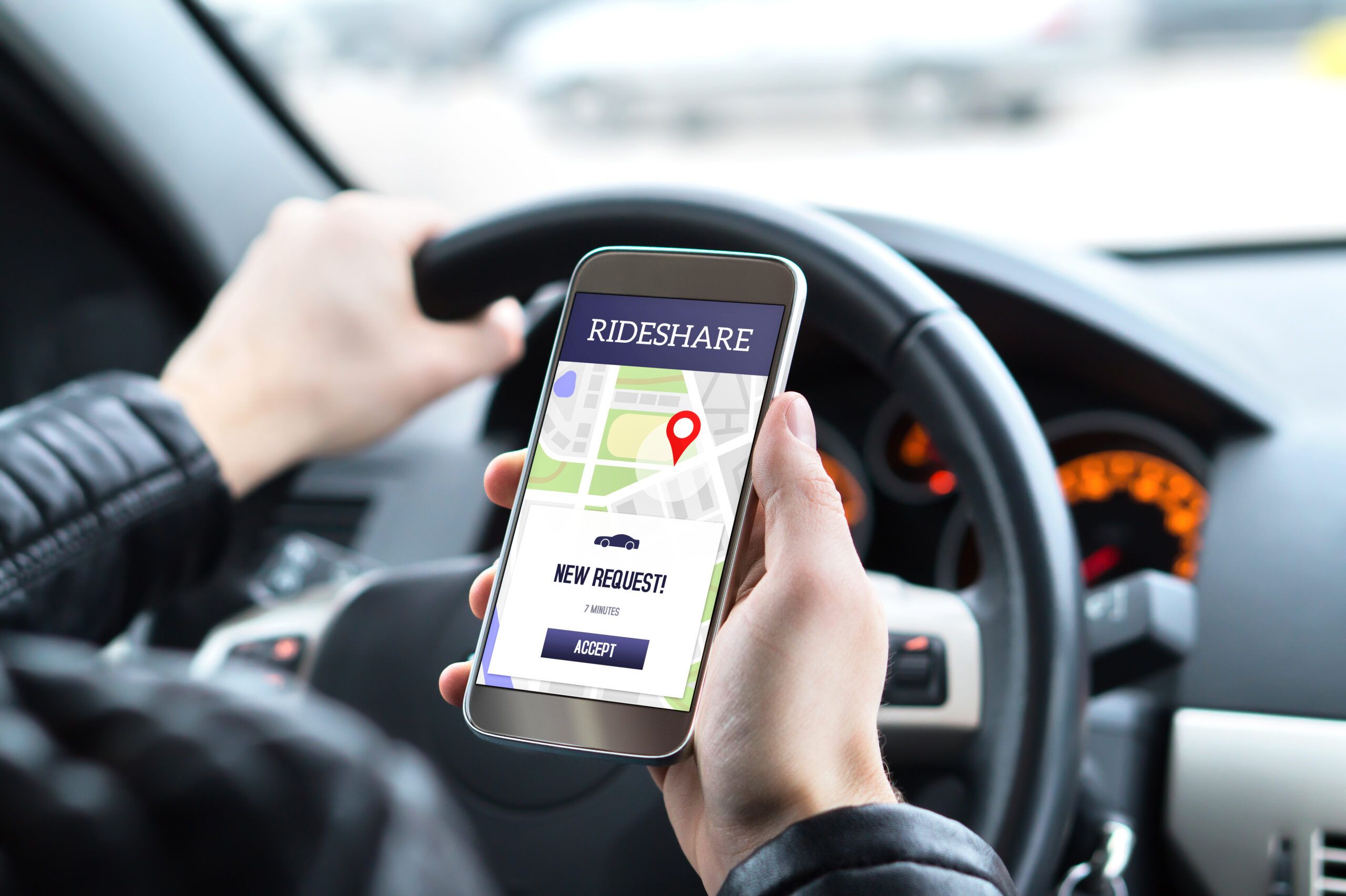
Everett rideshare crashes concentrate on a short list of roads, and on a short list of hours. The roads are Evergreen Way and SR 99, Broadway, Rucker Avenue, and SR 526, the freeway that runs past the Boeing plant on its way from Mukilteo to I-5. Those are the corridors on Everett’s Vision Zero high injury network, they are also where the rides are, and Everett recorded 44 fatal crashes between 2018 and 2022, predominantly pedestrian involved.
That overlap is the whole point. In some cities the dangerous roads and the busy rideshare routes are different places. In Everett they are the same places. Ride demand here is anchored to an aerospace plant, a naval station, an airport terminal and a freeway commute, and every one of those trips runs on an arterial or a freeway rather than through a dense downtown grid.
Here is what an ordinary week of Everett rideshare trips looks like, and where the risk sits in each one.
| Trip Type | The Route It Usually Takes | What Makes It Risky |
|---|---|---|
| A Boeing shift change ride | SR 526, the Boeing Freeway, running from SR 525 in Mukilteo to I-5 past the plant gates, then onto Evergreen Way | A large workforce leaving within the same few minutes on a freeway built for one employer. Two of the three shift changes happen in the dark. |
| A late night ride on Evergreen Way and SR 99 | The SR 99 spine south through the Everett Mall Way area | A 50 mph posted arterial with wide crossings and people on foot. This is the corridor with the most fatal crashes in the city. |
| A Paine Field airport run | SR 526 west toward Mukilteo and the commercial passenger terminal | Curbside loading, luggage, unfamiliar drop points, and early departures that put the car on the freeway before sunrise. |
| A Naval Station Everett liberty run | Between 2000 W Marine View Dr and downtown, usually via Broadway or Rucker Avenue | Both Broadway and Rucker are on the high injury network. Short downtown trips mean mid-block pickups, doors opening into traffic and frequent stops. |
| An I-5 commute ride to or from Seattle | I-5 south, roughly 24 miles | Long exposure in dense stop and go traffic through both peaks. Rear-end collisions are the usual result. |
Evergreen Way Is a 50 MPH Street With a City Built Along It
Evergreen Way is not a highway that bypasses Everett. It runs through the middle of it, lined with businesses, bus stops, driveways and people crossing to get to them, at speeds set for through traffic. The city has proposed dropping the posted limit from 50 to 40 mph on Evergreen Way, and from 40 to 35 mph on Everett Mall Way.
Those proposals matter to your case for one reason. Speed is the difference between a claim about a bruised shoulder and a claim about a surgical repair. A rideshare crash at 50 mph on a commercial arterial does damage that the same collision in a downtown block would not.
Why Everett Rideshare Trips Run Around the Clock
Everett’s ride demand does not follow the nightlife curve that shapes rideshare in bigger cities. It follows shift schedules. Boeing’s Everett plant runs three shifts, Naval Station Everett is a carrier strike group homeport, and Paine Field operates a commercial passenger terminal, so trips are being requested at 3 a.m. as routinely as at 9 p.m.
That is a specific crash profile, and it is worth understanding before you talk to an adjuster about your case.
The 4 A.M. Ride Is Its Own Risk Category
An early morning ride on Evergreen Way is a different trip than the same route at noon. The road is dark. It is empty enough that actual speeds drift above the posted limit. There are fewer cars around to slow anyone down, and fewer people around to see what happened.
That last part is the practical problem. Daytime crashes on a busy arterial produce witnesses. A 4 a.m. crash often produces two accounts and no third party to break the tie. When that happens, the objective evidence carries the case: the app records, the vehicle damage, the physical scene, and any camera facing the road.
The other driver may also be at the end of a long shift rather than the start of one. Fatigue is not a legal excuse, and it does not reduce what you are owed.
The Seattle Commute Puts a Second Pattern on the Road
The other half of Everett’s ride volume points south. The morning drive from Everett to Seattle averages 51 minutes in the general purpose lanes, according to 2023 WSDOT measurements. That is close to an hour of exposure in dense, stop and go traffic, which is where rear-end collisions live.
Passengers in these rides are frequently working on a laptop or asleep, with no warning before impact. It is one of the most common ways an Everett rideshare passenger gets hurt, and it is also one of the easiest liability pictures to prove.
Does It Matter Whether It Was an Uber or a Lyft?
Legally, no. Washington treats both as transportation network companies, or TNCs, which is the state’s term for an app-based ride platform, and the same statute sets the insurance both are required to carry. What decides your coverage is what the driver’s app was doing at the moment of impact, not which logo was on the windshield.
The controlling law is RCW 46.72B.180, part of the Revised Code of Washington, or RCW, the state’s collected statutes. A driver who is logged off carries only a personal auto policy, which may exclude rideshare driving entirely. A driver waiting for a request carries a smaller required policy, and from the moment a driver accepts a ride a $1,000,000 combined single limit is in force through the end of the trip, identically for both companies.
Where the platforms differ is in behavior, not law. Each route claims through its own insurer and keeps trip data on its own retention schedule, so getting records out of one is not the same job as getting them out of the other. That is a reason to have someone request them who has done it before, not a reason your claim is worth less.
Boohoff Law’s Everett office is at 2902 Colby Ave, Suite 103, in the same city these crashes happen in. Come in or call +1 (877) 999-9999 and talk with someone who knows these corridors by name.
What If a Rideshare Driver Hit Me While I Was Walking or Biking?
You have the same claim a passenger has, but you have to prove one thing a passenger does not: what the driver’s app was doing when he hit you. You were never in the vehicle, so you have no trip receipt and no ride history. The record that decides your coverage is held by the driver and the company, and neither one hands it over on request.
This is not a rare scenario in Everett. The city’s fatal crashes from 2018 to 2022 were predominantly pedestrian involved, and the corridor where that toll concentrates, Evergreen Way and SR 99, is the same corridor where rideshare drivers work all day and all night. Long blocks between signals and wide multilane crossings mean people cross where they need to, at speeds set for a highway.
Cyclists face the same proof problem with an added one. Rideshare crashes involving bikes often happen at pickups and drop-offs, when a car pulls to the curb across a bike lane or a passenger opens a door into it. Our Everett bicycle accident attorney team handles those cases, and the app-status question is the first thing we run down.
Proving App Status When You Were Never in the Car
Start with what exists at the scene. Note the plate, and if the vehicle has a rideshare placard or a phone mount running the app, photograph it. Ask the responding officer to record whether the driver said he was working. Drivers often volunteer at the scene and later go quiet about it.
After that, it takes a legal request. We send a preservation letter to the company so the trip data cannot be routinely purged, then pursue the driver’s own app history. The sooner that letter goes out, the less of a fight the rest of it becomes.
What Is an Everett Rideshare Claim Worth, and How Long Do I Have to File?
You generally have three years from the date of the crash to file a personal injury lawsuit in Washington, under RCW 4.16.080. There is no cap on noneconomic damages in this state, meaning no statutory ceiling on pain, suffering and loss of enjoyment of life. Value comes from documented medical treatment, future care, lost income, and how the injury changed your daily life.
Three years sounds generous and is not. Trip data, camera footage and witness memory all fade long before the deadline does.
The amount available also depends on whose policy applies. Washington’s minimum auto liability is 25/50/10, meaning $25,000 per person for bodily injury, $50,000 per accident and $10,000 for property damage, under RCW 46.29.090. A single arterial crash with a surgery in it can pass $25,000 before you leave the hospital.
If the rideshare policy is in play, the numbers are far larger, and if it is not, underinsured motorist coverage becomes the question. If you carry personal injury protection, or PIP, on your own policy, it pays medical bills early and regardless of fault, with a statutory minimum of $10,000 in medical benefits under RCW 48.22.085. Published settlement figures from other cases will not predict yours. Yours depends on the injury, the treatment record, and how much coverage the app status opened up, which is why the first thing worth doing is establishing that status.
What Should I Do in the Week After an Everett Rideshare Crash?
Do four things: get evaluated by a doctor, preserve anything on your phone that shows the ride, identify the vehicle and driver, and decline to give the other side a recorded statement until you have talked to a lawyer. Those four steps protect nearly everything that decides a rideshare claim, and they are also what turns a claim’s value from an argument into a record.
Specifically, in the days right after:
- Photograph the app screen, not just the car. A screenshot showing the driver, the vehicle and the trip in progress is worth more than a description of it later.
- Save the trip receipt email and do not delete the ride from your history. If you were not the rider, write down the plate and any placard while you still remember it.
- See a doctor even if you walked away. Gaps in treatment are the most common way a real injury gets valued as a small one.
- Say nothing recorded. An adjuster may call within a day or two, friendly and quick. You are not required to give a recorded statement to another party’s insurer.
If you have already done some of this wrong, it is usually fixable. Almost nothing about a rideshare claim is lost in the first week except the things nobody thought to save.
Partial Fault Reduces a Claim Here, It Does Not End It
Being partly to blame does not disqualify you here. RCW 4.22.005 says your share of fault “diminishes proportionately the amount awarded” but “does not bar recovery.” Washington set no cutoff percentage, which is why a fault argument in this state is a negotiation over a number rather than a door closing.
That matters most for people hurt on foot or on a bike on SR 99, because the first thing an insurer says is that you crossed where you should not have. Even if a jury agreed in part, you would still recover. Do not let an adjuster tell you the claim is dead.
Filing in Snohomish County
An Everett rideshare case is filed in Snohomish County Superior Court at 3000 Rockefeller Avenue. Most claims settle without a trial, but the county where a case would be tried shapes every settlement conversation before that, because both sides are valuing the same local jury pool.
Related Everett Injury Pages
If you were hit by a rideshare driver while driving your own vehicle, the claim runs on the same principles as any other collision, with the app-status question layered on top. Our Everett car accident attorney page covers how those claims are built.
Questions Everett Riders Ask Before They Hire a Lawyer
In most cases the claim runs against the insurance policy the company is required to carry, rather than against the company as an employer. That distinction rarely changes what is available to you, because the required TNC policy is the money in the case. Whether the company itself can be named as a defendant depends on the specific facts, and it is one of the first things we evaluate.
Report it to the police immediately and then check your own auto policy for uninsured motorist coverage, which is built for exactly this. A partial plate, a vehicle description or a nearby business camera is often enough to identify the driver later. If the driver is identified and was logged into the app, the rideshare coverage can still come into play.
No, not before you know the extent of your injuries. A cash offer at the scene or a few days later is almost always far below the cost of the treatment you have not had yet, and accepting it can complicate a later claim against the insurance that was actually available. Get evaluated first, then decide with real numbers.
Not for insurance purposes. Washington’s TNC insurance requirements attach based on what the driver’s app was doing, not on how the company classifies the driver for employment. The contractor question can matter for other legal theories, but it does not remove the coverage that state law requires the platform to carry.
Talk to an Everett rideshare accident lawyer

Most people call us with less than they think they need. A date, a cross street, a rough time of night. That is usually enough to start pulling the records that decide the case, and from there the records requests, the adjusters and the filing deadlines run out of the Everett office. You pay us out of the recovery, never out of pocket.
Call +1 (877) 999-9999. Someone picks up at any hour, we review the trip for free, and we work in English and Spanish.
Recovery is personal.

We’re here for you.
We’re close by. And if you can’t make it to us, we’ll meet you where you need us, at home or in the hospital.








© 2025 Boohoff Law, P.A. — Auto Accident Lawyers.
The information on this website is for general information purposes only. Nothing on this site should be taken as legal advice for any individual case or situation. This information is not intended to create, and receipt or viewing does not constitute, an attorney-client relationship.
Disclaimer: The results and testimonials presented on this website are based on the unique facts and circumstances of each case. Past results do not guarantee or predict similar outcomes in future cases. Every legal matter is different, and you should not rely on prior case results as an expectation of future performance.
