No Fees
Unless We Win
Millions Recovered!

Olympia Pedestrian Accident Lawyers
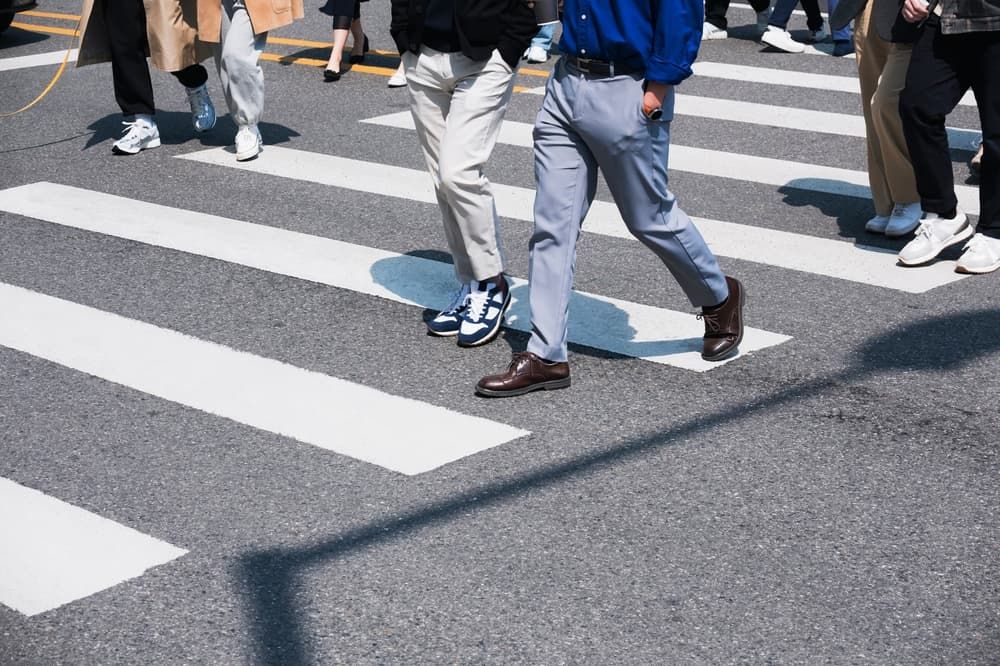
“She came out of nowhere.” Almost every driver says some version of it. In Olympia, between the rain and the five o’clock darkness that runs from November through February, it sounds believable.
Our Olympia pedestrian accident lawyers spend most of their effort on that one sentence. It is not a description of what happened. It is a description of what the driver noticed.
Available 24/7
Our specialists are here to listen and help for free, no strings attached.
877-999-9999
for a free consultation
Why is “I never saw her” not a defense?
Because Washington drivers have a duty to see what is there to be seen. A driver who missed a person who was plainly visible for several seconds has described inattention. Inattention is negligence, not an excuse for it.
The work is converting that principle into proof.
That means reconstructing what was actually visible: where you entered the roadway, your closing path, the driver’s approach speed, sight distance at that location, and how long you occupied the driver’s field of view.
Once those numbers exist, “out of nowhere” falls apart. A pedestrian visible for four seconds at 30 miles per hour was visible for roughly 175 feet. No jury needs an expert to understand what that means.
| What the driver says | What can be measured |
|---|---|
| “She came out of nowhere” | Seconds you were in the driver’s field of view before impact |
| “I had no time to stop” | Approach speed, and the distance covered in those seconds (four seconds at 30 mph is roughly 175 feet) |
| “It was too dark to see her” | Headlight range, street lighting, and whether a fixture was out |
| “She stepped right in front of me” | Where you entered the roadway and your closing path |
| “The view was blocked” | Sight distance at that location, including any vehicle stopped near the crossing |
| “The sun was in my eyes” | Street direction, time of day, and the winter sun angle at that hour |
Every item in the right column can be documented, and none of it depends on whose memory a jury prefers.
The credibility problem, and why it is worse here
Pedestrians in this spot are often disbelieved before anyone examines anything. You may have worn dark clothing because it was February. You may have crossed where there was no marked crossing, because the nearest one was three blocks away.
You may not recall the sequence clearly, which is very common after a head injury. None of that is fault. All of it gets treated as fault by an adjuster building a file.
That is the reason to have the physical evidence documented by someone working for you.
Struck while walking in Olympia? Call (877) 999-9999.
Is Olympia actually dangerous for pedestrians?
 More than its size suggests. One analysis ranked Washington cities by the per capita rate of people killed or seriously injured in crashes involving pedestrians and cyclists since January 2021.
Olympia sits among the worst performers in the state, just behind Everett and trailing only Puyallup and Lynnwood.
That is a striking result for a city this size, and it points at conditions rather than sheer traffic volume.
Long wet seasons and early winter darkness are part of it. So are arterials that carry commuter speeds past areas with real pedestrian activity.
Downtown adds its own mix. State workers, students, and residents walk the same grid that through traffic uses.
The City of Olympia reviews collisions on a set cycle and updates its Street Safety Plan from what it finds. That review looks at what contributes to pedestrian and bicycle crashes and to every crash causing serious or fatal injury.
Those analyses can be obtained. If your crash happened at a spot the city has already studied, that record belongs in your claim.
Does crossing outside a crosswalk end your case?
No. Under RCW 4.22.005, Washington splits fault by percentage and never uses your share to bar the claim outright. A pedestrian assigned 40 percent of the blame still collects 60 percent of proven damages.
Two points get overlooked routinely. Washington recognizes unmarked crosswalks at intersections, so a lawful crossing exists at most intersections whether or not paint sits on the pavement. Many crossings that adjusters label improper are legal.
Even where a pedestrian truly did cross improperly, the driver still owes a duty of due care to avoid a person in the roadway.
Speed, distraction, and failure to react to someone visible for seconds are all independently relevant, no matter where you stepped off the curb.
How does Olympia’s weather change these claims?

Rain gets offered as an explanation more often than it earns. Washington law asks a driver to select a speed that fits the conditions, not simply to stay under the posted number.
A driver doing the speed limit through heavy rain at dusk has not automatically satisfied that standard.
Darkness works the same way. If street lighting was poor or a fixture was out, that is a maintenance question, and the city may share exposure. It is provable only if someone documents it before the light gets repaired.
Glare deserves mention too. On east-west streets at low winter sun angles, drivers lose visibility for brief stretches. A driver who kept speed through a glare condition he knew about made a choice, not a piece of bad luck.
Can you bring a claim against the City of Olympia?
Sometimes, where road design, lighting, signal function, crossing placement, or upkeep played a part. That claim runs on a different track than the claim against the driver.
Under RCW 4.96.020, a tort claim against a local government must go to its designated agent on the approved form first. You then wait sixty calendar days before any lawsuit can be filed.
The filing clock pauses during that period, but the step is mandatory and the sequence matters.
These claims usually turn on notice, meaning what the entity knew or should have known about a hazard. Prior complaints, collision histories, and the city’s own safety plan analyses are what prove it. Gathering that material takes time.
A Washington pedestrian case, and the lesson in it

Boohoff Law recovered $1,250,000 for a pedestrian struck near a marked crosswalk on a busy Washington roadway. The detail that matters most for an Olympia reader is the setup.
A large vehicle stopped near the crossing cut sight lines while traffic shifted lanes, creating exactly the blind gap that makes a person seem to arrive from nowhere.
The client suffered a traumatic brain injury (TBI) with intracranial bleeding requiring emergency surgery and a severe arm fracture requiring surgical repair, with lasting effects on memory and speech.
A case like that gets characterized as unavoidable unless someone does the work to show it was not.
What stopped that from happening was proof gathered fast. The police file pointed to traffic camera footage and to how the crosswalk signal was working. Emergency medical services (EMS) records captured the injuries as first responders found them.
Hospital and billing records showed the real size of the trauma care. Lien and subrogation issues were handled so the recovery was protected rather than eaten by payback claims.
Every case is unique. Past results do not guarantee future outcomes, and the result in any case depends on the specific facts, injuries, liability, insurance coverage, evidence, and law involved.
Who pays while the claim is pending?
Your own auto insurance, more often than people expect. Personal injury protection (PIP) under RCW 48.22.085 follows the insured person, not the insured vehicle.
If you own a car with PIP, it can pay medical bills for injuries you sustained on foot.
Washington also requires that PIP be offered on every auto policy, and any rejection must be documented in writing.
If your carrier cannot produce a signed rejection, you have the coverage regardless of what you were told when you bought the policy. We request that document routinely.
Beyond PIP, health insurance, provider liens, and the driver’s medical payments coverage can carry treatment. Coordinating them correctly matters, because every dollar paid on your behalf is a dollar someone may ask for back at settlement.
When does the clock run out?
 Three years from the date of injury under RCW 4.16.080. Thurston County cases are usually filed in Thurston County Superior Court.
The practical window is far shorter. Businesses record over their security video within days, and vehicle event data vanishes once the car is repaired. Lighting and vegetation at the scene change with the season.
Where a public entity may share fault, the sixty-day claim step eats part of the timeline. Wrongful death claims and claims for injured minors follow their own rules and should be reviewed promptly.
What does it cost to have us review this?
We handle pedestrian claims on contingency. No consultation fee, no hourly billing, and no fee unless we recover for you. The firm fronts case costs, including reconstruction, lighting, and human factors experts.
The firm keeps an Olympia office at 203 4th Ave E, Suite 207, Olympia, WA 98501, open by appointment. If you or a family member is in the hospital, we will come to you.
We do not name one attorney on this page. Your case will be staffed to the lawyer whose background fits it.
We would rather tell you who that is in the first conversation than market a name to you now.
What do these injuries cost over a lifetime?

Pedestrian claims sit at the severe end, because nothing stands between a person and the vehicle. TBI, pelvic and leg fractures, internal injuries, and spinal trauma fill the category. The medical picture often takes a year or more to stabilize.
Damages include past and future medical care, lost income, and reduced earning power. They also cover life care and attendant costs where the impairment is permanent, plus general damages for pain, disfigurement, and loss of enjoyment.
What raises value most is proof that something will not heal. What caps it is the size of the policies in play.
The costliest mistake we see is settling before the medical picture is final.
A brain injury that appears to be resolving at four months can produce documented cognitive deficits at twelve, and a signed settlement closes that door permanently.
Frequently asked questions
The driver is presumed at fault, because Washington law requires drivers to stop and yield for pedestrians in marked and unmarked crosswalks alike.
You can pursue the driver’s liability coverage for medical costs, lost income, and pain and suffering. Your own PIP or underinsured motorist (UIM) coverage may also apply.
The driver may still argue you contributed, which trims the recovery by a percentage rather than ending it.
Yes. Clothing color may be raised as comparative fault, but it does not release a driver from the duty to see what is visible and to drive at a speed that fits the conditions.
Whether you were actually visible is a measurable question involving headlight range, street lighting, and approach speed. It is not a matter of opinion.
Several sources can, and often before the liability claim resolves.
Your own auto PIP coverage frequently applies even though you were on foot, health insurance can cover treatment subject to later reimbursement, and the driver’s medical payments coverage may contribute.
The at-fault driver’s liability policy usually pays at settlement rather than as bills arrive.
Claims with completed treatment and clear liability can resolve in a few months.
Serious injuries commonly take a year or longer, because value cannot be determined until physicians can speak to permanent impairment and future care. Cases involving a government entity or contested fault take longer still.
Uninsured motorist (UM) coverage usually applies to hit-and-run pedestrian collisions, including where the driver is never found. Report it to police right away, since that report is often a condition of coverage.
It helps a lot. Where none was taken, the record can often be rebuilt from medical documentation, witness statements, and area camera footage.
Both bring additional considerations. Minors’ claims follow different timing rules and require court approval of any settlement. Claims for older adults often involve harder damages questions around independence and long-term care.
Possibly. Health plans, PIP carriers, and providers may assert reimbursement rights, and reducing those claims directly changes what reaches you.
Speak with an Olympia pedestrian accident lawyer

If the driver’s account has already become the official version of events, the way to change it is measurement, not argument. Those measurements get harder to take every week that passes.
Call Boohoff Law at (877) 999-9999. We represent injured pedestrians and families in Olympia, Lacey, Tumwater, Yelm, and throughout Thurston County.

Recovery is personal.

We’re here for you.
We’re close by. And if you can’t make it to us, we’ll meet you where you need us, at home or in the hospital.











© 2025 Boohoff Law, P.A. — Auto Accident Lawyers.
The information on this website is for general information purposes only. Nothing on this site should be taken as legal advice for any individual case or situation. This information is not intended to create, and receipt or viewing does not constitute, an attorney-client relationship.
Disclaimer: The results and testimonials presented on this website are based on the unique facts and circumstances of each case. Past results do not guarantee or predict similar outcomes in future cases. Every legal matter is different, and you should not rely on prior case results as an expectation of future performance.
