No Fees
Unless We Win
Millions Recovered!

Tampa Personal Injury Lawyer
You already know what happened to you. What nobody explains, in the week when the calls start, is who is supposed to pay for any of it.
Boohoff Law is a Tampa personal injury and auto accident law firm that answers that question first, then takes the insurance work off your hands. A Tampa auto accident lawyer from our office will review your case for free, on a contingency fee.
We have handled injury claims across Hillsborough County for years, from our office on West Dr. Martin Luther King Jr. Boulevard, in English and Spanish.
Available 24/7
Our specialists are here to listen and help for free, no strings attached.
877-999-9999
for a free consultation

What Does It Cost to Hire Us?
Nothing upfront.
No Fees. Unless We Win.
Our fee is a percentage of the recovery, agreed in writing before we start.
Case expenses, such as records, medical reviews, and filing costs, are advanced by the firm. You never get an invoice while the case is open.
Before you hire anyone, ask three questions: what the fee percentage is, whether it changes if a lawsuit gets filed, and who carries the case costs from start to finish. We put our answers in writing.
Cases Our Tampa Auto Accident Lawyers Take
Motor vehicle crashes are the core of what we do, and they cover more than two cars at an intersection.
Car crashes are the largest group, and our Tampa car accident lawyer page goes deeper into how those claims are built. Commercial vehicle collisions follow their own federal rules and preservation deadlines, which our Tampa truck accident lawyer page covers.
We also handle motorcycle, bicycle, pedestrian, bus, and rideshare crashes, plus hit-and-run claims that run through uninsured motorist coverage.
Outside of traffic, we take premises liability claims, including injuries on poorly maintained property, and wrongful death claims when a family loses someone in a preventable accident.
If your case is not something we handle, we say so early and point you toward someone who does.
How Does Florida’s No-Fault System Actually Work?
 Your own Personal Injury Protection coverage pays first, no matter who caused the crash. PIP is required on every Florida auto policy and carries a $10,000 limit under Florida Statute 627.736.
Three details inside that statute cost people money every week in Tampa.
Why Does the 14-Day Rule Matter So Much?
Because missing it can erase your PIP benefits entirely. Florida requires you to receive initial medical services within 14 days of the crash. Wait longer, and the coverage you paid for may not apply at all.
The $2,500 Trap Inside Florida’s PIP Law
Because of how their condition is classified. The full $10,000 is available when a qualifying provider determines you had an emergency medical condition. Without that determination, benefits are capped at $2,500.
That single line in a chart note changes the number by $7,500, which is why the provider you see in those first days matters.
What Does PIP Not Cover?
Most of your loss, in a serious case. PIP pays 80 percent of reasonable medical expenses and 60 percent of lost income, up to the limit. It pays nothing for pain, and nothing for the life you cannot get back to.
For those damages, Florida requires you to meet an injury threshold under Florida Statute 627.737: a permanent injury within a reasonable degree of medical probability, significant and permanent loss of an important bodily function, significant and permanent scarring or disfigurement, or death.
Whether your injury meets that standard is a medical question that gets decided by what is documented in your records. It is also the single biggest reason people who stop treating early end up with claims worth a fraction of what they should be.
Not sure whether your injuries clear the threshold? Ask us to look at your records, free.
How Long Do You Have to File a Claim in Florida?
Two years from the date of the accident for most negligence cases, under Florida Statute 95.11. That is half the time Florida allowed before the 2023 tort reform, and people who remember the old four-year rule are the ones who miss it.
Claims against a government body run differently. Injuries involving a city vehicle, a HART bus, or a county road require written presuit notice, and damages against a state agency or subdivision are capped at $200,000 per person and $300,000 per incident.
What If You Were Partly at Fault?
You can still recover, up to a point. Florida uses modified comparative negligence under Florida Statute 768.81: your damages are reduced by your percentage of fault, and anyone found more than 50 percent at fault recovers nothing.
That 51 percent line is why adjusters push fault theories so hard. Moving you from 40 percent to 51 percent does not reduce the claim, it ends it, and they know that.
Fault gets argued with evidence: scene photographs, vehicle damage patterns, traffic camera footage, witness statements taken before memories shift, and in some cases the crash data stored in the vehicle.
The Low-Speed Crash Argument, and How We Answer It
Because a photo of an undamaged bumper is the cheapest defense there is. It is also wrong often enough that we build cases around disproving it.
Cars absorb force differently. A tow hitch can take an impact and leave the bumper cosmetically fine while the energy still travels through the occupants. Frame damage frequently hides behind panels that look untouched, which is why we ask the body shop whether anyone actually measured for it.
When it matters, we download the event data recorder, the module that stores speed, braking, and impact severity in the seconds around the crash. A number from the vehicle’s own computer ends that argument faster than any letter.
What Is Your Tampa Injury Claim Worth?
 It depends on the medical picture, the coverage available, and how clean the liability evidence is.
A full claim accounts for treatment you have had and treatment you still need, income lost while you were out, reduced earning capacity if you cannot return to the same work, out-of-pocket costs like rental cars and mileage, and the physical pain and lost activities that come with a permanent injury.
Available insurance sets the ceiling in many Florida cases. The state’s minimum requirement, as the Florida Highway Safety and Motor Vehicles department spells out, is $10,000 in PIP and $10,000 in property damage liability.
Bodily injury liability, the coverage that actually pays for someone else’s injuries, is not required of most drivers, so the person who hurt you may have nothing for your medical care. That is when your own uninsured or underinsured motorist coverage becomes the claim, and why we ask to see your declarations page early.
Boohoff Law’s published results include $27,000,000 in a catastrophic interstate collision, $9,000,000 in a catastrophic highway crash, and $665,000 in a chain-reaction crash on a Tampa causeway. Past results do not guarantee or predict similar outcomes in future cases, and every case turns on its own facts.
Injuries We See Most in Tampa Crashes
Neck and back injuries dominate, and they are also the ones insurers fight hardest. Herniated discs, facet joint injuries, and soft tissue damage produce real pain and limited function while showing up ambiguously on imaging, which gives carriers room to argue.
Concussions and traumatic brain injuries come next, and they are underdiagnosed in emergency rooms that are focused on broken bones and bleeding. Anyone who lost consciousness, or who has had headaches, memory trouble, or personality changes since a crash, needs a neurological evaluation and needs those symptoms documented.
Shoulder injuries, especially rotator cuff tears from bracing against a steering wheel, frequently require surgery and long rehabilitation. Knee injuries from dashboard contact follow a similar path.
Fractures, internal injuries, and burns appear in higher-speed crashes and in collisions with commercial vehicles, and those cases usually clear Florida’s injury threshold without any argument.
What matters for the claim is less the label than the documentation. Two people with the same MRI can have very different claims depending on whether their records describe how the injury actually affects their days.
What Happens After You Hire Us
The first week is administrative and invisible, and it sets up everything else.
We notify both insurers that we represent you, which legally stops the adjusters from calling you directly. We open your PIP claim, confirm the 14-day requirement has been met, and get the emergency medical condition determination in the file if it belongs there.
Then we gather. The full crash report, which is available to people involved in the collision through the state’s traffic crash report portal and stays exempt from general public release for 60 days, along with the scene and vehicle photographs, any traffic or business video before it is overwritten, witness statements, and your declarations page so we know what coverage exists on your side.
While you treat, we collect records and bills as they are generated rather than at the end, which is how claims stall for months. We also monitor for treatment gaps and tell you when one is forming, because an unexplained six-week gap is worth real money to the other side.
When your doctors say you have reached maximum medical improvement, or your future care is clear, we assemble the demand package and send it. The carrier typically responds within 30 to 60 days, and the first number is almost always low. Negotiation follows, and if it stalls, we discuss filing suit before the two-year deadline gets close.
Where Would Your Case Be Filed in Hillsborough County?
At the Hillsborough County Courthouse on East Twiggs Street in downtown Tampa, for most state court cases, with the Clerk of the Circuit Court handling the filings. Federal matters go to the Sam Gibbons U.S. Courthouse on North Florida Avenue, and appeals from Tampa go to the Second District Court of Appeal.
Filing does not mean a trial is coming. Most Florida injury cases resolve before a jury is selected, frequently at mediation, which the court usually requires before trial anyway.
What filing does is change the insurer’s math. A claim in litigation costs the carrier money to defend, exposes their insured to a verdict, and gives us subpoena power for records they were declining to produce.
Cases that do go to trial in Hillsborough County typically take a year or more from filing to verdict. We walk you through that trade-off honestly before anything is filed, because the decision is yours.
How Do Medical Bills Get Paid Out of a Settlement?
This is the part nobody explains until the end, and it decides how much money you actually keep.
Your PIP pays first, up to its limit. Health insurance usually covers what comes after, and providers who treat injury patients under a letter of protection wait to be paid from the settlement itself.
When the case resolves, several parties may have a right to be repaid from the recovery. A health insurer that paid your bills can assert subrogation rights. Medicare and Medicaid have statutory reimbursement rights that must be addressed before disbursement. Hospitals in Florida can assert liens in some circumstances. Providers holding letters of protection expect their balances.
Two things matter here. First, those amounts are frequently negotiable, and reducing them is part of the work rather than an afterthought. Second, they need to be identified early, because a settlement accepted without accounting for a Medicare interest can create a problem months later.
Before you sign a settlement, you should see a written breakdown: the gross recovery, the fee, the case costs, every lien and balance, and the net figure going to you. We provide that and go through it line by line, and nothing gets signed until it makes sense to you.
Four Things to Avoid While Your Claim Is Open
Four things cost Tampa clients more money than anything else.
Posting on social media. A photograph of you at a birthday party, smiling for eight seconds, gets used as evidence that your back is fine. Set accounts to private and post nothing about your health, your activities, or your case.
Giving a recorded statement to the other driver’s insurer. You are not required to, and the questions are designed for a file, not a conversation.
Taking the first offer. Early offers arrive before anyone knows what your treatment will cost, and the release that comes with them closes the claim permanently.
Stopping treatment because you are busy or because the bills worry you. Tell us about the financial pressure instead. There are usually ways to keep care going without paying out of pocket, and the alternative is a gap in the record that the carrier will use for the rest of the claim.
How We Work Tampa Cases
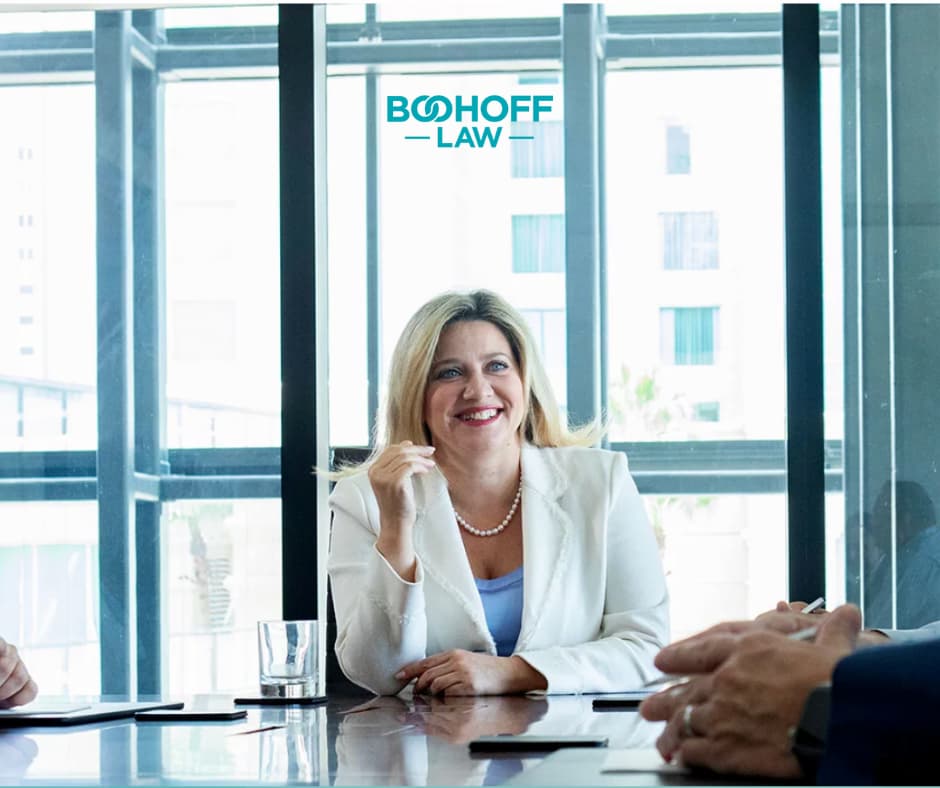
We handle the claim so you can handle your recovery. Our office notifies the insurers, opens your PIP claim so treatment gets paid, requests the crash report, gathers medical records as they are generated, and deals with adjusters directly.
You get one person to call, and honest answers about timing, including when the answer is that a hospital records department is slow.
Tampa cases that go to suit are filed at the Hillsborough County Courthouse on East Twiggs Street, and how a claim will be received there shapes settlement value long before a trial date exists. Many of our clients start their treatment at Tampa General, St. Joseph’s, or the HCA facilities around the county, and we work with those record systems constantly.
Founder Tatiana Boohoff is admitted in both Florida and Washington and is a Life Member of the Million Dollar Advocates Forum. Our team serves clients in English and Spanish, which matters more than it sounds in an injury claim.
A client who says the pain is “en la cintura” is describing the low back, and an interpreter who turns that into “waist” has just created a contradiction in the medical record. We catch things like that because we are listening in both languages.
If you cannot come to us, we come to you, at home or in the hospital.
Millions Recovered. Put a Tampa auto accident lawyer on your claim before the insurer sets its number.
Tampa Injury Claim Questions We Hear Every Week
Yes. Florida’s system routes your initial medical bills through your own PIP regardless of fault, and using it is not the same as admitting anything. Your PIP carrier may later seek reimbursement from the at-fault driver’s insurance, which is handled between the companies rather than by you.
You still have options. Many Tampa providers treat injury patients under a letter of protection, which means they wait for payment until the case resolves. Those arrangements need to be set up carefully, because the balance comes out of your settlement at the end, and the amount is negotiable.
Yes, and passengers usually have the cleanest claims of anyone involved, because no one can argue you were driving. Your own PIP typically covers your initial treatment, and the claim for everything beyond that runs against the at-fault driver’s liability coverage, even when that driver is a friend or a relative.
Florida injury law does not condition your right to bring a claim on citizenship or immigration status. Injured people are entitled to pursue compensation for medical bills, lost income, and permanent injuries regardless of status, and that question does not belong in an adjuster’s file.
Probably not, as long as you are inside the two-year deadline, though delays create issues worth addressing quickly. Gaps in treatment and missing PIP paperwork can both be explained, but they are easier to explain now than after an insurer has built its file around them.
Yes. Your PIP policy may steer you toward certain providers for billing purposes, and you are still entitled to treat with a physician you trust.
What matters for the claim is that the provider documents your symptoms thoroughly and that the treatment is consistent. If cost is what is limiting your options, tell us, because there are usually ways to keep care going without paying out of pocket.
There may be more coverage available than in an ordinary crash. Rental companies often provide liability coverage, the driver’s personal policy usually extends to a rental, and any credit card used to book it may add another layer. Identifying which policy responds first takes a review of the rental agreement, and it is worth doing before anyone accepts an offer from a single carrier.
Talk It Through With Someone Who Handles These Daily

You do not need to know whether you have a case. That is our job, and it takes one conversation.
Send us the crash report, the name of the insurer that has been calling, and a short description of your injuries. We will tell you what the claim looks like, what deadlines apply to you, and whether hiring a lawyer makes sense at all.
Free consultation, 24 hours a day, in English or Spanish.

Recovery is personal.

We’re here for you.
We’re close by. And if you can’t make it to us, we’ll meet you where you need us, at home or in the hospital.










© 2025 Boohoff Law, P.A. — Auto Accident Lawyers.
The information on this website is for general information purposes only. Nothing on this site should be taken as legal advice for any individual case or situation. This information is not intended to create, and receipt or viewing does not constitute, an attorney-client relationship.
Disclaimer: The results and testimonials presented on this website are based on the unique facts and circumstances of each case. Past results do not guarantee or predict similar outcomes in future cases. Every legal matter is different, and you should not rely on prior case results as an expectation of future performance.
