Tampa’s roads are the arteries of our vibrant city, carrying millions of residents and visitors from the beaches to the downtown core and everywhere in between. But with so much movement comes inevitable risk. Traffic data consistently reveals that a handful of specific crossings bear a disproportionate share of collisions. These are not just points on a map; they are places where lives are frequently disrupted by the crunch of metal and the sudden reality of an injury.
Identifying the most dangerous intersections in Tampa helps transform abstract statistics into practical knowledge for every driver. It’s about empowering you with information that promotes safer driving and clarifies your options if you find yourself injured in a collision.
Reach out to an experienced Tampa car accident lawyer to protect your rights after a serious intersection crash—contact us today for a free consultation.
Key Takeaways about the Top 10 Most Dangerous Intersections in Tampa
- Specific intersections in Tampa and Hillsborough County show a higher frequency of car accidents due to factors like high traffic volume and complex designs.
- Common causes for intersection crashes often include driver behaviors such as distracted driving, speeding, and failure to yield the right-of-way.
- Florida’s car insurance laws, including Personal Injury Protection (PIP), affect how individuals are compensated for injuries after an accident.
- Following a collision, the steps a person takes to document their injuries and damages can significantly impact their ability to secure fair compensation.
- Understanding the time limits for filing a personal injury claim is crucial for protecting one’s legal rights after being injured in a car accident.
What Makes an Intersection Dangerous?
Not all intersections are created equal. Certain design and traffic characteristics can significantly increase the risk of a crash. When multiple risk factors combine, an intersection can become a hotspot for accidents.
- High Traffic Volume: The more cars that pass through an intersection, the higher the probability of a collision. Busy roads, like Dale Mabry Highway or Brandon Boulevard, naturally have more interactions between vehicles.
- Complex Design: Intersections with multiple lanes, turning lanes, and confusing signage can be difficult for drivers to process, especially during peak hours. The crossing of Bruce B. Downs Boulevard and Fletcher Avenue near the University of South Florida (USF) is a prime example of this complexity.
- Poor Visibility: Obstructions like buildings, trees, or even other large vehicles can block a driver’s line of sight, making it hard to see oncoming traffic or pedestrians.
- High Speeds: Roads with higher speed limits leading into an intersection reduce the time drivers have to react to changing lights or unexpected events, increasing the severity of any resulting crash.
These factors, combined with driver error, are why certain locations see far more accidents than others.
Tampa’s Most Dangerous Intersections
Based on crash data and local traffic reports, several intersections in Tampa and the greater Hillsborough County area have earned a reputation for being particularly hazardous. Here are 10 crossings that demand your full attention every time you drive through them.
1. Hillsborough Avenue & Sheldon Road
This intersection in the Town ‘n’ Country area is frequently cited as one of the most dangerous in the region. The combination of heavy east-west traffic on Hillsborough Avenue and the flow of vehicles from Sheldon Road creates a constant potential for conflict, especially T-bone and rear-end collisions.
2. Waters Avenue & Himes Avenue
Located near the vibrant community of Carrollwood and not far from the iconic Raymond James Stadium, this intersection sees a mix of local and event traffic. The high volume and numerous business entrances and exits along both avenues contribute to frequent lane changes and sudden stops, which can lead to accidents.
3. Bruce B. Downs (BBD) Boulevard & Fletcher Avenue
Serving the bustling area around USF and several major hospitals, this intersection is a whirlwind of activity. Students, commuters, and emergency vehicles all converge here. The sheer number of lanes and complex traffic patterns make it a challenge, and red-light running is a known issue.
4. Gibsonton Drive & Interstate 75
Intersections near highway on-ramps and off-ramps are notoriously risky, and this one is no exception. Drivers are often merging, accelerating, or decelerating, and their focus may be on getting onto or off I-75 rather than on the cross-traffic on Gibsonton Drive.
5. Brandon Boulevard (State Road 60) & Interstate 75
As a major artery connecting Brandon to Tampa, SR 60 is almost always packed with traffic. Where it meets I-75, the congestion intensifies. Drivers rushing to beat the light or making ill-advised turns to get to the Brandon Town Center or other nearby businesses contribute to a high crash rate.
6. U.S. 301 & Gibsonton Drive
Another challenging intersection in the southern part of the county, the crossing of U.S. 301 and Gibsonton Drive sees a heavy volume of both commercial trucks and passenger vehicles. The mix of vehicle sizes and speeds adds a layer of complexity for drivers trying to make safe decisions.
7. Dale Mabry Highway & Hillsborough Avenue
Two of Tampa’s most prominent and busiest roads meet at this intersection, making it a predictable hotspot for accidents. The constant flow of traffic heading to Tampa International Airport, nearby businesses, and residential neighborhoods means this crossing is perpetually active and requires defensive driving at all times.
8. Fletcher Avenue & Interstate 275
Similar to other highway-adjacent intersections, the meeting point of Fletcher Avenue and I-275 is a site of frequent collisions. The flow of traffic coming off the interstate can be fast-moving, creating a dangerous situation for drivers on Fletcher Avenue who may not accurately judge the speed of approaching vehicles.
9. Big Bend Road & I-75 / U.S. 301
This sprawling interchange in the SouthShore area is a major hub of activity. The combination of traffic from I-75, U.S. 301, and the rapidly growing residential communities along Big Bend Road results in a complex and often congested environment where accidents are common.
10. Waters Avenue & Anderson Road
This intersection in the Town ‘n’ Country area is another location where high traffic volumes and numerous retail outlets create a risky environment. Drivers turning into and out of shopping plazas often disrupt the flow of traffic, leading to rear-end collisions and sideswipes.
Common Causes of Accidents at High-Risk Tampa Intersections
While road design plays a role, the majority of intersection accidents are caused by driver behavior. At these busy Tampa crossings, certain actions are particularly likely to lead to a collision.
- Distracted Driving: According to the National Highway Traffic Safety Administration (NHTSA), thousands of people are killed in distracted driving crashes each year. Texting, adjusting the GPS, or even talking to passengers takes a driver’s focus off the road at critical moments.
- Speeding: Exceeding the speed limit or driving too fast for conditions reduces a driver’s ability to stop in time to avoid a hazard, such as a car turning left or a light changing to red.
- Running Red Lights: Drivers trying to “beat the light” put everyone at risk. This single action is one of the most common causes of serious T-bone accidents, which often result in severe injuries.
- Failure to Yield: Whether making a left turn or pulling out from a stop sign, drivers who fail to yield the right-of-way to oncoming traffic are a primary cause of intersection crashes.
These preventable behaviors are at the heart of why so many people get hurt at otherwise manageable intersections every day.
Understanding Your Rights After a Tampa Intersection Accident
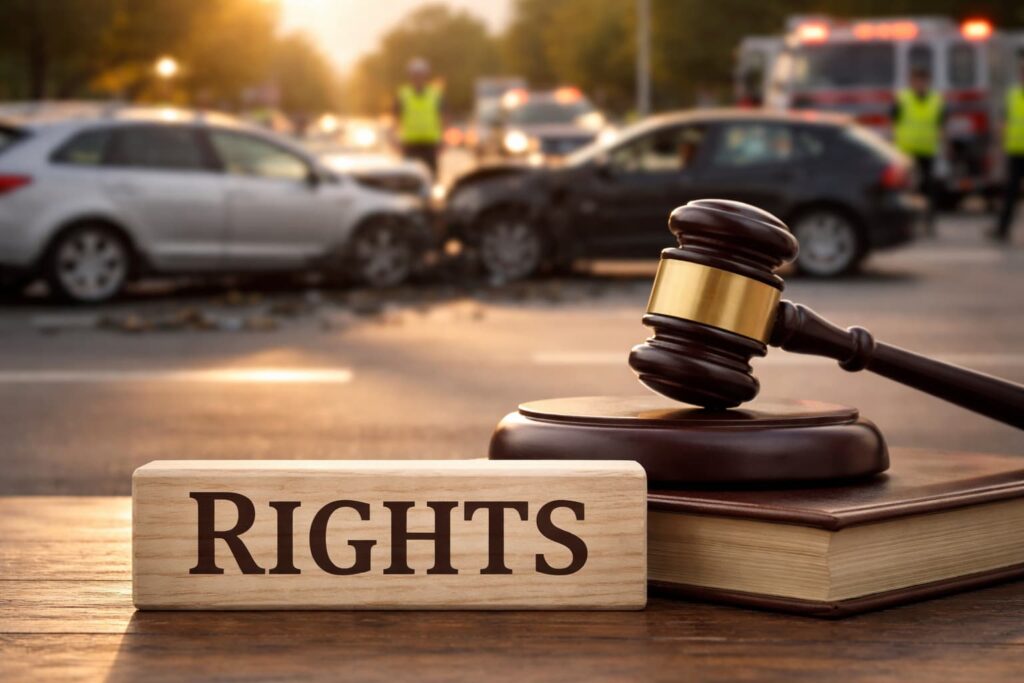
If you are injured in a crash, it’s important to understand the basics of Florida’s insurance and liability laws. The system can seem complicated, but knowing your rights is essential for protecting your health and financial stability.
First, Florida is a “no-fault” state. This means your own auto insurance is the primary source of coverage for your initial medical bills and lost wages, regardless of who caused the accident. This coverage is called Personal Injury Protection (PIP). In Florida, PIP covers 80% of your initial medical expenses and 60% of your lost wages, up to a total of $10,000.
However, in cases involving significant injuries, $10,000 is often not enough to cover the full extent of the damages. If your injuries meet a certain legal threshold—such as causing permanent injury, significant scarring, or death—you may be able to step outside the no-fault system and file a claim against the at-fault driver for the damages that PIP does not cover. This can include:
- All past and future medical bills
- Lost wages and loss of future earning capacity
- Pain and suffering
- Emotional distress
It is also important to be aware of the statute of limitations, which is a legal deadline for filing a lawsuit. As of a recent change in the law, for most personal injury cases in Florida, you generally have two years from the date of the accident to file a lawsuit. Missing this deadline can mean losing your right to seek compensation forever.
Steps to Take After an Intersection Collision
Once you have received emergency medical care, your focus will shift to your physical and financial recovery. Taking organized steps during this period can help protect your rights.
- Organize Your Documents: Keep all accident-related paperwork in one place. This includes the police report, medical records, bills from doctors and hospitals, and any correspondence from insurance companies.
- Document Your Experience: Start a journal to track your physical symptoms, pain levels, and medical appointments. Also, note how your injuries are affecting your daily life, such as your ability to work, sleep, or participate in activities you once enjoyed.
- Follow Medical Advice: Attend all follow-up appointments with your doctors and follow their treatment plans. This is not only crucial for your health but also creates a clear record of your injuries and recovery process.
- Be Cautious with Insurance Companies: The other driver’s insurance adjuster may contact you shortly after the crash. It is often wise to refrain from giving a recorded statement or accepting a quick settlement offer before you fully understand the extent of your injuries and your legal options.
These steps can provide a strong foundation for a personal injury claim and help you pursue the full compensation you deserve.
FAQs for Most Dangerous Intersections in Tampa
Here are answers to some common questions people have after being in a collision at one of Tampa’s busy intersections.
How is fault determined in a Florida intersection accident?
Fault is determined by examining the evidence to see which driver violated traffic laws or acted negligently. Evidence can include the police report, witness statements, traffic camera footage, and the positions of the vehicles after the crash. For example, a driver who ran a red light or made an illegal left turn would likely be found at fault.
What kind of compensation can I seek after a car accident?
Beyond your PIP benefits, you may be able to seek compensation from the at-fault party for a range of damages. This can include all medical costs not covered by PIP, lost income, future lost earning potential if you cannot return to your job, and non-economic damages like pain, suffering, and emotional distress.
Can the city or county be held responsible for a dangerous intersection design?
In some cases, a government entity could be held partially responsible if it can be shown that a poorly designed or improperly maintained intersection was a primary cause of the accident. These claims are complex and often require an investigation by traffic design professionals to prove that the intersection presented an unreasonable danger.
What should I do if the at-fault driver was uninsured or underinsured?
If the at-fault driver has no insurance or not enough to cover your damages, you may be able to make a claim through your own Uninsured/Underinsured Motorist (UM/UIM) coverage, if you have it. This is an optional but highly recommended part of an auto insurance policy in Florida that protects you in these situations.
Why is it important to seek medical attention right away, even if I feel fine?
Some serious injuries, like whiplash or internal injuries, may not show symptoms immediately after a crash due to the adrenaline rush. Seeking a prompt medical evaluation creates a record linking your injuries to the accident. Under Florida’s PIP law, you must seek initial medical treatment within 14 days of the accident to be eligible for benefits.
Let Us Handle the Legal Details While You Heal
Being injured in a car accident at one of Tampa’s most dangerous intersections can leave you feeling shaken and uncertain about the future. As you focus on your physical recovery, let an experienced legal team handle the fight for fair compensation. The attorneys at Boohoff Law, P.A. are committed to holding negligent drivers accountable and advocating for the rights of injured people.
We understand the challenges you are facing and are here to provide compassionate and determined representation. We will investigate your case, deal with the insurance companies, and build a strong claim on your behalf. You should not have to bear the financial burden of an accident someone else caused. With our “No Fees Unless We Win” promise, you can get the help you need without any upfront cost.
Call Boohoff Law, P.A. today for a free, no-obligation consultation to discuss your case with a dedicated Tampa personal injury lawyer. We are available 24/7 to take your call. Reach our Tampa office at (813) 445-8161 or through our online form to find out how we can help you move forward.

Free Consultation
We Are Here For You 24/7
Reviews

– Elissa M.
“Really pleased with Boohoff Law! Received immediate responses when I had any questions. Treated amazingly by all staff … made this process a true breeze!”
– Caitlyn M.
– Brandy K.
Related Posts
Top 10 Most Dangerous Intersections in Tampa for Car Accidents
How Do Most Bicycle Accidents Happen?
What are the Most Common Types of Bicycle Accidents?
Recovery is personal.
We’re here for you.
We’re close by. And if you can’t make it to us, we’ll meet you where you need us, at home or in the hospital.








© 2025 Boohoff Law, P.A. — Auto Accident Lawyers.
The information on this website is for general information purposes only. Nothing on this site should be taken as legal advice for any individual case or situation. This information is not intended to create, and receipt or viewing does not constitute, an attorney-client relationship.
Disclaimer: The results and testimonials presented on this website are based on the unique facts and circumstances of each case. Past results do not guarantee or predict similar outcomes in future cases. Every legal matter is different, and you should not rely on prior case results as an expectation of future performance.
