Commercial truck drivers must follow strict federal rules to prevent crashes caused by fatigue. One of the most important is the restart rule, which gives drivers thirty-four hours off to reset their weekly hours and recover. When companies pressure drivers to disregard this rule or adjust schedules to circumvent the system, serious accidents can occur.
Roads in Olympia become hazardous when tired drivers operate large trucks without adequate rest. If you or a loved one suffered injuries in an Olympia truck crash, understanding how missed rest periods can cause wrecks and why the company may bear responsibility proves valuable. Seek support from Boohoff Law, P.A., your Olympia truck accident attorney, ready to protect your rights.
Restart Violation Truck Accidents – Key Takeaways
- Fatigue is deadly: Skipping the 34-hour restart builds exhaustion, raising crash risk on Olympia roads.
- Federal rules exist: Drivers must get 34 consecutive hours off weekly, including two overnight periods.
- Violations are common: Pressure from companies and tight schedules leads to skipped rest.
- Typical accidents: Rear-end crashes, lane drift, highway departures, intersections, and multi-vehicle pileups.
- Evidence matters: ELD data, schedules, company policies, and professional analysis prove violations.
- Multiple parties liable: Trucking companies, dispatchers, shippers, brokers, and leasing firms.
- Compensation available Includes Medical bills, lost income, pain and suffering, and, in some cases, punitive damages.
- Act fast: Boohoff Law preserves evidence, investigates, and fights for full recovery.
Understanding the 34-Hour Restart Rule
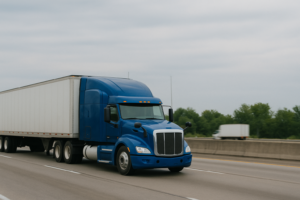 Federal Motor Carrier Safety Administration regulations strictly limit truck driver hours to prevent fatigue-related accidents. Under 49 CFR 395.3, drivers cannot exceed sixty hours on duty in seven days or seventy hours in eight days without completing a restart.
A restart requires at least thirty-four consecutive hours off duty, including two periods between 1:00 AM and 5:00 AM, with no work tasks allowed. Drivers can only use one restart per week. These rules are grounded in fatigue science, circadian rhythm research, and accident data, ensuring drivers have adequate rest to maintain alertness and reduce crash risks.
Why the 34-Hour Restart Exists
Truck driving is physically and mentally demanding. Even when drivers comply with daily hour limits, cumulative fatigue builds throughout the week. By the sixth or seventh consecutive day of driving, even well-rested drivers show measurable performance degradation each night.
The thirty-four-hour restart serves multiple critical purposes:
- Cumulative Fatigue Recovery: While nightly ten-hour breaks address daily fatigue, they don’t eliminate the cumulative exhaustion that builds up over multiple consecutive workdays. The thirty-four-hour restart provides time for complete physical and mental recovery.
- Sleep Debt Repayment: Drivers operating on compressed sleep schedules accumulate sleep debt that nightly breaks don’t fully resolve. The longer restart period allows catching up on missed sleep.
- Circadian Rhythm Restoration: Requiring two overnight periods within the restart ensures drivers get proper nighttime sleep, which is more restorative than daytime rest due to how human circadian rhythms function.
- Mental and Physical Break: The extended time off allows drivers to decompress from work stress, attend to personal matters, spend time with their families, and return to work mentally refreshed.
- Safety Improvement: Research consistently shows that properly rested drivers have better reaction times, superior judgment, sustained attention, and dramatically lower accident rates compared to drivers operating with inadequate rest.
How Restart Violations Happen in Olympia-Area Trucking
Despite federal restart mandates, violations are common in Olympia and across Washington due to multiple pressures. Economic pressure from carriers pushes drivers to manipulate logs or shorten rest periods to maximize revenue.
Driver pay structures based on miles or loads incentivize skipping or shortening restarts. Competitive market pressures and high shipping demand in the Pacific Northwest further encourage drivers to exceed limits.
Operations along the I-5 corridor add schedule pressure. Some drivers attempt to manipulate electronic logging devices, while smaller carriers may misunderstand regulations, resulting in dangerous violations. These factors combine to increase fatigue-related crash risks significantly.
Dangerous Fatigue Effects from Skipping Rest Periods
When truck drivers skip proper thirty-four-hour restarts, cumulative fatigue creates extremely dangerous conditions on the road. Severe cognitive impairment reduces decision-making and information processing, comparable to or worse than intoxicated driving.
Extended reaction times and microsleep events make it nearly impossible to avoid hazards, while attention failures cause drivers to miss signals, vehicles, pedestrians, and other road hazards. Impaired judgment leads to unsafe passing, following distances, and speed choices.
Physical deterioration affects steering, lane control, and precise handling. Finally, mood and emotional instability make drivers irritable, aggressive, and more likely to take unnecessary risks. Together, these factors dramatically increase the likelihood of serious or fatal accidents.
Common Olympia-Area Accident Scenarios
Restart violations lead to specific accident patterns on Washington roads. Interstate 5 crashes often involve rear-end collisions, lane drift, or running off the road as drivers exceed weekly limits without proper rest.
Early morning accidents occur when cumulative fatigue combines with circadian sleepiness, increasing crash risk. Highway departures happen when exhausted drivers lose control, crash through guardrails, roll vehicles, or strike fixed objects.
Intersection collisions occur due to missed signals, failure to yield, or misjudged timing, resulting in severe T-bone and head-on crashes. Multi-vehicle chain reactions occur when fatigued drivers cannot brake in time, triggering collisions that involve multiple cars and result in widespread injuries.
Proving Restart Violations in Washington Truck Accident Cases
Holding trucking companies accountable for restart violations necessitates a detailed and methodical approach. These cases involve complex regulations, company policies, and driver behavior, making thorough investigation and professional analysis essential to proving liability and securing justice for accident victims.
Electronic Logging Device Analysis
Modern ELDs track detailed driving time, on-duty periods, and off-duty rest periods. We examine these records to identify violations where drivers skipped required thirty-four-hour restarts or failed to include the mandated overnight periods. This analysis establishes objective evidence of fatigue and regulatory noncompliance.
Seven or Eight-Day Work Period Reconstruction
We reconstruct the complete work schedules of drivers leading up to accidents. By calculating cumulative on-duty hours, we identify when restarts should have occurred but were missed, showing a clear link between fatigue and the crash.
Company Policies and Practices
Trucking company schedules, dispatcher communications, and economic incentives often pressure drivers to skip required rest. We analyze these policies to reveal systematic practices that encourage violations, demonstrating corporate responsibility for unsafe operations.
Driver Testimony
Statements from drivers provide firsthand insight into company pressure, actual rest practices, and levels of exhaustion. Depositions help corroborate data from ELDs and company records, strengthening the case.
Carrier Safety Records
We review FMCSA records, past violations, and compliance patterns. This demonstrates a history of restart violations and a disregard for driver safety standards.
Professional Testimony and Industry Comparison
Industry and fatigue specialists analyze the evidence and compare practices to accepted safety standards. Their testimony demonstrates how restart violations directly contributed to accidents and highlights negligence on the part of the carrier.
Multiple Parties May Share Liability
 Restart violation cases often involve multiple defendants. Trucking companies face direct liability for creating schedules that result in restart violations, pressuring drivers, and failing to adequately monitor compliance.
Dispatchers and logistics managers may be personally liable when they enforce impossible schedules. Shippers and brokers share responsibility if delivery deadlines require drivers to skip restarts. Leasing companies can also be liable for ensuring regulatory compliance in leased arrangements.
We conduct thorough investigations to identify all responsible parties and pursue maximum compensation from every available source, holding each entity accountable for its role in causing fatigue-related accidents.
Washington State Legal Framework
Washington law provides strong protections for truck accident victims. Negligence per se applies when federal hours-of-service violations, including restart violations, occur, meaning the violation alone proves negligence.
Corporate liability holds trucking companies responsible under the doctrine of respondeat superior for the actions of their drivers and directly for negligent policies, inadequate training, and safety regulation violations. Modified shared fault under RCW 4.22.005 allows recovery even if the victim is partially at fault, as long as fault does not exceed fifty percent.
Substantial damages include all economic and non-economic losses, with punitive damages possible in cases of willful or reckless conduct to punish wrongdoing and deter future violations.
Comprehensive Compensation for Victims
Olympia truck accident victims injured by drivers who skipped required restarts deserve full compensation. Economic damages encompass all medical expenses, including emergency care, hospitalization, surgery, rehabilitation, ongoing and future treatment, lost income, lost earning capacity, property damage, and necessary modifications to home or vehicle.
Non-economic damages include pain and suffering, emotional distress, anxiety, post-traumatic stress, loss of enjoyment of life, permanent disability, disfigurement, and loss of consortium. Punitive damages may apply when trucking companies willfully ignore safety, pressuring drivers to violate restart rules. Truck accident cases often result in higher compensation than typical car crashes due to the severity of injuries and the substantial commercial insurance coverage involved.
Why You Need Legal Representation
Skilled legal representation protects victims’ rights in restart violation truck accident cases. Immediate action is crucial because companies can overwrite electronic logging data and destroy records. We preserve evidence quickly using spoliation letters and emergency court orders when necessary.
Complex federal regulations require in-depth knowledge of FMCSA hours-of-service rules, restart provisions, electronic logging requirements, and their impact on accidents. Resources to fight the trucking industry are essential, as commercial defendants have substantial financial and legal power. We have the capability and determination to take them on.
Expert witness networks include trucking industry specialists, fatigue scientists, accident reconstructionists, and medical professionals who provide compelling testimony. Insurance coverage complexity requires navigating primary policies, excess coverage, umbrella policies, and disputes to ensure victims receive full compensation.
How Truck Accident Lawyers Fight for Olympia Truck Accident Victims
At Boohoff Law, we are committed to holding trucking companies accountable when restart violations lead to accidents. A comprehensive investigation begins immediately, involving the securing of electronic logging devices, analysis of company records, reconstruction of work periods, and gathering of all evidence to prove violations and causation.
Leading industry specialists provide professional analysis and testimony, identifying violations and explaining how restart breaches caused the accident. Aggressive representation ensures you reject inadequate settlement offers and take cases to trial when necessary. A complete damage calculation accounts for both current and future medical costs, lost income, and all other associated losses. Compassionate client service enables victims to focus on their recovery while we handle the legal complexities.
Clients pay no fees unless we win, making experienced representation accessible. Washington’s statute of limitations gives three years to file, but waiting can ruin cases as critical evidence disappears and electronic data gets overwritten. Immediate action is essential to preserve evidence and protect your rights after a truck accident.
You Deserve Full Justice after Restart Violation Truck Accidents
 When trucking companies prioritize profits over safety, pressure drivers to skip required restarts, or ignore fatigue risks, they put everyone on Washington roads in danger. When these choices cause accidents that devastate Olympia families, those responsible must be held fully accountable. You did not cause this accident. The injuries, pain, medical expenses, lost income, and trauma are not your fault, and you deserve full compensation.
At Boohoff Law, recovery is personal. We have recovered millions for clients, including $27,000,000 in truck accident cases. The Multi-Million Dollar Advocates Forum has recognized our team, awarded the 2024 PIA Badge, and acknowledged our membership in state bars in Washington and Florida. Thousands of clients praise our integrity and the support we provide. Contact us for a free, confidential consultation.
FAQs: Restart Violations and 34-Hour Reset Truck Crashes in Olympia
Why do restart violations cause so many serious truck crashes in Olympia?
Because drivers never get the true thirty-four hours of rest they need. When they skip the reset, cumulative fatigue builds up throughout the week. By the sixth or seventh day, their reaction time drops, judgment slips, and even a few seconds of microsleep can cause an eighty-thousand-pound truck to enter traffic on I-5 or busy Olympia roads.
How do trucking companies push drivers to break the 34-hour restart rule?
They create impossible delivery schedules, pressure drivers to keep moving, or encourage them to “reset early” so the truck doesn’t sit still. Some companies manipulate electronic logs or look the other way when drivers falsify off-duty time. These shortcuts prioritize profits over safety, leading to preventable crashes.
What signs show that a restart violation caused a truck accident?
Investigators look at electronic logging device data, dispatch messages, delivery timestamps, and weekly driving patterns. Missing overnight rest periods, back-to-back long days, or incomplete off-duty stretches are clear warning signs. These records often reveal that the driver should have stopped days earlier.
What kinds of accidents happen when drivers don’t get proper restarts?
Fatigued drivers drift out of lanes, rear-end stopped traffic, run red lights, or lose control on I-5. Early-morning crashes are common because a lack of sleep and circadian fatigue often coincide. These collisions often lead to multi-vehicle pileups, highway departures, and devastating injuries.
Why should I call Boohoff Law after a suspected restart-violation crash?
Restart cases are complex and time-sensitive. Boohoff Law actively preserves logging data before it’s lost, exposes company pressure, works with fatigue professionals, and identifies every liable party. They calculate full damages and fight aggressively for maximum compensation. You pay nothing unless they win.
Are punitive damages common in Washington truck accident cases?
The court only awards punitive damages when it finds the trucking company acted willfully or recklessly to violate safety rules, such as pressuring a driver to skip restarts. Washington law intends these damages to punish wrongdoing and deter future misconduct. Because of the high standard, the claim requires strong evidence showing corporate indifference to safety.
Is the truck driver or the trucking company the main defendant in a restart violation case?
The trucking company usually becomes the primary defendant because it carries a substantial commercial insurance policy. We pursue truck accident claim process against the company for their negligent policies, unsafe scheduling, and failure to monitor drivers under the legal doctrine of respondeat superior.
While the driver’s actions cause the accident, the company’s systemic violations may enable the driver’s fatigue, making the company the key party responsible for paying compensation.

Free Consultation
We Are Here For You 24/7
Reviews

– Elissa M.
“Really pleased with Boohoff Law! Received immediate responses when I had any questions. Treated amazingly by all staff … made this process a true breeze!”
– Caitlyn M.
– Brandy K.
Related Posts
Who Is Liable for a Trailer Detachment Accident in Washington?
Who’s Liable in a Lumber Truck Accident Near Olympia, WA?
What to Do When Your Total Loss Offer Is Too Low in Olympia, WA
Recovery is personal.
We’re here for you.
We’re close by. And if you can’t make it to us, we’ll meet you where you need us, at home or in the hospital.













© 2025 Boohoff Law, P.A. — Auto Accident Lawyers.
The information on this website is for general information purposes only. Nothing on this site should be taken as legal advice for any individual case or situation. This information is not intended to create, and receipt or viewing does not constitute, an attorney-client relationship.
Disclaimer: The results and testimonials presented on this website are based on the unique facts and circumstances of each case. Past results do not guarantee or predict similar outcomes in future cases. Every legal matter is different, and you should not rely on prior case results as an expectation of future performance.
