No Fees
Unless We Win
Millions Recovered!
North Port Pedestrian Accident Lawyer
The driver almost always says the same thing: they came out of nowhere. It goes in the crash report, the adjuster reads it, and the person lying in a hospital bed is not there to answer it.
A North Port pedestrian accident lawyer’s first job is to replace that sentence with evidence, because in Florida the blame percentage does not just reduce a pedestrian’s claim, past a certain point it eliminates it.
Boohoff Law handles these cases from our office on Tamiami Trail. The review is free and the fee is contingent.
Available 24/7
Our specialists are here to listen and help for free, no strings attached.
877-999-9999
for a free consultation
Who Has the Right of Way in a North Port Crosswalk?
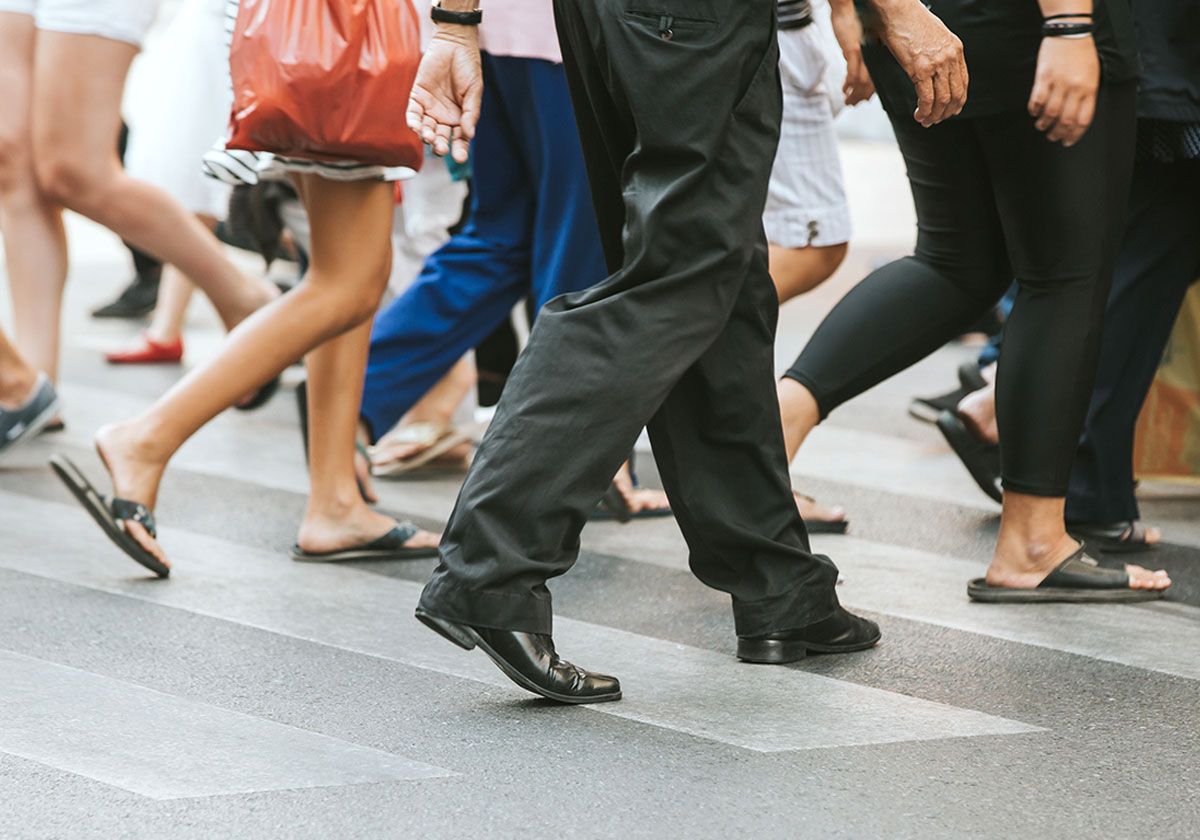
Drivers do not, in most situations. Florida Statute 316.130 requires that at an intersection with a traffic control signal, “the driver of a vehicle… shall stop before entering the crosswalk and remain stopped to allow a pedestrian” to cross.
Two words in that sentence do a lot of work: remain stopped. A driver who stops, then creeps forward while someone is still crossing, has violated the statute even if they never accelerated.
The same statute recognizes unmarked crosswalks. Where sidewalks meet at an intersection, a crosswalk exists in law whether or not anyone painted lines on the pavement. Drivers frequently do not know this, and neither do the adjusters evaluating the claim.
Pedestrians carry duties too. The statute says no one may “suddenly leave a curb or other place of safety and walk or run into the path of a vehicle which is so close that it is impossible for the driver to yield.” That clause is the source of nearly every defense in these cases.
Hit Outside a Crosswalk: What Changes
You may still have a claim. Crossing outside a crosswalk means you owed the right of way to vehicles on the roadway, but it does not give a driver permission to hit you.
Drivers have an independent duty to use due care, to watch for people on the road, and to sound a horn when necessary.
Federal safety guidance from NHTSA describes the same obligations in practical terms: slow down, stop well back from crosswalks, never pass a vehicle stopped at one, and take extra care after dark. A driver speeding, distracted, or driving with headlights out does not escape responsibility because the person they hit was mid-block.
What it does affect is the split. Florida applies modified comparative negligence under Florida Statute 768.81: your recovery is reduced by your percentage of fault, and anyone found more than 50 percent responsible recovers nothing.
In pedestrian cases that line decides everything, which is why the defense works so hard to push a walker past it. A claim that should settle at a reduced percentage gets argued as a total loss, and the difference is the quality of the evidence, not the truth of what happened.
Which Insurance Pays When a Car Hits a Pedestrian?
 Your own auto policy usually pays first, even though you were on foot. Personal Injury Protection follows you as a person, so the PIP on your car insurance covers your initial treatment under Florida Statute 627.736, paying 80 percent of medical bills and 60 percent of lost wages up to $10,000.
If you do not own a car, a relative’s policy in your household may cover you. If nobody in the household has coverage, the PIP on the vehicle that struck you may apply to a Florida resident pedestrian.
The rest of the claim goes against the driver’s bodily injury liability coverage, and Florida does not require drivers to carry any. When they do not, or when they carry too little for a serious injury, your own uninsured and underinsured motorist coverage becomes the claim. Pedestrians can use UM coverage from their auto policy, which surprises almost everyone.
The 14-day rule applies here exactly as it does in a car crash. Initial medical care has to happen within 14 days of being struck or the PIP benefits may not apply at all.
Not sure what coverage you have? Send us your declarations page and we will read it for you.
Proving What Happened When There Is No Second Vehicle
With physical evidence, because a pedestrian crash leaves more of it than people assume.
The point of impact on the vehicle tells a reconstructionist where you were relative to the car. Damage height and pattern indicate whether you were struck while standing, stepping, or already in the roadway. Windshield contact suggests speed, and so does throw distance from the impact point to where you came to rest.
The vehicle’s event data recorder stores speed, braking, and throttle in the seconds before impact, which answers whether the driver reacted at all. A driver who never braked was not looking.
Around the scene, the useful material disappears fast: residential doorbell and dashboard cameras, business surveillance facing the street, the 911 audio with the caller’s description before anyone had a story, and the condition of the streetlights that night, which the city or the utility can confirm from maintenance records.
We ask for all of it, and we ask early, because most of these sources overwrite within days or weeks.
Why North Port Roads Are Hard on People Who Walk
Because the road design assumes everyone is driving.
US-41, the Tamiami Trail, runs through town with long distances between signalized crossings, continuous driveway turns, and speeds that stay high between lights. Anyone crossing to a bus stop or a shopping plaza is choosing between a long walk to a signal and a shorter route across live lanes.
Price Boulevard, Sumter Boulevard, and Toledo Blade Boulevard carry fast traffic across a street grid with gaps in the sidewalk network and limited lighting between blocks. Walkers end up on shoulders and grass edges by default.
The timing matters as much as the geography. Early morning and dusk are when North Port residents walk, and when low sun and fading light make people hardest to see. From late fall through spring, seasonal traffic adds drivers who do not know the roads, often in rental cars with out-of-state insurance.
Retirees make up a large share of the people walking these routes, and injuries that a younger body absorbs become permanent at 70.
What to Do in the Days After Being Hit
Most people struck by a car are not in a position to do anything at the scene, and that is fine. The work starts once someone can think.
Get the crash report number and order the full report through the state’s traffic crash report portal, not the summary the insurer sends. Read what the driver told the officer, because that statement is the version everyone else will start from.
Write down what you remember while it is fresh: where you stepped off, what the signal showed, what you saw before impact, where the sun was. Memory for these details fades within days, and yours may be the only account that competes with the driver’s.
Photograph your injuries as they develop, including bruising that darkens over a week, and keep every discharge instruction, prescription, and appointment record.
Do not give a recorded statement to the driver’s insurance company. Do not accept an early check. And tell your own auto insurer about the crash promptly, because your PIP and uninsured motorist coverage may both be part of the claim and most policies require notice.
The Injury Pattern in Pedestrian Crashes

The pattern is consistent enough that reconstructionists use it to determine impact speed.
Lower leg fractures come first, from bumper contact. Then hip and pelvic injuries, particularly in older adults, where the recovery is long and sometimes incomplete. Then the second impact, when the body strikes the hood or windshield, which produces head, shoulder, and rib injuries.
The third impact is the ground, and it is often the worst one. Traumatic brain injuries, skull fractures, and spinal injuries usually come from that landing rather than from the vehicle.
Internal injuries are common and easy to miss in the first hours. So are fractures that go undetected while attention is on a more obvious wound.
Many of these injuries end with permanent limits: a leg that does not bear weight the same way, a shoulder with restricted motion, memory problems that do not resolve. Those permanent effects are what a claim has to account for, well beyond the hospital bill.
How the Claim Moves Forward From Here
In three stages, and the first one runs while you are still in treatment.
Investigation comes first: the report, the vehicle, the scene, the video, the lighting records, and every insurance policy that could respond, including your own. If liability is contested, a reconstructionist is brought in early, while the physical evidence still exists.
The medical stage sets the timeline. A claim cannot be valued responsibly until your doctors know whether you will recover fully or live with limits, and in serious pedestrian cases that answer can take a year. Where permanent care is likely, a life care plan projects those costs, and a vocational assessment addresses what work is still possible.
The resolution stage starts with a demand package and usually involves several rounds of negotiation. If the carrier will not move, filing suit before the two-year deadline becomes the next decision, and most filed cases still settle without a trial.
Throughout, our office deals with the adjusters, the medical providers, and the billing so that the family can focus on the person who was hurt.
What Is a Pedestrian Injury Claim Worth?
More than most people expect, because the injuries are worse. There is no bumper between a person and the car, so these cases involve fractures, head injuries, internal injuries, and long recoveries far more often than vehicle-to-vehicle crashes.
Serious pedestrian injuries also clear Florida’s injury threshold for pain and suffering damages without argument, which is not always true in a low-speed collision between two cars.
A full claim should account for surgery already performed and surgery still ahead, rehabilitation, home modifications, in-home care, mobility equipment, lost income and lost earning capacity, and the parts of daily life that do not come back.
Boohoff Law recovered $1,250,000 for a pedestrian struck near a marked crosswalk. Past results do not guarantee or predict similar outcomes in future cases, and every claim depends on its own facts and the insurance available.
Who Else Can Be Responsible Besides the Driver?
More parties than most people consider, and finding them is often what makes a serious claim payable.
The driver’s employer, when the driver was working. A commercial policy usually sits behind a delivery vehicle, a service van, or a company truck, and the employer can be directly responsible for how the driver was operating.
The vehicle’s owner, when someone else was driving. Florida’s dangerous instrumentality doctrine makes a vehicle owner responsible for the negligence of a person they allowed to drive it, which frequently opens a second policy when the driver was borrowing a car.
A property owner or association, where the hazard was on their land. Overgrown landscaping blocking a sight line at a community entrance, a poorly designed parking lot exit, or an unlit private walkway can all contribute, and those owners carry liability insurance.
A government entity, where the road itself created the danger. A missing crosswalk at a known crossing point, a signal timing that gives pedestrians too little time, or streetlights that were reported out and never repaired. These claims require written presuit notice, run into damage caps, and follow their own timeline, so they need to be identified early.
Bars and restaurants, in limited circumstances, where alcohol was served to someone Florida law protects against being served. Those claims are narrow and fact-specific, and worth evaluating rather than assuming.
How We Handle North Port Pedestrian Cases
We start with preservation and the scene, while both still exist. Then we open your PIP claim so treatment is covered, identify every policy in reach, including your own UM coverage, and deal with the adjusters directly.
Families often call us for someone who is still in the hospital. That is fine. We can begin the evidence work before the injured person is well enough to talk to anyone, and it is usually better that way.
Our North Port office is at 14900 Tamiami Trail. We work in English and Spanish, and we come to homes and hospital rooms.
No Fees. Unless We Win.
Recovery is personal. Let us handle the insurance side while you heal.
Questions After a Pedestrian Crash in North Port
It is an argument, not a rule. Florida law does not require pedestrians to wear reflective clothing on a public street, and a driver’s duty to watch the road does not switch off after sunset.
What matters is whether the driver was traveling at a safe speed for the conditions and paying attention, which is usually answered by the vehicle data and the lighting evidence rather than by your jacket.
Often yes, through your own uninsured motorist coverage, which is designed for hit-and-run collisions where the driver is never identified. Report it to police immediately and give them every detail you remember about the vehicle. Nearby homes and businesses frequently have footage that identifies a car when a witness cannot.
The insurance works the same way, and the fault analysis changes. Parking lots are private property where right-of-way rules are less formal, so these cases rely more on video and on where each party was moving. The property owner can also share responsibility if the layout, lighting, or sight lines created the hazard.
It usually adds coverage. A driver working for a company may be covered by a commercial policy on top of their personal insurance, and the employer can be directly responsible for how the driver was operating. Delivery apps carry their own tiered coverage that depends on whether a delivery was active, so the timing of the trip needs to be established early.
Not for your right to bring a claim. The driver’s insurance still applies, and the association or property owner may share responsibility if signage, speed control, lighting, or landscaping contributed to the collision. Private communities also tend to have camera coverage at their entrances, which is worth requesting before the system overwrites it.
Usually yes. Once you are outside the vehicle and on foot, you are generally treated as a pedestrian for insurance purposes, which brings your own PIP and uninsured motorist coverage into play alongside the at-fault driver’s liability coverage. Where you were standing and how visible your door or hazard lights were will come up, so photographs of the position of both vehicles matter.
That claim works differently, because many golf carts are not covered by auto insurance at all. Coverage may come from a homeowners policy, a community association policy, or a business policy if the cart belonged to a golf course or resort. Florida also has rules about who may operate them and where, and a violation of those rules supports the claim.
Get Someone on This Before the Story Sets

The driver’s version becomes the official version when nobody challenges it. Camera footage ages out, the vehicle gets repaired, and the streetlight that was dark that night gets fixed the following week.
Send us what you have, even if it is only a report number and the name of a hospital. We will tell you what can still be recovered, what your claim looks like, and whether you need a lawyer for it.
For a broader view of how injury claims work in Sarasota County, including deadlines and coverage, see our North Port personal injury lawyer page. If a vehicle collision was involved rather than a pedestrian impact, our North Port car accident lawyer page covers those claims.
Free consultation, 24 hours a day.

Recovery is personal.

We’re here for you.
We’re close by. And if you can’t make it to us, we’ll meet you where you need us, at home or in the hospital.











© 2025 Boohoff Law, P.A. — Auto Accident Lawyers.
The information on this website is for general information purposes only. Nothing on this site should be taken as legal advice for any individual case or situation. This information is not intended to create, and receipt or viewing does not constitute, an attorney-client relationship.
Disclaimer: The results and testimonials presented on this website are based on the unique facts and circumstances of each case. Past results do not guarantee or predict similar outcomes in future cases. Every legal matter is different, and you should not rely on prior case results as an expectation of future performance.
