Amazon deliveries in Olympia often involve drivers delivering Amazon-marked packages, sometimes wearing self-acquired or locally provided Amazon-branded gear. After a crash, Amazon frequently argues that the driver is an independent contractor rather than its employee.
Amazon Flex drivers use personal vehicles and sometimes appear to be company representatives. The legal question is whether Amazon’s branding creates liability despite independent-contractor status. The answer affects which insurance applies and whether claims can reach Amazon’s resources under apparent-authority theories.
Key Takeaways: Amazon Flex Driver Accidents in Olympia
- Amazon Flex drivers are independent contractors using personal vehicles—not Amazon employees—creating insurance gaps when accidents occur despite Amazon’s visible branding.
- Apparent authority doctrine may hold Amazon liable when its branding (packages, app) creates reasonable public belief that Flex drivers are Amazon agents, even if contracts say otherwise.
- Insurance coverage is often inadequate—Flex drivers carry personal auto policies (Washington minimum: $50,000/$100,000), while Amazon provides commercial auto liability coverage through its insurer up to $1 million during active delivery blocks, creating disputes over coverage timing.
- Visual branding creates the liability trap—Amazon benefits from brand visibility and public trust while contractually distancing itself from driver negligence.
- Evidence preservation is critical—photos of Amazon packages, delivery app status, and Amazon notifications must be documented immediately because these elements may help prove apparent authority claims.
Why Amazon Flex Accidents Create Unique Liability Confusion
Amazon’s gig delivery model creates confusion that traditional employment relationships avoid. The combination of visible branding and independent contractor status leaves accident victims uncertain about who bears responsibility and which insurance policies apply.
The Visual Branding Problem
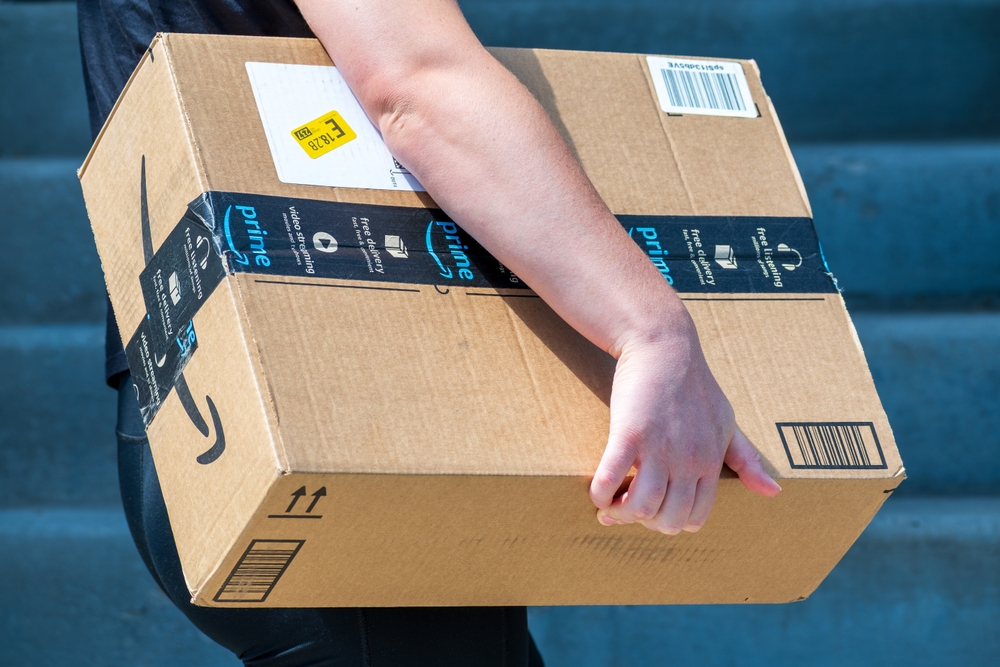
Amazon Flex operates differently than traditional delivery services. Flex drivers are gig workers who use personal vehicles—their own Hondas, Toyotas, and Subarus—to deliver packages fulfilled through Amazon, most of which display Amazon branding. They access delivery blocks through the Amazon Flex app, pick up packages from Amazon facilities, and deliver to customers’ doors.
The confusion arises because Flex drivers sometimes wear Amazon-branded vests or gear they acquire independently or through temporary site distribution, but Amazon does not officially require or routinely issue uniforms for Flex drivers. Most deliveries involve Amazon-branded packages, though Flex drivers may occasionally handle items from third-party merchants fulfilled through Amazon’s platform. They follow routes guided by Amazon’s app. Customers receive automated delivery notifications such as “Your package is out for delivery” or “Your driver is nearby.”
To the public, these drivers appear to be Amazon representatives, similar to drivers in branded Prime vans. But legally, Amazon classifies Flex drivers as independent contractors. When accidents occur, Amazon points to contract language stating drivers are not employees or agents. This creates an “Amazon vest” liability trap: Amazon benefits from its branding while distancing itself from crash liability.
How Olympia’s Geography Increases Flex Driver Accidents
Thurston County presents unique challenges for Flex drivers who are unfamiliar with local roads. The Westside shopping corridor around Costco and Target generates high delivery density. The Hawks Prairie commercial district sees constant delivery traffic. Downtown Olympia’s one-way streets and limited parking create rushed delivery attempts. Intersections such as Capitol Boulevard and Harrison Avenue, the Pacific Avenue corridor, and the US-101 and Black Lake Boulevard SW interchange are accident-prone areas where delivery pressure meets complex traffic.
Flex drivers often accept blocks covering unfamiliar areas. Unlike DSP drivers who develop route familiarity, Flex drivers may deliver in Olympia one day, Lacey the next, and Tumwater after that. This unfamiliarity, combined with app-driven time pressure and personal vehicle operation, creates accident risks—especially during the fourth-quarter holiday season, when delivery volumes and Flex driver activity increase.
Understanding Independent Contractor Status vs. Apparent Authority
Amazon’s business model relies on independent contractor classification, but Washington law recognizes exceptions when companies create the appearance of employment or agency. Understanding both concepts is essential for determining available legal remedies.
What Independent Contractor Status Means
Amazon’s contract with Flex drivers explicitly states they are independent contractors, not employees or agents. Legally, this distinction matters.
Independent contractors generally make their own decisions about how, when, and where to work. They use their own equipment (vehicles). They can accept or decline work. The hiring party (Amazon) typically isn’t liable for their negligence.
Employees or agents, by contrast, work under the hiring party’s direction and control. The employer typically faces vicarious liability for employee negligence under respondeat superior.
Amazon structures Flex to emphasize independence: drivers choose which delivery blocks to accept, use personal vehicles, set their own schedules, and receive 1099 tax forms rather than W-2s.
Why Apparent Authority May Override Contract Labels
Washington recognizes apparent authority (also called ostensible agency). A company may be liable even without an actual agency relationship if:
- The principal holds the individual out as an agent—through branding, packages, or other representations
- A reasonable person relies on that appearance—believing the individual represents the principal, and the injured party must show actual reliance on that belief when the injury occurred
- The injured party must also prove actual reliance on that appearance when engaging or interacting with the apparent agent
- That reliance leads to injury or harm
Amazon Flex presents apparent authority factors
Amazon holds drivers out as representatives:
- Most packages bear Amazon branding exclusively
- Customers receive automated delivery notifications such as “Your package is out for delivery” or “Your driver is nearby”
- Flex app interface reinforces Amazon association
- The public often cannot distinguish Flex, DSP, and employee drivers
Reasonable reliance:
- When you see Amazon packages and receive Amazon notifications, you reasonably believe the driver represents Amazon
- Amazon’s brand presence leads many people to rely on its involvement
- No visible indication differentiates independent contractor Flex drivers from employee drivers
- Amazon’s branding intentionally creates an association for business benefit
Resulting harm:
- Accidents occur while drivers are performing Amazon deliveries
- Victims suffer injuries believing Amazon’s resources back the driver
- Insurance gaps leave victims undercompensated
The apparent authority doctrine provides a legal framework for pursuing Amazon when facts support the claim.
The Insurance Gap Reality in Amazon Flex Accidents
Multiple insurance policies may apply, but disputes often arise over which policy is primary and when it applies. Understanding these layers helps victims identify all potential sources of compensation.
What Insurance Actually Covers Flex Accidents
Understanding available insurance is critical for Olympia Flex accident victims.
Flex Driver’s Personal Auto Insurance:
- Washington requires minimum liability: $50,000 per person / $100,000 per accident under RCW 46.29.090 (increased from $25,000/$50,000 to $50,000/$100,000 effective July 28, 2023)
- Many Flex drivers carry only these minimums
- Personal policies may exclude commercial use—including exclusions for using a personal vehicle to deliver goods for compensation—leaving coverage gaps even at these low limits
- $50,000–$100,000 is often insufficient for serious injuries involving surgery, lost wages, or permanent disability
Amazon’s Commercial Insurance:
- Amazon provides commercial auto liability coverage through its insurer, up to $1 million during active delivery blocks
- Coverage applies while the driver is actively delivering packages as defined in Amazon’s policy—from pickup of the first package through completion of the final delivery within a scheduled block
A critical limitation is timing: disputes often arise over whether the driver was “actively delivering.” Gaps exist between accepting blocks and picking up packages, between deliveries, and after completing final delivery.
When Your UM/UIM Coverage Becomes Critical
If the Flex driver is underinsured or coverage is disputed, your uninsured/underinsured motorist (UM/UIM) coverage may provide your only realistic recovery. Washington insurers must offer UM/UIM and document any written rejection (RCW 48.22.030).
Check your auto insurance declarations page. If you declined UM/UIM or selected low limits, serious injuries from Flex accidents may exceed available coverage. This gap between minimal personal coverage, disputed commercial coverage, and your policy limits creates a financial risk.
What to Do After an Olympia Amazon Flex Driver Accident
Taking the right steps immediately after an accident helps to preserve your legal rights and strengthen potential claims. Time-sensitive evidence can disappear within days or weeks without proper action.
Contact an Attorney Within Days
Delivery-app data may be retained only for a limited period and can be overwritten or inaccessible without timely preservation requests. Your attorney will send preservation letters to Amazon and the driver demanding:
- Flex app data showing delivery block status
- GPS tracking for the accident timeframe
- Delivery route and package information
- Performance metrics and monitoring records
- Contract terms and branding requirements
This evidence may disappear within weeks without legal preservation demands. The apparent authority claim depends on proving Amazon’s control and branding—evidence Amazon possesses.
Understanding the Legal Process
During the investigation phase, your attorney will determine whether the crash occurred during an active delivery block, which may trigger Amazon’s commercial insurance, or between blocks, which may leave only personal insurance. Delivery block status is often disputed, requiring discovery.
Potential defendants include the Flex driver (direct negligence), Amazon (under apparent authority and control theories), and both drivers’ insurance companies.
Insurers may dispute several aspects, such as whether Amazon’s commercial policy applies (based on delivery block status), whether the driver’s personal policy covers commercial activity (due to exclusions), and whether apparent authority creates Amazon liability (a legal question).
If insurers deny responsibility or offer inadequate settlements, litigation may be necessary. This could involve obtaining Amazon’s internal records through discovery, proving apparent authority through branding evidence, establishing delivery block status through app data, and demonstrating inadequate total insurance coverage.
FAQ About Amazon Flex Driver Accidents
How long do I have to file a lawsuit after a Flex-driver crash?
Motor vehicle and other personal injury claims generally must be filed within three years of the crash under Washington’s statute of limitations, RCW 4.16.080.
Can I get punitive damages in Washington for these crashes?
Generally no. Washington does not permit punitive damages unless expressly authorized by statute or applicable federal law; recovery focuses on compensatory damages.
Will Personal Injury Protection (PIP) or health insurance affect my settlement?
PIP, if included in your policy, can cover medical bills and certain wage losses regardless of fault, subject to your coverage limits. Health insurers may assert reimbursement (subrogation) from your settlement; coordinating and negotiating liens helps increase your net recovery.
What if the driver’s personal insurer denies coverage due to a business-use exclusion?
If the denial is valid, responsibility may shift to Amazon’s commercial policy only if the driver was “on delivery” within a Flex block. Otherwise, you may need to use uninsured/underinsured motorist (UM/UIM) coverage.
Can we obtain Ring/doorbell, store, or traffic-camera footage?
Often yes. Prompt preservation requests to homeowners, businesses, and agencies can secure video before it’s overwritten; subpoenas may then obtain copies.
What electronic data besides the Flex app can help my case?
Dashcam files, phone location data, vehicle infotainment logs, and third-party telematics can show speed, braking, and route. Preserve devices and avoid altering data.
How are property damage totals handled if my car is a total loss?
You’re generally entitled to fair market value immediately before the crash, plus tax and title fees. You may also claim rental or loss-of-use, and diminished value when repairs don’t restore pre-loss value.
Get Legal Help for Your Olympia Amazon Flex Accident
Boohoff Law handles complex delivery driver accidents throughout Olympia and Thurston County. We understand how Amazon Flex operates, what apparent authority requires, and how to preserve critical app data and branding evidence before it disappears. We’ve helped clients navigate insurance coverage disputes, independent contractor defenses, and the timing questions that determine which policies apply.
These cases turn on prompt evidence preservation and careful insurance sequencing. Early legal holds, prompt video collection, and clear proof of delivery status often determine whether commercial coverage applies and how much you can recover.
If an Amazon Flex driver caused your accident in Olympia, Lacey, Tumwater, or anywhere in Thurston County, contact Boohoff Law 24/7 at (877) 999-9999 or contact us online for your free, confidential consultation. We handle delivery driver accident cases on a contingency basis—you pay nothing unless we win. Don’t let the “Amazon vest” trap cost you fair compensation. You’re better off with Boohoff.

Free Consultation
We Are Here For You 24/7
Reviews

– Elissa M.
“Really pleased with Boohoff Law! Received immediate responses when I had any questions. Treated amazingly by all staff … made this process a true breeze!”
– Caitlyn M.
– Brandy K.
Related Posts
Who Is Liable for a Trailer Detachment Accident in Washington?
Who’s Liable in a Lumber Truck Accident Near Olympia, WA?
What to Do When Your Total Loss Offer Is Too Low in Olympia, WA
Recovery is personal.
We’re here for you.
We’re close by. And if you can’t make it to us, we’ll meet you where you need us, at home or in the hospital.










© 2025 Boohoff Law, P.A. — Auto Accident Lawyers.
The information on this website is for general information purposes only. Nothing on this site should be taken as legal advice for any individual case or situation. This information is not intended to create, and receipt or viewing does not constitute, an attorney-client relationship.
Disclaimer: The results and testimonials presented on this website are based on the unique facts and circumstances of each case. Past results do not guarantee or predict similar outcomes in future cases. Every legal matter is different, and you should not rely on prior case results as an expectation of future performance.
