No Fees
Unless We Win
Millions Recovered!

Seattle Truck Accident Lawyer
Most people assume a truck crash claim is a claim against the driver. It rarely is. A Seattle truck accident lawyer is usually dealing with a motor carrier, its insurer, a safety department, and sometimes a broker or a cargo loader who never came near the scene.
Boohoff Law handles those claims across King, Pierce, and Snohomish counties on a contingency fee, with a free case review.
The reason that matters on day one is evidence. The carrier’s investigators are often at the scene the same afternoon. The information that decides your case sits on the truck and in the company’s servers, and some of it can be erased legally if nobody asks for it in time.
Available 24/7
Our specialists are here to listen and help for free, no strings attached.
877-999-9999
for a free consultation
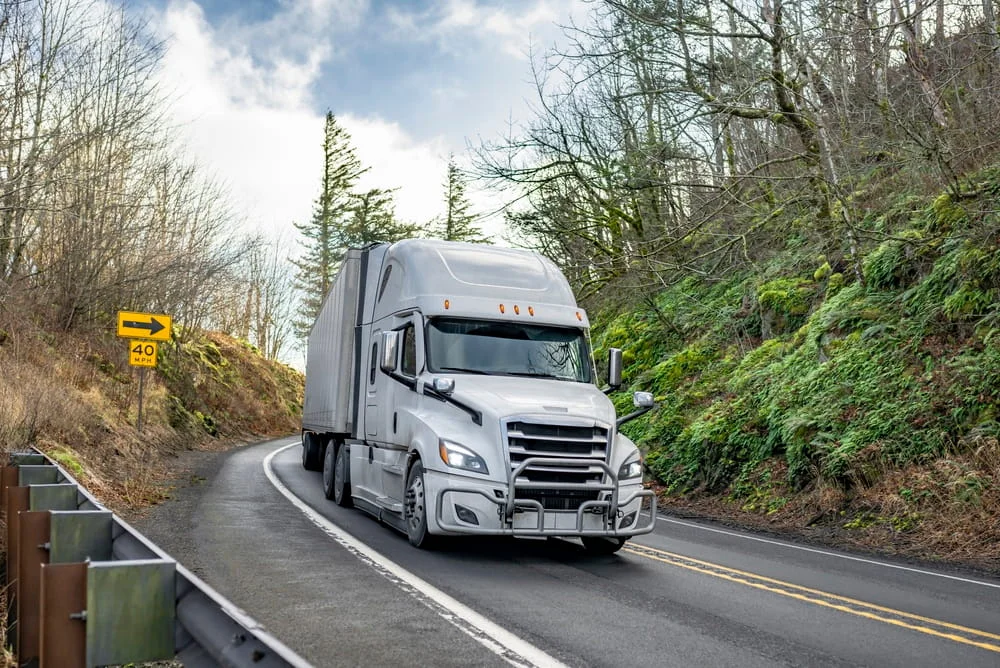
Who Is Liable After a Seattle Truck Accident?
Liability can fall on the driver, the trucking company, the maintenance provider, the company that loaded the trailer, or the broker that arranged the freight, depending on what caused the crash. More than one of them is often responsible for the same collision.
That is the practical difference between a truck case and a car case. Finding fault is not one question, it is several, and each answer can add an insurance policy.
| Who may be responsible | What usually puts them there |
|---|---|
| The driver | Speed, fatigue, phone use, following distance, impairment |
| The motor carrier | Hiring a driver with a bad record, pressuring schedules, skipping inspections, poor training |
| A maintenance contractor | Brake or tire work that was never done or done badly |
| The shipper or loading crew | Overloaded, unsecured, or unbalanced cargo that shifted |
| A broker | Arranging freight with a carrier it knew or should have known was unsafe |
| A parts manufacturer | A defective component that failed before the crash |
A driver hauling under a carrier’s authority makes that carrier responsible for the driver’s negligence in most cases, even when the driver is labeled an independent contractor. The label on the paperwork does not decide it.
The Evidence That Disappears First
The electronic records vanish fastest. Federal rules require carriers to retain some documents for six months, and others for far less. Dash camera video is commonly overwritten on a loop within days.
A spoliation letter, sometimes called a preservation letter, is a formal demand that the carrier keep everything connected to the crash. It is the first document we send, and once it is delivered, destroying that evidence carries consequences in court.
What Is the Truck’s Black Box and What Does It Record?
The engine control module, often called the black box, stores data from the moments before impact: speed, throttle position, brake application, hard-braking events, and sometimes seat belt use.
That data is owned by the carrier, sits inside a vehicle they control, and can be lost when the truck is repaired or returned to service. Getting a protocol in place for a joint download, with both sides present, is often the single most important step in the first two weeks.
In our experience, this is where cases turn. When the physical evidence contradicts the driver’s account of speed or braking, the argument about fault usually ends.
The Records We Demand From the Carrier
The driver’s qualification file and hiring records, the drug and alcohol testing history, hours-of-service logs and the electronic logging device data behind them, dispatch and messaging records, the bill of lading and weight tickets, maintenance and inspection records for that tractor and trailer, and the carrier’s own post-crash investigation.
Most of that is only available through a lawsuit or a preservation demand. None of it is offered voluntarily.
How Do Federal Trucking Rules Affect a Washington Claim?
 Federal safety rules set the standard the carrier had to meet, and a violation is powerful proof of negligence. The Federal Motor Carrier Safety Administration, or FMCSA, is the agency that writes and enforces them.
Hours-of-service limits cap a property-carrying driver at 11 hours of driving after 10 consecutive hours off duty, inside a 14-hour on-duty window, with a 30-minute break required after 8 hours of driving and a 60- or 70-hour weekly ceiling. The FMCSA hours of service rules lay out how those limits work together.
Electronic logging devices made those hours much harder to fake, which is why the log data and the dispatch records need to be compared. A log showing a legal shift alongside fuel receipts and gate times showing something else is the kind of contradiction that changes a case.
Federal rules also require interstate carriers to hold minimum liability insurance, commonly $750,000 for general freight and higher for hazardous loads. Most serious crashes involve layered policies above that, which is why the coverage question is worth investigating rather than assuming.
Ask us to look at the carrier’s safety record before you talk to their adjuster.
Where Seattle Truck Crashes Concentrate
Seattle concentrates heavy freight into a few corridors, and those corridors are where the claims come from.
The Duwamish industrial area and the Port of Seattle terminals put drayage trucks, chassis, and container traffic onto surface streets shared with commuters. Short trips, tight turns, and blind spots produce right-turn and crossing collisions that look minor on paper and are not.
The I-5 and SR-99 interchange, the approaches to the West Seattle and Ship Canal bridges, and the grade coming into I-90 near Mercer Island create the other pattern: heavy vehicles that need distance to stop, in stop-and-go traffic that does not give it to them. Rain makes that worse for months at a time.
Loads coming off I-90 from the pass bring a third issue, fatigue at the end of a long run, arriving in the most congested part of the region.
How Does Fault Sharing Work If the Carrier Blames You?
Blaming the injured driver is standard practice in truck defense, and Washington law gives you room to survive it. Under the state’s pure comparative fault rule in RCW 4.22.005, your recovery is reduced by your percentage of fault, not eliminated.
Someone found 25 percent at fault for a lane change still recovers 75 percent of their damages. That is why the carrier’s investigators work so hard on the fault percentage, and why the reconstruction evidence matters as much as the medical records.
Washington gives you three years from the crash to file suit. Claims involving a public agency vehicle, such as a state or municipal truck, require a formal claim filing first and move on a shorter clock.
What If the Carrier Blames the Weather or Another Vehicle?
Those are the two standard defenses, and both are answerable.
The weather argument runs into a basic rule of commercial driving: conditions are part of the job. Federal safety rules require drivers to reduce speed in rain, fog, and ice, and to stop driving when conditions become too dangerous to continue safely.
In western Washington, rain is not an unexpected event, and a carrier arguing otherwise is arguing that its driver was going too fast for conditions.
The phantom vehicle defense is the other one. The driver says an unidentified car cut in front of the truck, which conveniently cannot be interviewed. Sometimes that is true, and sometimes it is a story assembled hours later.
The way through both is physical evidence. Braking data from the engine control module shows when the driver reacted and how hard. Following distance can be reconstructed from speed and impact location. Dash camera footage, when it exists and is preserved, usually settles the question outright.
Washington’s fault-sharing rule also limits the damage these defenses can do. Even if some blame is assigned elsewhere, your claim is reduced proportionally rather than eliminated.
What Is a Seattle Truck Accident Case Worth?
It depends on the injuries, the medical future, the income lost, and how many policies are available to pay. Truck cases usually carry higher values than car cases for one structural reason: the weight difference produces worse injuries, and the coverage behind the defendant is larger.
Serious cases are valued around the cost of a life after the crash, not the cost of the treatment so far. That means a life care plan for future medical needs, a vocational assessment if you cannot return to your trade, and an economist’s calculation of lost earning capacity.
Boohoff Law has recovered $27,000,000 in a catastrophic interstate collision and $1,100,000 in an interstate rear-end crash involving a commercial truck. Past results do not guarantee or predict similar outcomes in future cases, and every case depends on its own facts and available coverage.
Are Punitive Damages Available in Washington?
Generally no. Washington does not allow punitive damages in most personal injury cases, which surprises people who have read about verdicts from other states.
What the conduct does affect is leverage. A carrier that ignored a driver’s record, pushed an impossible schedule, or falsified logs is a carrier that does not want a jury hearing about it, and that shows up in the settlement rather than in a separate damage award.
The First 72 Hours After a Truck Crash
Get treated, and be thorough about it. Truck crash injuries are often worse than they feel at the scene, because adrenaline masks a lot and because internal injuries take time to announce themselves. Tell every provider that a commercial vehicle was involved, and describe every symptom rather than the worst one.
Do not give the carrier’s insurer a recorded statement. Trucking insurers move faster than auto insurers, and their adjusters often call within a day, while you are medicated and before you have seen a police report.
Photograph everything you can reach: both vehicles, the trailer number and the company name and USDOT number on the door, the scene, the road conditions, and any debris. Those numbers identify the carrier when the police report has them wrong, which happens more than it should.
Keep the vehicle. Do not authorize repairs or let an insurer total it and send it to salvage until it has been inspected and photographed, because the crush damage is evidence and the module inside it may hold data of its own.
Then get a lawyer in front of it quickly. The preservation demand only works if it arrives before the data cycles, and in a serious case that window is measured in days rather than weeks.
Truck Injuries Take Longer to Value, and Why That Protects You
Because the injuries are usually more severe, and severe injuries take longer to reach a stable medical picture.
An 80,000-pound vehicle transfers force that passenger cars are not built to absorb. Spinal injuries, traumatic brain injuries, multiple fractures, and internal organ damage are common in these crashes, and each one carries a treatment arc measured in months or years rather than weeks.
Valuing that claim before your doctors know where you are going to land is guessing with your own money. A settlement signed at month four does not reopen when the surgeon recommends a fusion at month nine.
For seriously injured clients, we bring in a life care planner to project future medical needs and a vocational evaluator to assess what work is still realistic. An economist then reduces that to numbers a carrier’s team has to respond to. That work takes time, and it is usually the difference between a claim valued at medical bills and a claim valued at a life.
What Happens If the Carrier Will Not Pay Fairly?
We file, and then the carrier has to answer questions under oath.
Litigation changes the information flow completely. Discovery gives us access to the driver’s qualification file, the company’s safety history, internal messages, and the maintenance records that are otherwise unavailable. Depositions put the driver, the safety director, and the dispatcher on the record about what they knew and what they required.
That is often where a case resolves. A carrier that was comfortable at a low number before discovery gets much less comfortable once its own documents are on the table.
Most cases still settle, frequently at mediation, without a trial. Filing is not a commitment to a courtroom, it is a way to get at the facts, and we talk through the timeline and the trade-offs with you before anything is filed.
How We Build a Seattle Truck Accident Case

We open with preservation, then reconstruction, then the paper trail. A crash reconstructionist visits the scene while the marks are still there. We obtain the police file and any traffic or business camera footage, and we identify every entity connected to the load, not just the name on the door of the truck.
Then we work the insurance question in the opposite direction from the carrier: how much coverage exists, layered across primary and excess policies, and which of the responsible parties brings their own.
While that runs, our office handles your medical side. Your treatment gets documented properly, your providers get the records requests they need, and you get one person to call who knows where your file stands.
Boohoff Law has an office at 920 5th Avenue, Suite 1530, in downtown Seattle, and attorneys admitted in Washington and Florida. We handle these claims in English and Spanish. If you cannot get to us, we will come to you at home or at the hospital.
Free consultation, available around the clock. You’re better off with Boohoff.
Questions People Ask After a Truck Crash in Seattle
Often yes, and sometimes better. Many delivery and box trucks operate under the same federal rules, carry commercial policies, and run telematics that track speed and braking. The vehicle being smaller does not make it a personal auto claim, and treating it like one is how coverage gets left behind.
Be careful. An offer to cover treatment early is sometimes genuine and sometimes tied to a release or to control over which doctors you see. Read what comes with the money, or have someone read it for you, before anything is signed or deposited.
Not necessarily. A traffic citation is a criminal or infraction matter with its own standard of proof, and a dismissal there does not decide the civil claim. Civil liability is proven by different evidence, including data and records that the traffic court never saw.
Those claims still proceed, though the investigation changes. Camera coverage is usually better on terminal property, access to it is usually harder, and the property operator may share responsibility for the traffic design. Getting a records request in early matters more in these cases than almost any other.
No. A fatal truck crash produces a wrongful death claim, which has its own rules about who may file and what can be recovered, and it usually requires opening an estate first. Our Seattle wrongful death lawyer page explains how that process works in Washington.
Nothing upfront. Our fee is a percentage of the recovery, agreed in writing before we start.
The costs of building the case, including reconstruction, records, and expert analysis, are advanced by the firm rather than billed to you along the way. Truck cases carry higher costs than car cases, which is exactly why the fee arrangement matters, and we go through the numbers with you before you sign anything.
Start With One Conversation

You do not owe us anything for a first conversation, and you will not get a sales pitch. We will tell you what evidence needs to be secured this week, what the carrier is likely doing right now, and whether your claim needs a lawyer at all.
If the crash involved a passenger vehicle rather than a commercial rig, our Seattle car accident lawyer page covers how those claims work. If a trailer lost control and folded against the tractor, jackknife truck accidents raise their own questions about braking, load securement, and road conditions.
Send us your crash details today and we will tell you what to preserve first.
No Fees. Unless We Win.

Recovery is personal.

We’re here for you.
We’re close by. And if you can’t make it to us, we’ll meet you where you need us, at home or in the hospital.












© 2025 Boohoff Law, P.A. — Auto Accident Lawyers.
The information on this website is for general information purposes only. Nothing on this site should be taken as legal advice for any individual case or situation. This information is not intended to create, and receipt or viewing does not constitute, an attorney-client relationship.
Disclaimer: The results and testimonials presented on this website are based on the unique facts and circumstances of each case. Past results do not guarantee or predict similar outcomes in future cases. Every legal matter is different, and you should not rely on prior case results as an expectation of future performance.
