No Fees
Unless We Win
Millions Recovered!

Kennewick Rideshare Accident Lawyers
A rideshare trip in the Tri-Cities is rarely a six block hop through a dense downtown. It is a bridge crossing, an airport run out to Pasco, a late shift ending near Hanford, a highway leg at 60 miles an hour. Same app, different physics, and a much harder impact when something goes wrong.
If you have been searching for a Kennewick rideshare accident lawyer, the question underneath that search is almost always the same: whose insurance pays for this? Boohoff Law answers that first, whether you were the passenger, the driver of the car that got hit, or someone an Uber driver ran into on the way to a pickup. Our Kennewick personal injury attorney page covers the rest of our work out here.
Washington law decides that question, not the app and not the adjuster.
Available 24/7
Our specialists are here to listen and help for free, no strings attached.
877-999-9999
for a free consultation
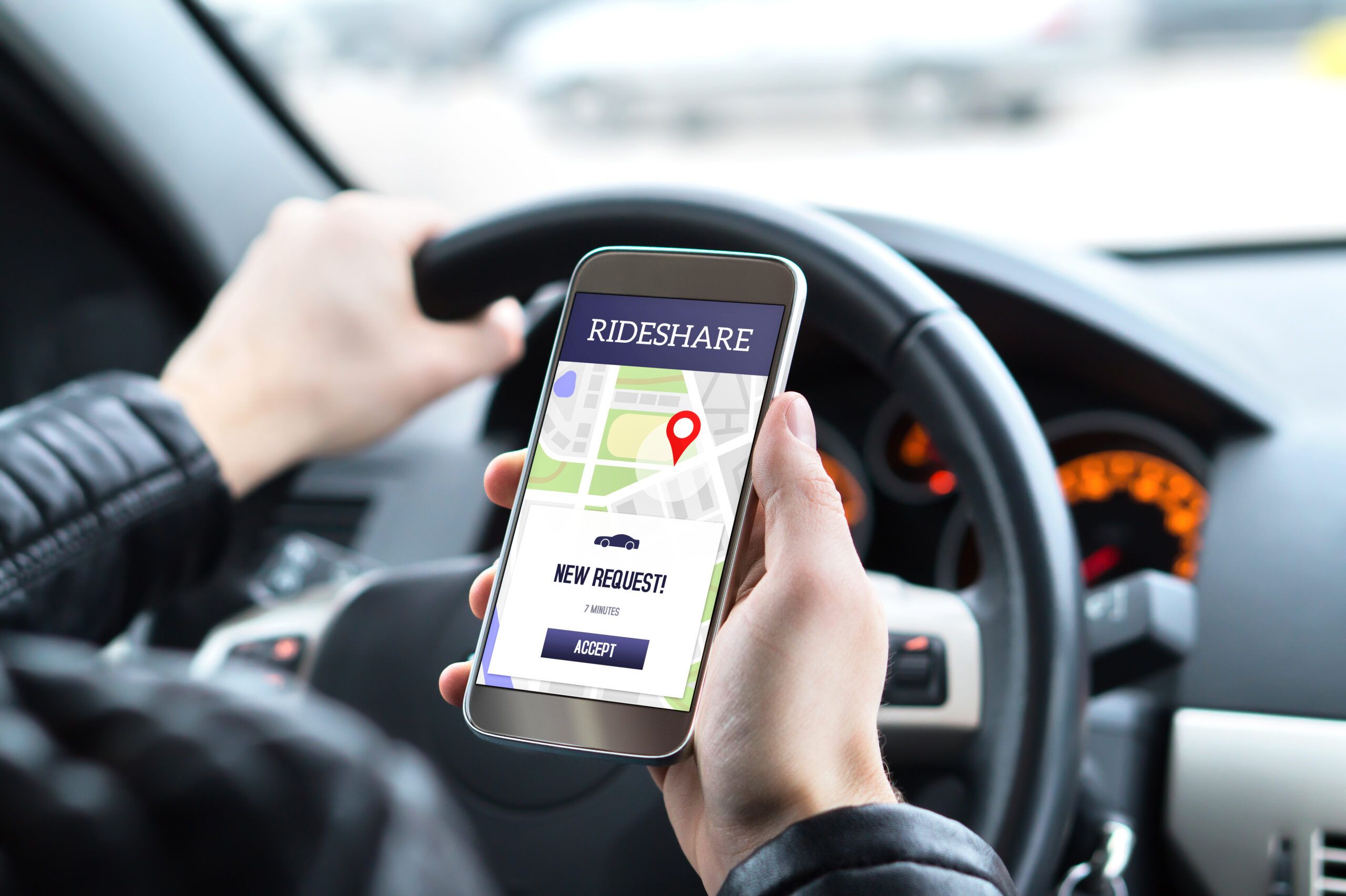
Why a Rideshare Crash in the Tri-Cities Is Not a City Rideshare Crash
Rideshare crashes in Kennewick, Pasco and Richland happen on Columbia River bridge crossings, on wide retail arterials and at highway speed, not in slow downtown traffic. That changes how many vehicles get pulled in and how much insurance it takes to cover the loss.
It also means the driver who caused your crash is frequently not the rideshare driver at all, and the question stops being how much Uber carries and becomes how many policies we can reach.
The Three Bridges Shape Every Trip and Every Investigation
Every cross-river trip in the Tri-Cities funnels through three Columbia River crossings: the I-182 Bridge, made up of the Lee and Volpentest Bridges; the US 395 Blue Bridge, formally the Pioneer Memorial Bridge, linking Pasco and Kennewick; and the Cable Bridge on SR 397. That is the whole list, and one incident on any of them reroutes an entire metro area.
The bridges matter twice over. The Blue Bridge is a four lane arch truss span from the early 1950s, and a crossing like that squeezes traffic into a narrow throat, so a crash near one pulls in more vehicles and more insurance companies. And a ride that starts in Kennewick can end on the Pasco side, which moves the case into a different county.
Highway Speed Changes the Injury and the Insurance Math

Most Tri-Cities rideshare miles are highway miles, and that changes both how badly people get hurt and how much insurance a claim needs. A crash at 60 miles an hour on I-182 or US 395 is not a fender bender, and it is not a $25,000 claim.
The geography offers no slow alternative. I-182 and US 12 carry the cross-river traffic between Richland and Pasco, SR 240 is the Richland to Kennewick connector with recurring multi vehicle backups, and W Clearwater Avenue and Columbia Center Boulevard are where Kennewick intersection collisions concentrate. Harvest season adds heavy agricultural trucks on rural two lane roads and on US 395.
The commute pushes the same way. Hanford and Pacific Northwest National Laboratory work is shift based and sits about thirty minutes northwest of Richland, so a ride at the end of a rotation is a highway run. At that speed the coverage math breaks fast, because Washington requires only $25,000 in bodily injury coverage per person and a highway injury with surgery and lost work passes that figure early.
Uber is available at Tri-Cities Airport in Pasco and Lyft is not listed there. There is no reliable public data on how many drivers work this market or how long a rider waits, and we will not invent one. What is not in doubt is that a ride out here covers more ground, at higher speed, than one in Seattle or Spokane.
Who Pays If the Other Driver Caused the Crash?
If another driver caused the crash, that driver’s liability insurance pays first, and Washington only requires them to carry $25,000 in bodily injury coverage per person. When that runs out, the next money almost always comes from underinsured motorist coverage, either the rideshare company’s or your own. Most serious Tri-Cities rideshare claims are funded by two or three policies, not one.
Nobody explains that at the scene. You get a business card and an insurance number, and it looks like one closed loop.
| Source | When it applies | Typical limit in Washington |
|---|---|---|
| The at-fault driver’s liability policy | Another driver caused the crash and carries insurance | State minimum is 25/50/10: $25,000 per person, $50,000 per accident, $10,000 property damage (RCW 46.29.090) |
| The rideshare company’s UIM | You were a passenger on a prearranged ride and the at-fault driver’s policy is too small to cover your loss | $100,000 per person and $300,000 per accident |
| Your own UIM or UM coverage | You carry it and the policies above do not cover the loss | Whatever limit you purchased. Insurers must offer it (RCW 48.22.030) |
| Your own PIP | You have an auto policy and did not reject PIP in writing | $10,000 in medical and hospital benefits at minimum (RCW 48.22.095) |
| The at-fault driver’s employer | The at-fault driver was working at the time of the crash | Varies widely. Certain for-hire interstate trucks must carry at least $750,000 under 49 CFR 387.9 |
Underinsured Motorist Coverage, in Plain Terms

UIM stands for underinsured motorist coverage and UM stands for uninsured motorist coverage. Both are add-ons to an auto policy that step in when the person who hurt you carried no insurance at all, or not enough of it.
Washington insurers have to offer you both, and the only way you do not have them is if you rejected them in writing. That rule is RCW 48.22.030. RCW stands for the Revised Code of Washington, the state’s book of statutes.
If you were a passenger when someone else hit your Uber or Lyft, two layers are worth checking: the rideshare policy’s UIM of $100,000 per person and $300,000 per accident during a prearranged ride, and whatever UIM your own auto policy carries on top of that.
Using your own UIM is not suing yourself. It is coverage you already paid for, and it exists precisely because the state minimum is so low.
When the At-Fault Driver Was Working
If the driver who caused the crash was on the clock, their employer’s commercial policy may be reachable too. That matters more here than in a city market, because so much of the traffic on US 395 and the rural two lane roads is commercial.
Federal rule 49 CFR 387.9 requires at least $750,000 in liability coverage for for-hire interstate carriers of general freight in vehicles with a gross vehicle weight rating, or GVWR, of 10,001 pounds or more. GVWR is the manufacturer’s maximum loaded weight. Whether the rule reaches your crash depends on the truck and the trip it was making, which we determine early rather than assume.
Does It Matter Whether It Was Uber or Lyft?
No. Washington regulates both as transportation network companies, or TNCs, meaning companies that connect riders and drivers through an app, and the same insurance statute applies to both. What differs is how their claims departments behave, not what they owe you.
The statute to know is RCW 46.72B.180. From the moment a driver accepts your ride until you step out of the car, the required coverage is a $1,000,000 combined single limit. While the driver is only logged in and waiting for a request, it drops sharply, to $50,000 per person, $100,000 per accident and $30,000 in property damage.
When the app is off entirely, no TNC coverage applies. Only the driver’s personal auto policy is in play, and personal policies commonly exclude losses that happen while a driver is logged in. That gap is why pinning down app status is the first thing we do, and why no page can tell you what your case is worth before someone reads the trip record.
Kennewick cases do not get handed off to a call center. Our office is on Okanogan Place, minutes from the Benton County Justice Center, and the person you talk to will look at your trip records with you. Reach us at +1 (877) 999-9999. No charge to look, any hour, English and Spanish.
What Freezing Fog Does to a Rideshare Claim
Weather does not cancel your claim. Freezing fog and black ice are the signature hazard of the Lower Columbia Basin, and insurers lean on them to argue that a crash was nobody’s fault. Washington law does not work that way, because every driver still has a duty to drive for the conditions that exist.
The National Weather Service issues freezing fog advisories here, and those mornings reliably produce multiple crashes across the Tri-Cities. Outlying roads add whiteout conditions and drifting snow. A rideshare driver crossing a bridge deck in freezing fog is on one of the first surfaces in the region to ice over.
Expect the adjuster to raise conditions anyway, and to suggest you share the blame. That argument carries less weight here than in most states, because Washington uses pure comparative negligence. Under RCW 4.22.005, fault on your part “diminishes proportionately the amount awarded … but does not bar recovery.”
Washington set no cutoff percentage at all. A partial fault argument shrinks a claim. It does not end one. And if you were a passenger, you were almost certainly not at fault for anything, which means the real fight is between the two drivers and it is theirs.
Where Would My Case Be Heard?
A Kennewick rideshare case is a Benton County Superior Court case, and the practical location for it is the Benton County Justice Center at 7122 W Okanogan Pl, Building A, Suite A130, in Kennewick. Benton County Superior Court also operates from the county seat courthouse in Prosser, at 620 Market St. Which building your case lands in should be confirmed before anything gets filed.
There is a widely circulated claim that one of those locations handles civil matters and the other criminal. We have not confirmed that division, so we will not state it as fact on a page you might rely on.
The county question is the one that catches people. If the impact happened on the Pasco side of the Blue Bridge or the I-182 Bridge, you are in Franklin County, not Benton County. That comes up constantly on airport runs, because Tri-Cities Airport is in Pasco.
The bridge you were on at impact can decide which courthouse hears your case. General information on the state court system is published at courts.wa.gov, but venue in a two county metro is not something to guess at.
What a Kennewick Rideshare Claim Is Worth
Washington puts no cap on noneconomic damages, so there is no ceiling on the pain and loss of normal life that never come with receipts. What a claim is worth depends on the injuries and on how much insurance can actually be reached, and out here that second piece usually decides the case.
The Washington Supreme Court struck that cap down in Sofie v. Fibreboard Corp. as a violation of the right to a jury trial, and the legislature repealed the old cap statute in 2023. Wage loss deserves a closer look here than usual too.
Federally funded Hanford and PNNL work pays well above the regional average, so missing a shift rotation can make the earnings piece far larger than an adjuster’s opening estimate assumes.
Set that against the coverage. Washington requires only 25/50/10 in liability under RCW 46.29.090, and at highway speed on I-182 or US 395 that does not go far, which is why the layered sources in the table above decide most of these cases.
PIP, or personal injury protection, is optional here because Washington is an at-fault state rather than a no-fault one. If you did not reject it in writing it pays at least $10,000 in medical benefits regardless of fault, and it pays early, while liability is still argued. No lawyer can value your claim from a webpage, but on a first call we can tell you which policies are in play and in what order they open.
How Long Do I Have to File a Rideshare Injury Claim in Washington?
Three years from the date of the crash, under RCW 4.16.080(2). That is the deadline for starting a personal injury lawsuit in Washington, and missing it ends the claim no matter how clear the liability was. The clock runs from the crash date, not from the day you finished treatment or the day an adjuster stopped returning calls.
The same three years applies whether you were the passenger, the driver of the car that got hit, or someone a rideshare driver struck on the way to a pickup. Filing before the deadline is not the same as going to trial. It preserves the claim, and it usually changes the pace of the negotiation.
Related Kennewick Pages
Not every Tri-Cities injury claim involves an app, and the right starting page changes the strategy. These two cover the case types closest to this one.
If a rideshare was not involved and you were hit by an ordinary driver on Clearwater, Columbia Center Boulevard or SR 240, start with our Kennewick car accident lawyer page.
If you were riding a bicycle when a driver hit you, including a driver logged in to an app, our Kennewick bicycle accident lawyer page covers how those claims are built.
Questions Tri-Cities Riders Ask Before Hiring a Lawyer
No. A claim can be opened without one, and plenty of rideshare crashes out here are documented mainly by the trip record, photographs and medical treatment. A report from Kennewick Police or the Washington State Patrol helps, but its absence ends nothing.
If no officer came out, write down what you remember now: time, direction of travel, weather, which bridge or arterial you were on, and who else stopped. That, plus the timestamped record the app kept, is often a cleaner account than a report written from the roadside.
No. What matters is where the crash happened and where the case will be filed, not where you sleep. We regularly work with people who were visiting, working a rotation, flying in through Pasco, or passing through on I-182.
If you have already gone home, in state or out, the case still belongs here and we can handle it from here. Most of the work happens by phone, email and secure document exchange anyway.
You can still bring a claim. Plenty of people walk away from a wreck feeling functional and wake up two days later unable to turn their head. Get evaluated as soon as you can, and tell the provider the visit is related to the crash so the record shows it that way.
Expect the insurer to point to the delay and argue the injury came from something else. The answer to that is consistent treatment and a clear record, starting now rather than next month.
No. You can bring a lawyer into a claim at any point before it is resolved, including after you have given the carrier information or received an offer. Handling it yourself so far closes nothing.
What we do first is find out what has already been said and what coverage has been identified, because a claim open for months is often sitting on one policy when two or three are available. The sooner someone looks, the more of it can still be corrected.
Talk to a Kennewick rideshare accident lawyer

You do not need to know whose insurance applies before you call. We work that out from the trip record, the police report and the coverage on every vehicle involved.
Boohoff Law is at 5204 Okanogan Pl., Ste 110 in Kennewick. The first call is short, and it usually ends with you knowing more about the coverage of your crash than the adjuster has told you.
No fees unless we win. Reach the office at +1 (877) 999-9999 and we will start with the coverage question, today.

Recovery is personal.

We’re here for you.
We’re close by. And if you can’t make it to us, we’ll meet you where you need us, at home or in the hospital.








© 2025 Boohoff Law, P.A. — Auto Accident Lawyers.
The information on this website is for general information purposes only. Nothing on this site should be taken as legal advice for any individual case or situation. This information is not intended to create, and receipt or viewing does not constitute, an attorney-client relationship.
Disclaimer: The results and testimonials presented on this website are based on the unique facts and circumstances of each case. Past results do not guarantee or predict similar outcomes in future cases. Every legal matter is different, and you should not rely on prior case results as an expectation of future performance.
