No Fees
Unless We Win
Millions Recovered!

Seattle Amazon Truck and Delivery Van Accident Lawyers
The first thing most people hear after an Amazon van crash is that Amazon is not responsible, because the driver works for a contractor. That is a defense position, not a legal conclusion. Juries have rejected it, and in one reported case they put 85 percent of the fault on Amazon.
Boohoff Law represents people hit by Amazon delivery vehicles in Seattle and throughout King County. What you actually need from a Seattle Amazon truck accident lawyer is not outrage. It is someone who can name every company in that delivery chain and freeze the records before they cycle off a server.
That work starts with three questions. Who employed the driver, who insured the vehicle, and what did Amazon control. The answers are not the same in every case, which is exactly why the blanket denial you were given does not hold up.
Available 24/7
Our specialists are here to listen and help for free, no strings attached.
877-999-9999
for a free consultation
Who is actually responsible when an Amazon van hits you in Seattle?
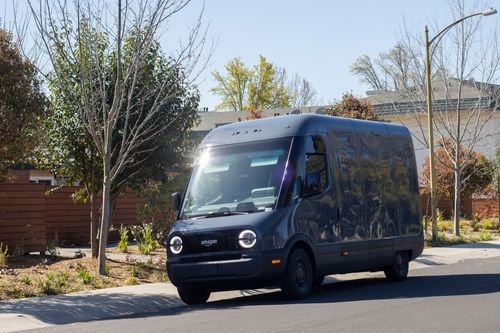
Responsibility depends on which of three delivery models put that vehicle on your street. A branded step van is almost always driven by an employee of a Delivery Service Partner, or DSP, an independent company under contract with Amazon. An unmarked personal car is usually an Amazon Flex gig driver, and a tractor-trailer hauling an Amazon load is a separate motor carrier.
Each of those three points at a different insurance policy and a different defendant. Getting it wrong costs you months.
Amazon describes the arrangement in its own words: “While DSPs as independent businesses hire and manage their own employees, they receive support from Amazon.” That sentence is doing a lot of work. The “independent businesses” half is the defense. The “support from Amazon” half is where the case lives.
Support, in practice, can mean the routing software, the delivery window, the package count, the scanner that tracks every stop, the branding on the van and the camera pointed at the driver. Whether that adds up to legal control is a question of fact. It is not something an adjuster gets to decide for you on a phone call.
Three delivery models, three different defendants
|
Vehicle you saw |
Who employs the driver |
Whose insurance is in play first |
What we have to prove to reach Amazon |
|
Branded Rivian or Prime-logo step van |
An employee of a Delivery Service Partner (DSP), an independent company contracted by Amazon |
The DSP’s own commercial auto policy |
That Amazon’s control over the route, the pace and the method of the work was close enough to make it responsible as a principal |
|
Unmarked personal car, often with a phone mount |
Nobody. This is an Amazon Flex gig worker delivering packages in a personal vehicle |
The driver’s personal auto policy, then your own underinsured motorist coverage |
That the delivery was being performed for Amazon at the moment of impact, and that Amazon’s own coverage responds to it |
|
Tractor-trailer carrying an Amazon freight load |
A separate motor carrier that contracted to haul the load |
The motor carrier’s commercial policy, which for interstate for-hire carriers of general freight at 10,001 lbs or more must be at least $750,000 |
That Amazon’s role went past simply arranging the load. Broker and negligent-selection theories are fact-specific |
There is one more thing worth saying plainly, because most pages will not. There is no reliable public dollar figure for Amazon’s contingent auto coverage for DSPs. Anyone quoting you a number is repeating something they read. What is real is that your claim may reach the DSP’s commercial policy, your own coverage, and depending on the facts Amazon’s own coverage, and which one pays gets determined in discovery.
Has Amazon ever actually been held liable for a delivery driver’s crash?

Yes. Juries and courts have found Amazon responsible for crashes involving contracted delivery drivers, on theories of control and agency, in more than one reported case. The independent-contractor label is a starting argument for the defense, not the end of the analysis.
Three reported outcomes are worth knowing about. In Bradfield v. Amazon Logistics, tried in Gwinnett County, Georgia in August 2024, a jury returned a $16.2 million verdict and apportioned Amazon 85 percent of the fault. In 2023, a South Carolina jury returned $44.6 million, including $30 million in punitive damages.
And in July 2026, a Middlesex County, Massachusetts jury returned $56 million in a case where Amazon stipulated to agency liability roughly a week before trial began.
That last detail is the one to sit with. Stipulating to the agency about a week out means the contractor defense was abandoned before a jury ever weighed it.
These are reported verdicts in other states, and they do not set the rule in Washington. Outcomes depend entirely on the facts of each case, the evidence that survives, and the jury. Prior results do not guarantee a similar outcome. What they do establish is that “the driver works for a contractor” is a position that has failed under scrutiny, which is a very different thing from a position that is correct.
The practical takeaway for your claim is simple. Do not accept an early denial that rests only on corporate structure. Ask what the evidence shows about control, and then go get that evidence quickly.
The evidence that disappears in the first two weeks
The evidence that decides an Amazon delivery case has a shelf life measured in days, not years. Onboard camera footage, route and telematics data, dispatch records and nearby business video are the proof that establishes who controlled the driver, and most of it is overwritten or repaired away within the first month. A written preservation demand sent in the first week is often the difference between a provable case and a swearing contest.
This is where a delivery claim stops resembling an ordinary fender bender. In a two-car crash, the facts live in the police report and in two people’s memories. In an Amazon case, the facts live on servers owned by companies with no reason to hand them over and an ordinary business practice of overwriting them.
|
Window |
What still exists |
What is usually gone |
|
First 72 hours |
The vehicle in its post-crash condition, onboard camera footage, that day’s route assignment, scene debris and skid evidence, nearby doorbell and storefront video |
Nothing yet, if a preservation letter is already out. This is the only window where that sentence is true |
|
First 2 weeks |
The DSP’s internal incident report, dispatch and delivery-window records, the driver’s personnel file, telematics if it has been demanded in writing |
Most residential doorbell and small-business camera systems have already overwritten. The van is commonly repaired and back on route |
|
First 30 days |
The police report, your medical records, preserved electronic data, witnesses you already identified |
The driver may no longer work for that DSP. Uninvolved witnesses stop returning calls. Any chance to inspect the vehicle as it was |
|
After 6 months |
Whatever you locked down in writing, plus records the court can compel once suit is filed |
Video, essentially always. Reliable memory for details like speed, signal timing and how long the van sat double-parked |
What a preservation letter actually does

A preservation letter is a written demand that puts a company on notice to stop the routine deletion of specific evidence. It costs nothing to send, it goes out before any lawsuit exists, and it creates a record. If the material is destroyed after the letter arrives, that destruction itself becomes something we can raise.
We send these to the DSP, to Amazon, to the insurer once identified, and to any nearby business whose camera may have caught the impact. The letters are specific by design. A vague request to “preserve everything” is easy to shrug off. A request naming the route, the date, the time window and the data type is not.
Telematics and route data do not wait for you to make up your mind. The day you call +1 (877) 999-9999, those letters go out, and sending them costs you nothing at all.
Is an Amazon delivery van a commercial truck under federal law?
Usually not, and that surprises people. Most Amazon step vans, including the Ram ProMaster, the Ford Transit and the Rivian electric delivery van, weigh less than the federal cutoff that defines a commercial motor vehicle, so the federal trucking rules generally do not reach them.
Here is the line. Under 49 CFR 390.5, a commercial motor vehicle, or CMV, includes, among other things, a vehicle with a gross vehicle weight rating of 10,001 pounds or more used in interstate commerce. Gross vehicle weight rating, or GVWR, is the manufacturer’s maximum loaded weight for that vehicle. The common Amazon delivery vans sit below it.
This matters more than it sounds like it should. It means the federal hours-of-service limits usually do not apply to the van that hit you. It means the $750,000 minimum insurance requirement for interstate for-hire carriers usually does not apply either. A page that tells you every delivery van is federally regulated is selling you a theory that will not survive the first motion.
What replaces those rules is ordinary Washington negligence law, plus everything the DSP’s own contract, training and dispatch practices require. That is not a weaker case. It is a different one, and it is built on records rather than on a regulation.
When federal trucking rules do apply to an Amazon vehicle

Federal trucking rules attach once a vehicle used in interstate commerce is rated at 10,001 pounds GVWR or more. That takes in the larger box trucks and the tractor-trailers hauling Amazon freight, but not the ordinary step van. Cross that line and the driver’s hours, the carrier’s insurance floor and its federal safety record all become evidence in your case.
The federal framework starts with the hours-of-service limits at 49 CFR 395.3, published by the Federal Motor Carrier Safety Administration, or FMCSA, the federal agency that regulates interstate trucking. Those hours-of-service rules require 10 consecutive hours off duty before driving, cap driving at 11 hours, bar driving after the 14th consecutive hour on duty, and require a 30-minute break after 8 cumulative hours of driving.
It also includes the minimum liability floor at 49 CFR 387.9, which is $750,000 for for-hire interstate carriers of general freight in vehicles at or above 10,001 pounds GVWR. For a badly injured client, that floor is often the difference between a claim worth pursuing and one that runs out of coverage.
For qualifying carriers, we also request electronic logging device data. An ELD, or electronic logging device, is the equipment used to record a commercial driver’s on-duty and driving time, and in discovery it can either confirm or contradict what the driver told the responding officer.
Anyone can check a motor carrier’s federal safety record for free. FMCSA’s SAFER Company Snapshot will show a carrier’s operating authority, fleet size and inspection history if you have the company name or DOT number from the crash report. We pull it on every case with a tractor involved.
Why an Amazon van crash in Seattle plays out differently
A Seattle Amazon van claim is different from an ordinary car claim because you are suing a delivery system, not just a driver. The company that dispatched that van set the route, the stop count and the clock, and in this city those decisions pile up in a handful of neighborhoods that can be named and measured. Seattle’s rain, its grades and its early winter darkness do the rest.
The concentration is documented. A University of Washington study released in December 2023 looked at Seattle-metro neighborhoods within 3 kilometers, about 1.9 miles, of an Amazon last-mile delivery station or sortation center. Those neighborhoods are exposed to roughly twice the delivery van and truck traffic of neighborhoods farther away. They also order 14 percent fewer packages than the metro average, and they skew lower-income with more residents of color.
The people living closest to the vans are not the people generating the deliveries. They are absorbing someone else’s convenience, and that is a fact a jury can be told.
The geography backs it up. Prologis Georgetown Crossroads, in Georgetown just south of downtown, was the first ground-up multistory warehouse built in the United States, and Amazon leased roughly 500,000 square feet of it in 2019. That puts industrial-scale delivery volume directly into South Seattle’s street grid.
Those same blocks carry everything else. East Marginal Way S is Seattle’s core industrial freight street, connecting Port of Seattle terminals to I-5 and SR 99. Fourth Avenue S sits on the city’s high-injury network. Port drayage, rail crossings, last-mile delivery, stadium traffic and light rail all share a few blocks of pavement.
Then add the conditions. Sea-Tac averages 39.34 inches of precipitation a year, and the first rain after a dry stretch lifts oil to the surface. Seattle’s grades are genuinely severe, with E Roy St on Capitol Hill at a 21 percent grade and Queen Anne holding seven of the twenty steepest streets in the city. In December, a driver working a route is delivering in full darkness by 4:30 in the afternoon.
None of that excuses a driver, and we are not going to argue that it does. It matters because it is the defense’s argument, and because a delivery company that dispatches routes into those conditions on a fixed clock has made a decision about risk that a jury is entitled to hear about.
Will my case be filed in Seattle or in Kent?

Which King County courthouse hears your case depends on where the crash happened. King County Superior Court runs two full-service facilities: the King County Courthouse in downtown Seattle, which handles north and east King County matters, and the Maleng Regional Justice Center in Kent, which handles south King County. A crash in Georgetown and a crash in Kent are the same county and two different courthouses.
That is not a trivia point. It affects the jury pool, the scheduling, and how a defense firm staffs the case. We factor it in from the first week rather than the month before trial.
What if the driver was using their own car?
If an unmarked personal vehicle hit you while delivering Amazon packages, that driver was most likely working through Amazon Flex, Amazon’s gig program in which individuals deliver packages in their own cars. The first policy in line is the driver’s personal auto insurance, and the second is often your own underinsured motorist coverage. Whether Amazon’s coverage also responds depends on the facts and gets resolved in discovery, not in a phone call with an adjuster.
Two problems tend to show up here. The first is that personal auto policies are written for personal use, and many contain business-use or delivery exclusions. Whether one applies to your crash is a question of policy language, and it is worth having someone read the actual policy rather than accept a verbal denial.
The second is limits. Washington’s minimum liability coverage is 25/50/10 under RCW 46.29.090: $25,000 per person for bodily injury, $50,000 per accident, and $10,000 for property damage. A single ambulance ride and two nights in a hospital can exhaust $25,000 before anyone discusses your lost income.
That is what UIM is for. UIM stands for underinsured motorist coverage, and it is coverage on your own auto policy that pays when the at-fault driver’s limits are too low to cover your losses. Under RCW 48.22.030, Washington insurers must offer it, and you may reject it, but only in writing.
Go find your declarations page before you do anything else. If you have UIM, it is the most useful thing you own right now. If you were told you rejected it, the writing requirement is worth checking.
What an Amazon delivery crash claim is worth in Washington
Value in Washington turns on your losses, the available coverage, and how fault is divided. Washington uses pure comparative negligence, which means partial fault reduces your recovery in proportion but never bars it. There is also no cap on noneconomic damages in this state, so pain, disability and loss of enjoyment are not limited by a statutory ceiling.
The comparative fault rule is worth understanding precisely, because delivery-crash defendants lean on it constantly. RCW 4.22.005 provides that contributory fault “diminishes proportionately the amount awarded” but “does not bar recovery.” If a jury assigns you 30 percent of the fault, you recover 70 percent. There is no percentage at which you lose everything.
That is a real advantage. Some states cut you off at 51 percent. Washington does not, which means an argument that you stepped out too quickly or were riding too close to the curb changes the number rather than ending the claim.
There is no cap on noneconomic damages here
Washington’s cap on noneconomic damages was struck down as unconstitutional in Sofie v. Fibreboard Corp., 112 Wn.2d 636 (1989), on the ground that it violated the state constitutional right to a jury trial. The legislature formally repealed the capping statute, RCW 4.56.250, in 2023. For someone with a permanent injury and modest wage loss, that is often the largest part of the case.
Coverage is the other half of the equation. A commercial policy behind a DSP, a possible additional layer, and your own UIM can stack into meaningful recovery in a way a single personal policy cannot.
Be skeptical of any firm that quotes you a number before it knows who dispatched the van. The verdicts above came from cases where somebody did the work of proving control, and that work happens in discovery, not on a website.
Related Seattle cases we handle
 If your crash involved a tractor-trailer rather than a delivery van, our Seattle truck accident lawyer page covers the federal carrier rules, driver qualification files and cargo issues in more depth.
If the vehicle that hit you turned out to be a private car and not a delivery vehicle at all, start with our Seattle car accident lawyer page instead. The insurance analysis is different, and so is the evidence we chase first.
Frequently asked questions
No. Paint does not decide who is in your case. Delivery Service Partners run plain white and rented vans alongside branded ones, especially during peak season, and Amazon Flex drivers deliver in ordinary personal cars with no markings at all.
What settles it is the contract behind the vehicle, not the graphics on the side of it. If the driver was moving Amazon packages that afternoon, there is a dispatch record that says so, and that record is what we go after.
Generally three years from the date of the crash, under RCW 4.16.080(2). Miss it and the claim is gone regardless of how strong it was. Three years sounds generous, but it is not the deadline that should drive your decision.
The evidence deadlines are far shorter, and a claim filed on time with no surviving proof is not worth much. Confirm your specific deadline with an attorney, since some situations shorten it.
Not before you talk to a lawyer. You are not required to give a recorded statement to another party’s insurer, and there is no penalty for declining one. Adjusters record these calls early to lock in your description of your injuries before you know how bad they are. Give your name and the date of loss, then send the adjuster to us.
Get the paperwork read before you sign it. An early offer to cover medical bills often comes with a full release, meaning you give up every future claim connected to the crash, including for treatment you have not had yet. If your injury needs an MRI, injections or surgery later, that money is gone.
Have the release language reviewed before you sign anything. It takes us minutes and it costs you nothing.
If your car has a dented bumper and you walked away uninjured, you can probably handle it yourself. Once you are hurt, you are negotiating against a company that already knows which entity employed the driver, which policy applies and what the records show, while you are still guessing at all three.
That information gap is the whole problem. We will look at your crash and tell you straight whether the delivery chain in it actually reaches Amazon or stops at the contractor.
Talk to a Seattle Amazon truck accident lawyer while the records still exist

Boohoff Law takes Amazon delivery cases across King County, from Georgetown and SODO to Kent and the east side, and we start with the part of the case that has a clock on it. Tatiana Boohoff’s team works these files in one order: name every company in the delivery chain, then argue about fault.
You do not need to have anything organized before you reach out. A date and a street corner is enough for us to start, and the company currently telling you this is not their problem does not get a say in whether we look.
Call +1 (877) 999-9999. Someone answers at any hour, and nothing about that conversation costs you anything.

Recovery is personal.

We’re here for you.
We’re close by. And if you can’t make it to us, we’ll meet you where you need us, at home or in the hospital.












© 2025 Boohoff Law, P.A. — Auto Accident Lawyers.
The information on this website is for general information purposes only. Nothing on this site should be taken as legal advice for any individual case or situation. This information is not intended to create, and receipt or viewing does not constitute, an attorney-client relationship.
Disclaimer: The results and testimonials presented on this website are based on the unique facts and circumstances of each case. Past results do not guarantee or predict similar outcomes in future cases. Every legal matter is different, and you should not rely on prior case results as an expectation of future performance.
