The convenience of online shopping means delivery vans are a constant presence on our streets, in our apartment complexes, and pulling into our driveways. We trust these drivers to deliver packages safely, but when they fail to do so, the results can be devastating.
Being hit by a delivery van, especially in a seemingly safe residential area, is a shocking and painful experience. If you or a loved one were injured in an incident involving an Amazon van in a driveway or parking lot, you are likely facing medical bills, lost time from work, and many questions.
Determining who is financially responsible—the driver, their direct employer, or the corporate giant Amazon—is a complex issue. Still, Washington law provides a path to hold the right parties accountable.
If you were injured by an Amazon delivery van, a dedicated Seattle Amazon delivery accident lawyer can help hold the responsible parties accountable—contact us today for a free consultation.
Key Takeaways about Residential and Parking Lot Accidents in Washington
- Determining liability after an accident with an Amazon van involves examining the actions of the driver, the responsibilities of the third-party Delivery Service Partner (DSP), and Amazon’s own role.
- The legal concept of “vicarious liability” can sometimes hold an employer responsible for the negligent actions of its employees, though Amazon’s business structure often complicates this.
- Washington state follows a “pure comparative fault” rule, which means an injured person can recover damages even if they are partially at fault, but their compensation is reduced by their percentage of fault.
- Evidence from the accident, including photos, witness statements, and documentation of injuries, is crucial for building a strong claim for compensation.
- Accidents in residential driveways and parking lots present unique dangers due to large vehicle blind spots, driver pressures, and the presence of pedestrians, including children.
Why Are Driveway and Parking Lot Accidents So Common?
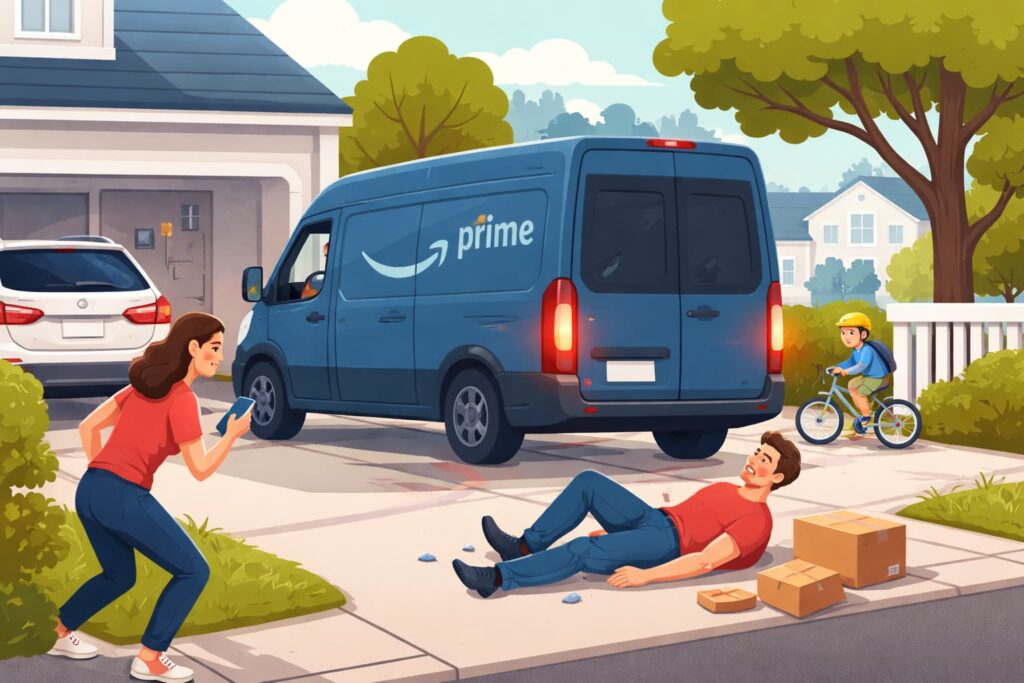
Accidents involving large delivery vans in residential settings happen more often than many people think. These areas, which we associate with safety and home, can become hazardous when commercial vehicles are introduced. Several factors contribute to the risk of a person being backed over or hit by a delivery van.
- Vehicle Blind Spots: Commercial vans, like the familiar blue Amazon Prime vans or the newer, larger Rivian electric vehicles, have significant blind spots, especially in the rear and along the sides. A driver reversing out of a driveway might not see a person, particularly a small child, walking behind the vehicle.
- Driver Pressure and Distraction: Delivery drivers often work under intense pressure to meet strict quotas and deadlines. This can lead to rushing, failing to perform proper safety checks before backing up, or being distracted by their delivery scanner or GPS while maneuvering in a tight space.
- Quiet Operation: Modern vehicles, especially electric ones, are much quieter than older models. A pedestrian might not hear a van approaching or preparing to move in a busy parking lot near the Pike Place Market or in a quiet suburban neighborhood in Bellevue.
These elements combine to create a recipe for serious incidents in the very places we should feel most secure. The consequences of such an accident can be life-altering, making it vital to understand your rights.
Who Is Legally Responsible for an Amazon Van Accident?
When an Amazon van causes an injury, figuring out who to hold responsible isn’t always straightforward. It’s rarely just about the driver. Liability—the legal term for responsibility—can extend to multiple parties, and a thorough investigation is often needed to identify all of them.
The Driver’s Negligence
The starting point for liability is usually the driver. All drivers have a “duty of care” to operate their vehicle safely to avoid harming others. When they fail in this duty, it’s called negligence. In a residential accident, driver negligence could include:
- Failing to check mirrors and blind spots before reversing.
- Speeding through a parking lot or residential street.
- Being distracted by a phone or delivery device.
- Ignoring stop signs or failing to yield to pedestrians.
If the driver’s careless actions directly caused your injuries, they are considered negligent and can be held responsible for the damages.
Amazon’s Potential Liability: The Doctrine of Vicarious Liability
This is where things get complicated. You might assume that if a driver in an Amazon-branded van hits you, Amazon is automatically responsible. However, Amazon has structured its delivery operations to create distance between itself and its drivers. Most drivers work for separate companies called Delivery Service Partners (DSPs).
Amazon uses this DSP program to argue that the drivers are not its employees, which would protect the company from direct liability under a legal principle called vicarious liability (or respondeat superior). This principle states that an employer is often responsible for the negligent acts of an employee, as long as the employee was performing work-related duties at the time.
While Amazon exerts immense control over DSPs—dictating routes, schedules, and even driver conduct—they use the contractor model to fight claims. However, depending on the level of control Amazon has over its drivers, it may still be possible to hold the corporation accountable.
The Delivery Service Partner’s (DSP) Role
The DSP is the company that directly hires, trains, and pays the driver. As the direct employer, the DSP has a clear responsibility to:
- Properly vet and hire safe drivers.
- Provide adequate training on operating large vans and navigating residential areas.
- Supervise drivers to ensure they follow safety protocols.
- Carry sufficient commercial auto insurance.
If the DSP was negligent in its hiring or training practices, or if its driver caused an accident while on the job, the DSP can be held liable for the resulting harm. Their insurance policy is often the primary source of compensation for victims.
Understanding Washington’s Laws on Fault and Compensation
Washington state has specific laws that govern personal injury claims, including how fault is assigned and what kind of compensation an injured person can receive.
Washington’s Comparative Negligence Rule
Washington follows a legal standard known as “pure comparative fault.” Under this rule, an injured person can recover damages even if they were partially to blame for the accident.
For example, imagine you were walking through a parking lot while looking at your phone and were hit by a backing Amazon van. A court might find that the van driver was 80% at fault for not checking their mirrors but that you were 20% at fault for not paying attention to your surroundings. In this scenario, you could still recover compensation, but your final award would be reduced by your 20% share of the fault.
What Types of Damages Can You Recover?
If you are injured because of someone else’s negligence, you may be entitled to recover financial compensation for your losses, often referred to as “damages.” These damages are typically separated into two categories.
- Economic Damages: These are tangible financial losses that can be calculated with receipts and bills. They include medical expenses (current and future), lost wages from being unable to work, and costs for rehabilitation or physical therapy.
- Non-Economic Damages: These are intangible losses related to the human cost of the injury. They include pain and suffering, emotional distress, loss of enjoyment of life, and disability or disfigurement.
An experienced legal professional can help you document all your losses to build a comprehensive claim for the full amount of compensation you deserve.
Steps to Take After a Delivery Van Accident in a Parking Lot or Driveway
After receiving immediate medical care, the actions you take afterward can help protect your right to fair compensation. Once you are in a safe place, consider the following steps to document what happened and begin the recovery process.
- Write Down Everything You Remember: As soon as you are able, write down every detail about the accident. Note the time of day, the weather conditions, what you were doing, what you saw the driver do, and anything that was said. Memories can fade, so a written record is invaluable.
- Organize Your Documents: Create a file to keep all accident-related paperwork. This includes medical records, bills, receipts for any related costs, the driver’s information, and any correspondence from insurance companies.
- Track Your Injuries and Recovery: Keep a simple journal detailing your physical pain, emotional state, and any daily activities you can no longer do. This helps demonstrate the real-world impact the injuries have had on your life.
- Be Cautious with Insurance Adjusters: An adjuster from the DSP’s or Amazon’s insurance company will likely contact you. Be aware that their goal is to resolve the claim for the lowest amount possible. It is wise to avoid giving a recorded statement or accepting a quick settlement offer before understanding the full extent of your injuries and legal options.
Taking these organizational steps can provide a strong foundation for your claim and help ensure that important information is not lost.
The Unique Dangers of Delivery Vans in Residential Areas
The presence of large, commercial delivery vans changes the safety dynamic of a neighborhood. Whether it’s the winding roads near Discovery Park or the dense apartment complexes in South Lake Union, these vehicles pose risks that standard passenger cars do not. Pedestrians are vulnerable, and large vehicles with poor rear visibility are a known factor in rear-end collisions, also known as back-over incidents.
The pressure on drivers is also a significant concern. Reports have highlighted the demanding performance metrics that can lead drivers to cut corners on safety to avoid falling behind schedule. This rush to deliver can result in tragic mistakes when a child is playing on a driveway or a resident is walking their dog in a parking lot.
These factors are crucial in determining how and why an accident occurred and in holding the responsible companies accountable for policies that may prioritize speed over safety.
How a Personal Injury Attorney Can Help Unravel Liability
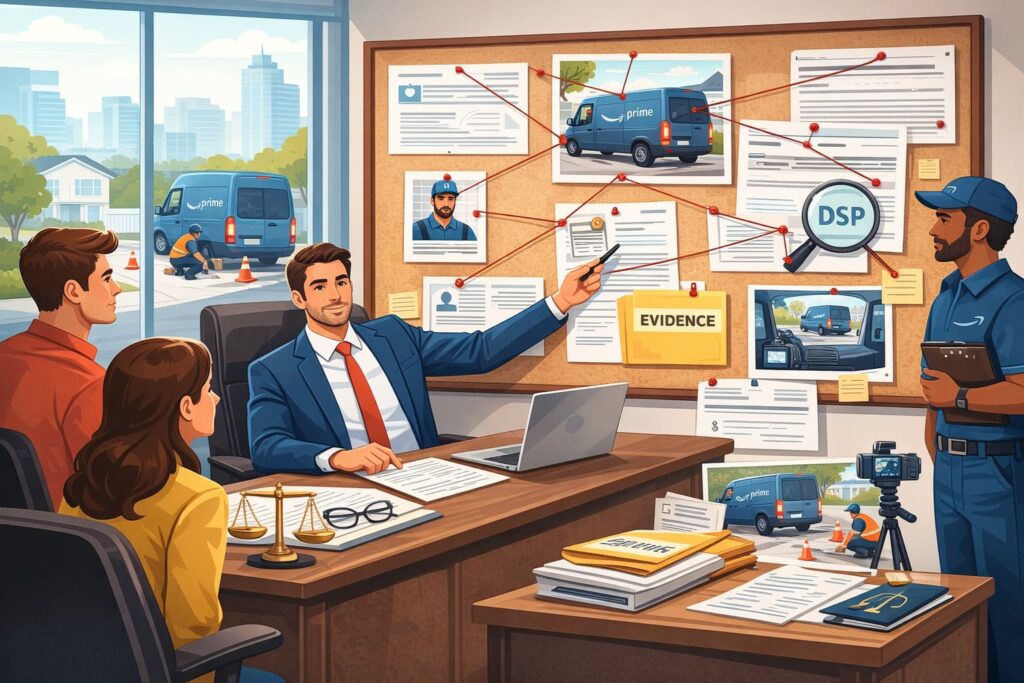
The legal questions surrounding an Amazon van accident are complex. Was the driver an employee or a contractor? Which insurance policy applies? Was Amazon’s level of control over the driver enough to make them legally responsible? A Seattle personal injury attorney who has handled cases involving commercial vehicles can provide the clarity and advocacy you need.
A legal team can immediately launch an investigation to:
- Preserve crucial evidence, such as driver logs, vehicle maintenance records, and any onboard camera footage.
- Determine the exact employment relationship between the driver, the DSP, and Amazon.
- Hire accident reconstruction professionals to show how the collision occurred.
- Calculate the full value of your claim, including future medical needs and non-economic damages.
- Handle all communications with the insurance companies on your behalf.
This allows you to focus on what matters most—your health and recovery—while a dedicated professional fights for your rights.
FAQs for Liability for Residential Driveway and Parking Lot Accidents in Washington
Here are answers to some common questions about accidents involving delivery vans in Washington.
What if the Amazon van driver was on a personal break when the accident happened?
This can complicate a claim. If a driver significantly deviates from their work duties for a personal reason, their employer might argue they are not responsible under vicarious liability. However, minor breaks are often considered part of the job. An investigation would be needed to determine the specific circumstances.
What is the deadline for filing a personal injury lawsuit in Washington?
In Washington, the statute of limitations for most personal injury claims is three years from the date of the injury. If you do not file a lawsuit within this period, you will likely lose your right to seek compensation.
Do I need a police report if the accident happened in a private parking lot or driveway?
While police may not always respond to accidents on private property if there are no serious injuries, a police report is extremely helpful. It creates an official record of the incident. If the police do not come, you should still document everything yourself and report the accident to the property owner or manager.
Can I sue Amazon directly for an accident caused by a DSP driver?
Suing Amazon directly can be challenging due to their business model, but it is not impossible. A lawsuit might be successful if it can be proven that Amazon exerted significant control over the driver’s work or was negligent in its selection and monitoring of the DSP.
What if the delivery van left the scene of the accident?
A hit-and-run is a crime. You should report it to the police immediately. Even if the driver is not found, you may still be able to get compensation through your own auto insurance policy’s uninsured/underinsured motorist (UIM) coverage, if you have it.
Get Help from a Dedicated Seattle Personal Injury Law Firm
Being injured by a delivery van in your own neighborhood can leave you feeling shaken and uncertain about the future. At Boohoff Law, P.A., we are dedicated to assisting individuals in Seattle and throughout Washington during challenging times. We will listen to your story, help you understand your options, and stand up to large corporations and their insurance carriers to pursue the compensation you deserve.
As you focus on your recovery, let us focus on your case. We work on a contingency fee basis, which means there are no fees unless we win. For a free, no-obligation consultation to discuss your case, call us 24/7 at (877) 999-9999 or contact us through our online form.

Free Consultation
We Are Here For You 24/7
Reviews

– Elissa M.
“Really pleased with Boohoff Law! Received immediate responses when I had any questions. Treated amazingly by all staff … made this process a true breeze!”
– Caitlyn M.
– Brandy K.
Related Posts
Who Is Liable for a Trailer Detachment Accident in Washington?
Who’s Liable in a Lumber Truck Accident Near Olympia, WA?
What to Do When Your Total Loss Offer Is Too Low in Olympia, WA
Recovery is personal.
We’re here for you.
We’re close by. And if you can’t make it to us, we’ll meet you where you need us, at home or in the hospital.








© 2025 Boohoff Law, P.A. — Auto Accident Lawyers.
The information on this website is for general information purposes only. Nothing on this site should be taken as legal advice for any individual case or situation. This information is not intended to create, and receipt or viewing does not constitute, an attorney-client relationship.
Disclaimer: The results and testimonials presented on this website are based on the unique facts and circumstances of each case. Past results do not guarantee or predict similar outcomes in future cases. Every legal matter is different, and you should not rely on prior case results as an expectation of future performance.
