No Fees
Unless We Win
Millions Recovered!

Zephyrhills Amazon Truck and Delivery Van Accident Lawyers
The road through Zephyrhills was not built for what it carries now. State Road 54 comes in from Wesley Chapel and Land O’Lakes as a six-lane divided highway and ends at US 301 as two undivided lanes. Six lanes in, two lanes out, right at the city line.
Now put a same-day delivery network on top of that.
If a delivery vehicle hit you, a Zephyrhills Amazon truck accident lawyer has to work two problems at once: the road that set the crash up, and the stack of companies standing between you and anyone who will pay. Boohoff Law handles both from an office on Gall Boulevard in Zephyrhills.
Available 24/7
Our specialists are here to listen and help for free, no strings attached.
877-999-9999
for a free consultation
Does the Road Where I Was Hit Change My Claim?
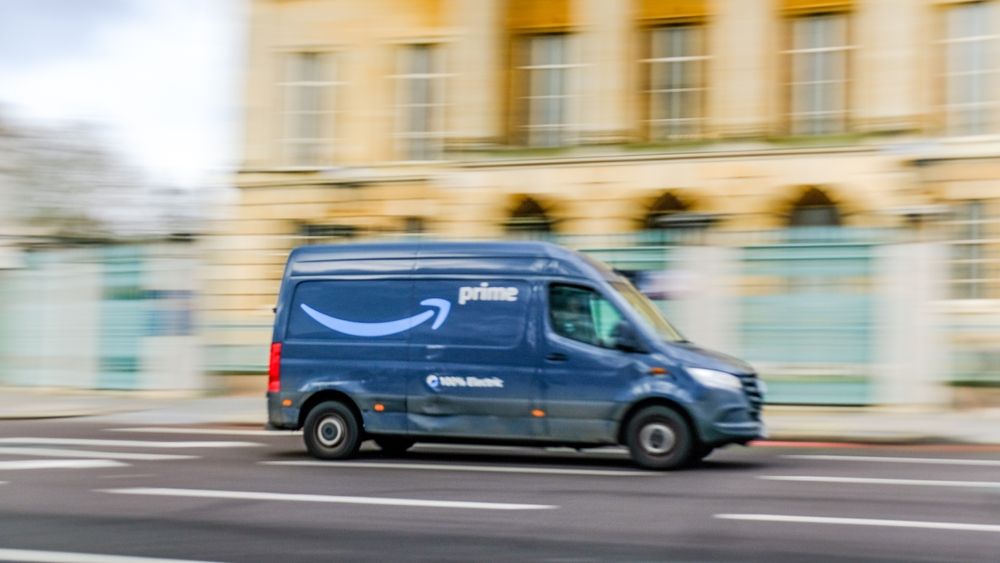
Yes, and in Zephyrhills it changes it more than in most places. The corridor through town is a two-lane highway carrying the delivery volume of a much larger city. That makes the physical setting part of the fault argument on both sides: where the van stopped, whether there was a shoulder, how far away the nearest crosswalk was. It is the first thing we go look at, usually before we contact anyone’s insurer.
The mismatch is not subtle. Zephyrhills is up 36.49 percent since the 2020 census, and the main highway through town is still two lanes.
The Florida Department of Transportation, or FDOT, has the widening through the city designed but not funded for construction. The road you were hit on is the road that will be there next year, which is why we document the corridor as it stood the week of your crash rather than the way it will eventually be rebuilt. Photographs of the missing shoulder, the ditch line and the sight distance at that driveway are the record that answers a fault argument later.
Where Six Lanes Become Two
SR 54 runs from US 19 in Elfers east to US 301 in Zephyrhills. On the west end it is a six-lane divided highway carrying Land O’Lakes and Wesley Chapel commuters. At its eastern terminus it is a two-lane undivided road.
Everything that fits in six lanes has to fit in two by the time it reaches town. A West Zephyrhills Bypass has been proposed but not built.
A delivery driver working through that taper is merging, decelerating for an unprotected left into a driveway, and stopping in a live travel lane because there is no shoulder to pull onto.
| Where | What is happening there now | Why it raises crash risk |
|---|---|---|
| US 301 / Gall Blvd through town | Still two lanes. The widening from SR 56 to SR 39 is designed but not funded | Delivery stops happen in a live lane. Rear-end and sideswipe crashes follow, plus head-on risk when someone crosses the centerline to pass |
| SR 54 at its eastern end | Six lanes of Wesley Chapel and Land O’Lakes traffic narrow to two undivided lanes at the US 301 line | Drivers carry six-lane speed into a two-lane road. Merge conflicts and rear-end crashes cluster at the taper |
| US 301 and Wire Road | A new traffic signal is planned but not yet in place | Unsignalized turns across two-way traffic. Left-turn and angle crashes are the predictable result |
| SR 52 corridor toward Dade City | An Amazon robotic sortation center in Eagle Industrial Park is announced and planned. Operating status is unverified | Announced freight capacity in a rural corridor means a step change in van and truck volume |
| Residential streets off 301 | No sidewalks, no shoulders, open drainage ditches at the pavement edge | Pedestrians and cyclists share the lane with delivery vans. There is nowhere safe to step aside |
Rainy Season on a Road With No Shoulder
West Central Florida’s rainy season runs roughly May 25 to October 10. On a two-lane road with open drainage ditches and no paved shoulder, a hard afternoon downpour removes every margin for error. Standing water pushes traffic toward the centerline, and a van that drifts a foot in either direction is either in a ditch or in oncoming traffic.
Weather excuses nobody. What it does is put the routing decision into the case alongside the driver’s conduct: a fixed stop count, on a fixed clock, on a road with no margin, in the middle of a season that floods it most afternoons.
Who Is Responsible If an Amazon Van Hits Me in Zephyrhills?

Responsibility starts with whoever employed the driver, and around here that is usually a contractor rather than Amazon itself. The van with the logo on the side belongs to a Delivery Service Partner, or DSP: an independent company that holds an Amazon contract and puts its own employees behind the wheel.
Unmarked personal cars generally mean Amazon Flex, which is gig work done in the driver’s own vehicle, while a tractor-trailer carrying an Amazon load belongs to whichever motor carrier accepted the freight.
Amazon’s own description of the setup cuts both ways. DSPs “as independent businesses hire and manage their own employees,” the company says, but “they receive support from Amazon.” Support can mean the route, the clock and the package count, and whether it went far enough to make Amazon answerable gets settled through contracts and dispatch records, not over the phone.
Treat any page that puts a dollar figure on Amazon’s backup coverage for its partners as unreliable, because no public source supports one. What can honestly be said is that three pools of money may be in play: the DSP’s commercial auto policy, your own coverage, and possibly Amazon’s. Which of them responds surfaces once the contracts and insurance certificates are produced.
Identification comes first. A plate, the van number stenciled on the body panel, the date and the delivery window are usually enough to trace that vehicle back to the company that sent it out. The second half of the answer is what that vehicle weighed, because weight decides which rulebook the company behind it gets judged by.
Is an Amazon Delivery Van Even a Truck Under the Law?
The federal line is 10,001 pounds, and the ordinary Amazon step van sits under it. The Ram ProMaster, the Ford Transit and the Rivian electric van all come in below that, which leaves them outside the federal trucking rulebook. Box trucks and tractor-trailers are a different matter.
That cutoff comes from 49 CFR 390.5, which defines a commercial motor vehicle, or CMV, to include a vehicle with a gross vehicle weight rating of 10,001 pounds or more used in interstate commerce. GVWR is shorthand for gross vehicle weight rating: the maximum loaded weight the manufacturer rates that vehicle to carry.
Two things drop out when the van is under that line. The federal hours-of-service limits go, and so does the federal minimum insurance requirement for interstate freight carriers. Florida negligence law fills the gap, together with the delivery company’s own training, dispatch practice, stop counts and safety policies, and those internal documents are frequently harder on a company than a regulation would have been.
When a Delivery Vehicle Does Cross the Federal Line

Box trucks and the tractor-trailers running freight through the Tampa and Lakeland corridors clear 10,001 pounds, and the full federal framework attaches to them.
Their drivers work under hours-of-service rules written by the Federal Motor Carrier Safety Administration, or FMCSA, the agency that regulates interstate trucking. Those rules require 10 consecutive hours off duty before driving and cap driving at 11 hours. They also bar driving after the 14th consecutive hour on duty and require a 30-minute break after 8 cumulative driving hours.
Coverage changes as well. For-hire interstate carriers of general freight at or above that weight must carry at least $750,000 in liability insurance. Set that against what Florida asks of a private driver, which does not include bodily injury coverage at all, and you can see what a serious injury claim lives or dies on.
If the crash report gives you a company name or a DOT number, the SAFER Company Snapshot will show you what FMCSA has on that carrier: its operating authority, its fleet size and its inspection history. It is free and it is public.
Does Florida No-Fault Apply If a Delivery Van Hit Me?

Yes. Florida is a no-fault state, so your own Personal Injury Protection coverage, known as PIP, pays your first medical bills regardless of who caused the crash. PIP provides up to $10,000 in combined medical and disability benefits, with medical expenses paid at 80 percent of reasonable charges, under Fla. Stat. § 627.736.
One deadline catches people constantly. You must receive initial medical care within 14 days of the crash or PIP pays nothing at all.
Fourteen days sounds like plenty until you are living it. You feel bruised, not broken, so you wait to see if the neck loosens up. Three weeks later an MRI finds a disc problem and the benefit is gone.
The $2,500 Trap Inside Your PIP Benefits
Even if you treat inside the 14 days, your PIP reimbursement is capped at $2,500 unless a qualified provider determines you had an emergency medical condition, written in the statute as an EMC. That is a medical finding that your condition was serious enough to need immediate attention.
With it you have the full $10,000. Without it, $2,500, which one imaging study and a few visits will consume.
Not every provider can make the call. A physician, a dentist, a physician assistant or an advanced practice registered nurse may determine an EMC. A chiropractor may treat you under PIP but may not make that determination, so if chiropractic care is all you have had so far, get in front of a physician this week.
The Injury Threshold That Lets You Sue for Pain and Suffering
Only if your injury meets Florida’s serious injury threshold. Under Fla. Stat. § 627.737(2), you can step outside no-fault and sue the at-fault party for pain and suffering in four situations:
- significant and permanent loss of an important bodily function
- permanent injury within a reasonable degree of medical probability, other than scarring or disfigurement
- significant and permanent scarring or disfigurement
- death
That threshold is proved with medical records and physician opinion, which is why treatment in the first month shapes the case you have in the second year.
Coverage is the other half. Florida requires private drivers to carry only $10,000 of PIP and $10,000 of property damage liability under Fla. Stat. § 324.022, and no bodily injury liability at all, as the state’s own insurance requirements confirm. A commercial delivery policy is a far larger pool of money than a private minimum policy, which is why naming the right company early is worth real dollars.
If the crash was in the last two weeks, the 14-day clock is what to handle today, not the lawsuit. Call +1 (813) 725-0981 and we will help you get in front of the right kind of provider and open the claim against the right company.
What If the Driver Says I Was Partly to Blame?

You can still recover in Florida as long as you are not found more than 50 percent at fault. Under Fla. Stat. § 768.81(6), a person found more than 50 percent responsible for their own harm recovers nothing. At 50 percent or below, your damages are reduced by your share and you still collect.
That is a hard edge, and insurers know exactly where it sits. Getting you to 51 percent is not a side argument in a Florida case. It is the defense.
The Argument the Road Design Creates

On a two-lane road with no sidewalk and no shoulder, the predictable claim is that you should not have been where you were. You were walking in the road. You were riding too far into the lane. You pulled out of a driveway into traffic that had nowhere to go.
Notice what that assumes: that there was a safer place to be. On this corridor there frequently is not. The same design that makes the road dangerous is what the defense uses to move blame onto the person it endangered.
It gets answered with specifics. No sidewalk on that block, the width of the pavement, where the ditch starts, the sight lines at that driveway, what the driver’s stop schedule required that afternoon. Fault percentages are argued, not assigned by an adjuster over the phone.
You do not have to accept a percentage someone else picked for you. Bring us what the insurer told you and we will tell you whether it holds up or whether it is an opening position.
Where Does a Zephyrhills Case Get Filed, and How Long Do I Have to File It?
Pasco County sits in Florida’s Sixth Judicial Circuit, and an east Pasco case is handled at the Robert D. Sumner Judicial Center at 38053 Live Oak Ave in Dade City, not the West Pasco Judicial Center in New Port Richey. The deadline for most negligence claims is two years from the date of the crash under Fla. Stat. § 95.11(5)(a). Blow that date and the strength of the case stops mattering.
Two years moves faster than it sounds when treatment is still ongoing. Have a lawyer check the exact date that applies to you, since a handful of situations run differently.
Dade City, Not New Port Richey
Plenty of law firm pages tell Zephyrhills readers their case goes to New Port Richey. That is the wrong side of the county. Dade City is the county seat, a short drive up 301.
That is not trivia. It decides which courthouse you drive to, who sits in the jury box, and how much of a workday a hearing takes out of you.
Related Zephyrhills Cases We Handle
If a tractor-trailer or large box truck hit you rather than a delivery van, our Zephyrhills truck accident lawyer page goes deeper into carrier records, driver qualification files and cargo issues.
If someone in your family did not survive the crash, our Zephyrhills wrongful death attorney page explains who may bring that claim in Florida and how the two-year deadline works.
Numbers from other people’s cases will not tell you much about yours. What will tell you something is whether the vehicle crossed the federal weight line, whether the driver was employed by a contractor or delivering in a personal car, and whether your treatment started inside the fourteen-day window.
Frequently Asked Questions
Report it to your own insurer and to law enforcement, and let your attorney make the contact with the delivery company. Amazon routes these reports to the partner that operated the van, so a call from you often lands with the same company whose driver hit you. Photograph the van number and the plate before you do anything else, because that is what makes the right company findable weeks later.
Yes, and your own auto insurance still comes into it. Florida PIP follows the person rather than the vehicle, so your policy, or a resident relative’s policy, covers you even though you were on a bike. Cases like this turn on lane position and sight lines, so photograph the exact spot before anything about that block changes.
Yes. A crash report helps, but it is not required and it is not the last word on fault. What you have instead is the scene itself, any dash or doorbell video nearby, the delivery company’s records of where that van was and when, and your medical records. Write your own account down while it is fresh, and photograph the location before FDOT work or a storm changes it.
No. We can open a file over the phone or by video, and we come to you if you are not driving yet. Sitting down at our Zephyrhills office is an option, not a requirement, and it costs nothing either way.
Talk to a lawyer who drives the same road

Boohoff Law keeps an office at 6719 Gall Blvd, Suite 209 in Zephyrhills. Gall Boulevard is US 301, so we drive the same road you were hit on, in the same traffic, at the same hours.
You are better off with Boohoff, and starting early matters more in Florida than most people expect, because two years goes by while you are still in treatment. Bring us the crash report number, the plate or van number, and the photos on your phone. We will handle the delivery company, the insurer, and the question of which of them is on the hook.
Reach us at +1 (813) 725-0981, day or night, in English or Spanish.

Recovery is personal.

We’re here for you.
We’re close by. And if you can’t make it to us, we’ll meet you where you need us, at home or in the hospital.










© 2025 Boohoff Law, P.A. — Auto Accident Lawyers.
The information on this website is for general information purposes only. Nothing on this site should be taken as legal advice for any individual case or situation. This information is not intended to create, and receipt or viewing does not constitute, an attorney-client relationship.
Disclaimer: The results and testimonials presented on this website are based on the unique facts and circumstances of each case. Past results do not guarantee or predict similar outcomes in future cases. Every legal matter is different, and you should not rely on prior case results as an expectation of future performance.
