Truck Leasing Company Liability: When the Name on the Truck Isn’t the Real Owner
Commercial truck accidents can stem from driver fatigue, improper maintenance, overloaded cargo, or negligent hiring and supervision. Injured victims endure severe injuries, a long-term treatment plan, and substantial financial losses.
Injured victims have the right to pursue compensation for crashes caused by someone else’s negligence. However, trucks leased, borrowed, or operated under layered corporate arrangements create complications in determining liability.
You should, therefore, work with a legal professional to protect your right to fair compensation.
Our skilled truck accident attorneys at Boohoff Law, P.A., can support you in the aftermath of the crash. We understand how to uncover the real parties at fault, analyze leasing agreements, and pursue compensation from all liable parties.
Leased Truck Accidents Key Takeaways
- Liability in a leased truck accident may extend beyond the driver to the lessee, leasing company, maintenance providers, or manufacturers, depending on control and negligence.
- Proving negligence requires detailed evidence, including logs, maintenance records, contracts, data, and professional analysis to identify fault.
- Filing a leasing truck accident claim involves investigating liability, preserving evidence, identifying insurance coverage, and negotiating or litigating for a fair and just settlement.
- Call a truck accident attorney to establish liability in a leased truck accident.
Who Is Liable for a Leased Truck Accident
Sometimes a commercial truck may bear one company’s name, even though another owns it. In such a case, determining liability after an accident can overwhelm you. The arrangement, common in the trucking industry, can create confusion for accident victims seeking compensation.
Here are the various parties who may bear responsibility for the leased truck collision:
The Truck Driver
The driver operating the leased vehicle often carries primary liability for accidents caused by their negligence. If the driver was speeding, driving while fatigued, violating traffic laws, or operating the vehicle recklessly, they can be held personally responsible for resulting damages.
Even in lease arrangements, driver negligence remains a fundamental basis for liability claims.
The Lessee (Operating Company)
The company or individual leasing the truck typically assumes legal responsibility. Under the principle of respondeat superior, employers are generally liable for their employees’ actions performed within the scope of employment.
The lessee may be liable for injury-related losses for:
- Inadequate driver training
- Failure to enforce safety policies
- Encouraging unsafe practices like unrealistic delivery schedules
- Negligent hiring of unqualified drivers.
The Lessor (Truck Leasing Company)
While leasing companies often attempt to limit their liability through contractual agreements, they cannot completely escape responsibility. The lessor may be liable if the accident resulted from mechanical failures due to inadequate maintenance, failure to conduct required safety inspections, leasing trucks with known defects, or providing vehicles that don’t meet federal safety standards.
Some jurisdictions also recognize “negligent entrustment” claims when leasing companies provide trucks to unqualified or unsafe operators.
Third-Party Maintenance Providers
When leasing agreements delegate maintenance responsibilities to third-party service providers, these companies can share liability. They can be liable if defective repairs, failure to identify safety issues during inspections, or use of substandard replacement parts contributed to the accident.
Equipment Manufacturers
Sometimes liability extends beyond the leasing arrangements. If the accident resulted from defective truck components, manufacturing defects in the vehicle itself, or inadequate safety warnings, the truck or parts manufacturer may face product liability claims regardless of the lease agreement.
How to Prove Negligence in a Leasing Truck Accident
Proving negligence in a leasing truck accident requires more than showing that a crash occurred. When trucks are rented or borrowed, the driver, motor carrier, leasing company, or multiple entities may share liability.
A skilled truck accident attorney collects and analyzes evidence to build a negligence case, showing that a duty of care existed, the driver breached that duty, and the breach directly caused the victim’s injuries.
A truck accident lawyer can use the following types of evidence to prove fault:
Police Crash Reports
Police reports provide an objective summary of the accident, including citations issued, initial fault assessments, and witness information. A truck accident attorney uses these reports to establish how the crash occurred and to support arguments that the driver or company violated traffic or safety laws.
Driver Logs and Hours-of-Service Records
Electronic logging devices (ELDs) and paper logs reveal whether a driver exceeded federal hours-of-service limits. If fatigue played a role, a truck accident lawyer can use these records to show negligent supervision by the motor carrier or leasing entity that allowed or encouraged unsafe driving.
Truck Maintenance and Inspection Records
Leasing companies are often responsible for vehicle maintenance. Maintenance logs can expose skipped inspections or unresolved mechanical issues. A truck accident lawyer can use the evidence to prove negligent maintenance that contributed to brake failures, tire blowouts, or other preventable defects.
Leasing Agreements and Contracts
Leasing documents clarify the party that controlled the truck and driver at the time of the crash. A truck accident lawyer can analyze these contracts to demonstrate:
- Who had responsibility for maintenance and repairs?
- Which company exercised operational control?
- Whether someone improperly shifted liability on paper.
Black Box and Telematics Data
Event data recorders capture speed, braking, and engine performance before impact. This data allows a truck accident attorney to show reckless driving, delayed braking, or mechanical malfunctions, directly linking negligent behavior to the collision.
Cargo and Load Documentation
Improper loading can increase stopping distance and cause rollover truck crashes. Bills of lading and loading records show whether the truck was overloaded or improperly balanced. A truck accident lawyer can use cargo and load documentation to prove negligence by:
- The company responsible for loading
- The leasing company that allowed unsafe loads
- The carrier that failed to enforce weight limits
Employment, Training, and Qualification Files
Driver qualification files show whether the company trained the driver, verified their license, and confirmed their medical clearance. A truck accident attorney can use these records to show negligent hiring or retention if the driver had prior safety violations or lacked proper qualifications.
Witness Statements and Video Footage
Eyewitness testimony, dashcam recordings, and nearby surveillance footage help reconstruct the accident. A truck accident lawyer uses this evidence to corroborate the victim’s account and refute claims made by the driver or leasing company.
Professional Analysis and Accident Reconstruction
Professionals analyze physical evidence, data, and industry standards to explain how negligence caused the crash. A truck accident attorney can use professionals to help juries understand leasing relationships and demonstrate:
- How the driver or company violated safety rules
- Why was the crash preventable?
- Which parties failed to meet their duty of care
How to File a Leasing Truck Accident Claim
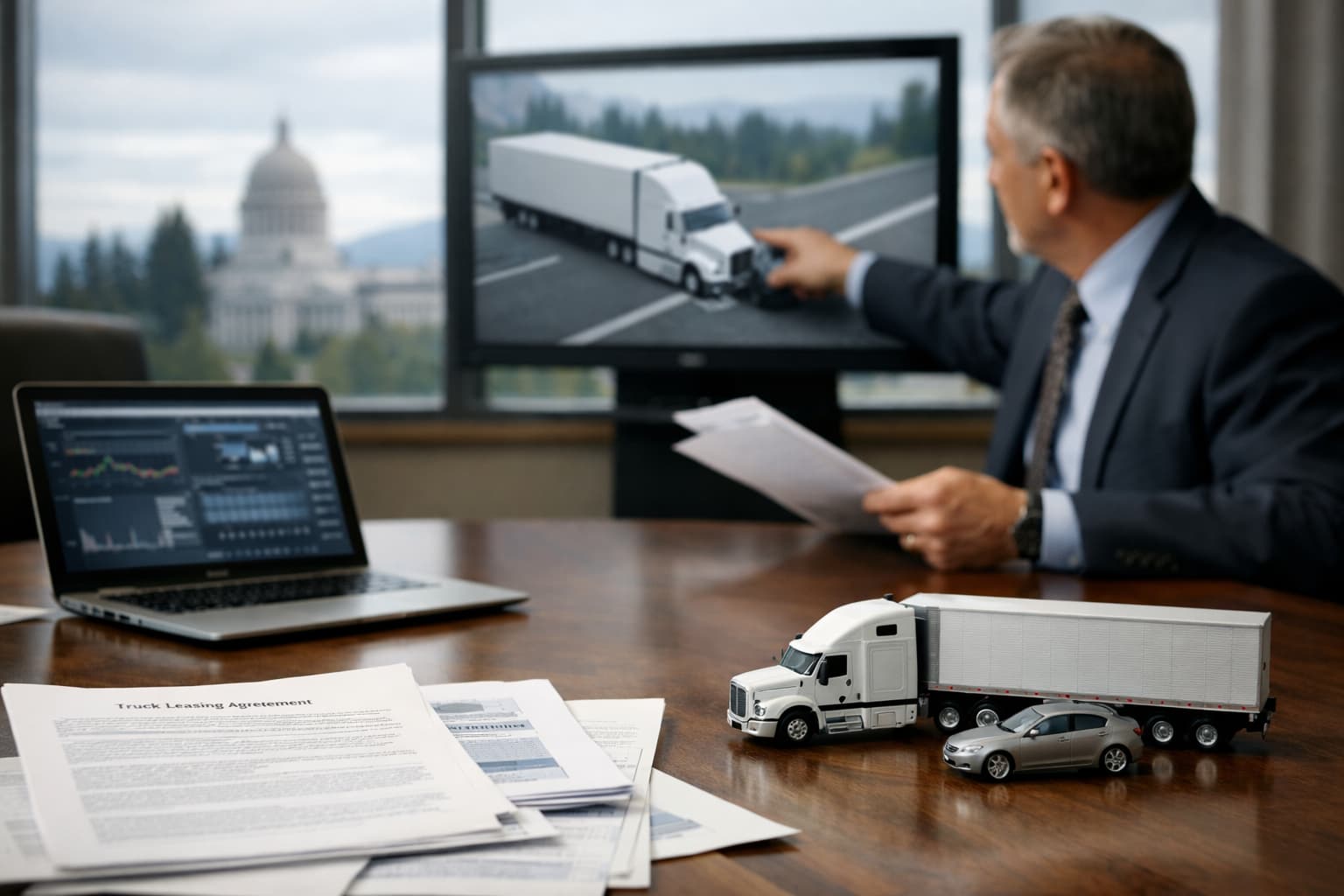
Filing a leasing truck accident claim requires a legal professional who can determine what to do when the truck involved is owned, leased, or operated by multiple entities. Rather than being a simple insurance claim against one driver, these cases often require a detailed legal strategy to determine who is financially responsible.
A truck accident lawyer manages each stage of the claim and protects your right to fair compensation. Here are the steps involved in the claim process:
Conducting a Comprehensive Case Evaluation
A truck accident lawyer begins by reviewing the facts of the crash, the injuries sustained, and the parties involved. This includes examining who controlled the truck, who managed the driver, and the companies that share liability.
The attorney uses the initial evaluation to identify potential defendants and applicable insurance policies before filing any claim.
Preserving and Securing Evidence
Leasing truck accident claims depend heavily on evidence that may be lost or altered if not preserved quickly. A truck accident attorney takes formal steps to secure key materials, such as vehicle data, driver records, and maintenance logs.
This process helps ensure that leasing companies, carriers, and insurers cannot discard information that may later prove negligence or liability.
Analyzing Leasing Agreements and Corporate Relationships
One of the most important steps involves reviewing leasing contracts and corporate documents. A truck accident attorney analyzes these records to determine the entity that had operational control of the truck, handled maintenance, or directed the driver.
This analysis helps prevent companies from shifting blame using contractual language.
Identifying All Liable Parties and Insurance Coverage
Rather than filing a claim against a single party, a truck accident lawyer identifies every potentially responsible entity. This may include the driver, the motor carrier, the leasing company, maintenance providers, or cargo loaders.
A truck accident attorney can also locate all available insurance policies, which can enhance your recovery in serious injury cases where damages exceed minimum coverage limits.
Preparing and Filing the Insurance Claims
Once the lawyer identifies liability and coverage, they prepare the necessary claim documentation. This includes submitting formal notices, organizing evidence, and presenting a clear narrative that connects negligent conduct to the victim’s injuries.
A truck accident lawyer must also file the claim in compliance with procedural requirements and to avoid delays or denials.
Managing Communication With Insurance Companies
Insurance carriers for leasing companies and motor carriers often attempt to limit payouts or dispute responsibility. A truck accident attorney manages all communications, responds to insurer inquiries, and counters efforts to shift blame.
They guide you to avoid making statements that others can take out of context or use to weaken the claim.
Establishing the Value of Your Losses
Your ability to recover from an injury depends on the settlement offer you receive in a truck accident claim. Therefore, a truck accident attorney must document the full scope of damages, including economic and non-economic losses.
Some of the damages they can pursue in the claim include:
- Medical Expenses
- Lost income
- Out-of-Pocket Expenses
- Emotional Anguish
- Pain and Suffering
- Loss of enjoyment of Life
- Loss of Consortium
- Permanent disability/Disfigurement
- Punitive Damages
They can use supporting documentation to demonstrate how the injuries have affected the victim’s Life. This detailed damage assessment strengthens the claim and supports demands for fair compensation.
Negotiating a Settlement or Preparing for Litigation
As the claim progresses, a truck accident attorney negotiates with insurers using the evidence developed throughout the case. If parties cannot reach a fair settlement, they prepare and file the litigation claim.
The claim process involves organizing filings, professional testimony, and legal arguments. The trial-readiness of a truck accident attorney often puts pressure on defendants and insurers to make better settlement offers.
Advancing the Claim Toward Resolution
The final step involves guiding the claim toward settlement or trial resolution. Throughout this process, the lawyer continues to address procedural requirements, respond to defenses, and advocate for the client’s interests.
Don’t Let Leasing Agreements Limit Your Compensation
While you may be entitled to compensation, truck leasing arrangements can limit your right to fair compensation after the crash. When the name on the truck differs from the true owner or controlling company, determining liability requires careful legal analysis and aggressive advocacy.
Our experienced truck accident lawyers at Boohoff Law, P.A., have years of experience representing injured victims and their families. You can count on us to protect your interests in the compensation claim.
FAQs: Leased Truck Accidents and Liability
How Much Can You Sue for a Leased Truck Accident?
There is no average value you can sue for a leased truck accident. Each case is unique, and the value depends on factors such as the severity of the injury, the availability of evidence, the duration of the recovery period, and the insurance coverage of the negligent party.
How Long Does It Take to Get an Injury Settlement?
Truck accident settlements typically take 6-18 months, though cases involving leased trucks may extend longer. Factors that may influence the timeline include determining actual ownership, investigating multiple liable parties, and injury severity.
Insurance negotiations and the likelihood of litigation can also determine the timeline of the claim.
When Should I Get a Lawyer for an Accident?
You should consider hiring a truck accident attorney after an accident involving severe injuries, uncertain liability, or hefty losses. Legal representation is especially important when determining the true value of your claim, facing disputes over fault, or receiving low settlement offers that fail to cover your losses.