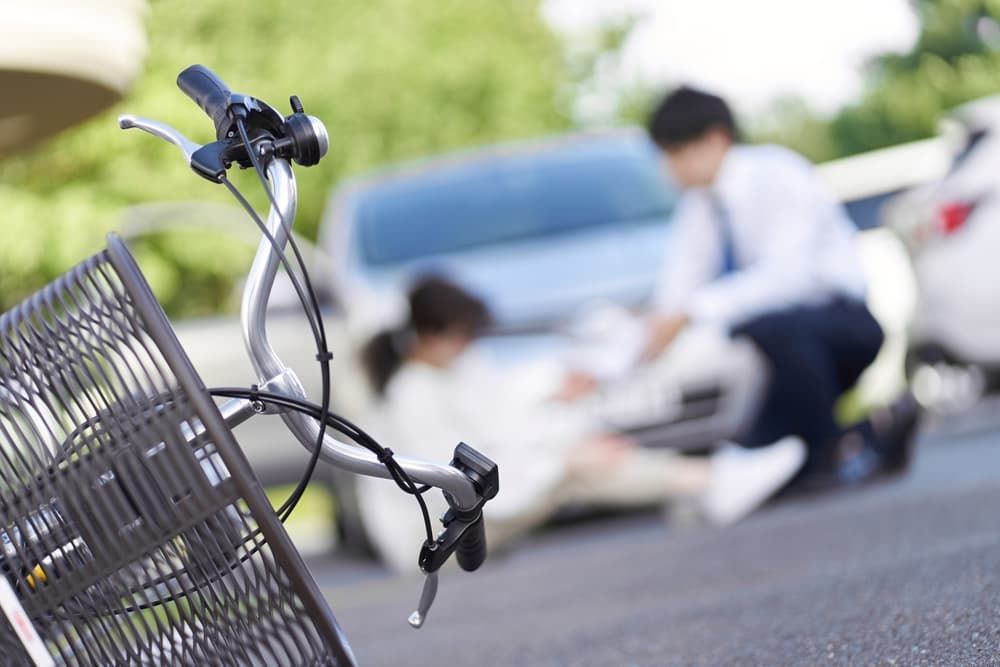
Bicycle accident scene on a roadway with a fallen bike, helmet, and glasses near a stopped car, illustrating a collision involving a cyclist.

How Do Most Bicycle Accidents Happen?

Most bicycle accidents in Florida don’t happen because the cyclist made a mistake. They happen when a driver isn’t paying attention, fails to yield the right-of-way at an intersection, or makes a sudden turn without checking for others on the road.

You were simply in the wrong place at the wrong time, and another person’s carelessness has now left you dealing with the consequences. Knowing the common reasons these incidents occur can help you understand your rights and what to do if you are injured.

Reach out to an experienced bicycle accident lawyer to protect your rights after a driver’s negligence—contact us today for a free consultation.

Get A Free Consultation

Key Takeaways about How Most Bicycle Accidents Happen

  • A significant number of bicycle accidents occur at intersections when drivers make turns without properly checking for cyclists.
  • Driver distraction, including texting or using a GPS, is a primary factor in many crashes involving bicyclists.
  • Florida law grants cyclists the same rights to the road as motorists, yet failure to yield the right-of-way is a frequent cause of accidents.
  • Environmental factors like poor road maintenance, lack of dedicated bike lanes, and drivers opening doors into traffic also contribute to bicycle incidents.
  • After a bicycle accident, documenting injuries, preserving evidence, and understanding the claims process are important steps for protecting a cyclist’s rights.

The Most Common Scenarios for Florida Bicycle Accidents

Bicycle accident scene on a roadway with a fallen bike, helmet, and glasses near a stopped car, illustrating a collision involving a cyclist.

Riding a bike in the Sunshine State offers beautiful views and great exercise, but it also comes with risks. Knowing how most bicycle accidents happen can provide crucial context if you or a loved one has been injured. The vast majority of these incidents are not random but occur in specific, recurring situations where a driver’s actions put a cyclist in danger.

Intersections are a primary hotspot for bicycle accidents. A common and dangerous scenario is the “left cross,” where a driver making a left turn fails to see an oncoming cyclist and turns directly into their path. Another is the “right hook,” where a driver passes a cyclist on the left and then makes an abrupt right turn, cutting the cyclist off.

These situations are especially common on busy Florida roads, where drivers may be focused on other cars and forget to look for more vulnerable road users.

Cyclists also face significant risks from drivers who don’t provide enough space. Florida law requires drivers to give cyclists at least three feet of passing distance, but many drivers either don’t know this rule or ignore it. This can lead to sideswipe collisions or force a cyclist off the road to avoid being hit.

Understanding How Most Bicycle Accidents Happen: The Role of Driver Behavior

While road conditions can play a part, the actions—or inactions—of motor vehicle drivers are the leading cause of serious bicycle accidents. A moment of carelessness behind the wheel of a two-ton vehicle can have life-altering consequences for an unprotected cyclist.

Distracted Driving: A Leading Cause of Bicycle Accidents

A driver who isn’t paying full attention is one of the greatest threats to a cyclist. In today’s world, distractions are everywhere, but they are particularly dangerous when someone is operating a motor vehicle. According to the National Highway Traffic Safety Administration (NHTSA), distracted driving is a serious public safety issue that claims over 3,000 lives annually.

The most common driver distractions include:

  • Visual Distractions: Taking your eyes off the road to look at a phone, GPS, or something on the side of the road.
  • Manual Distractions: Taking your hands off the wheel to text, eat, or adjust the radio.
  • Cognitive Distractions: Taking your mind off the task of driving, such as being deep in thought or talking to a passenger.

Texting is especially hazardous because it involves all three types of distraction at once. Florida law addresses this danger directly. Here, it is illegal to operate a motor vehicle while manually typing or entering letters, numbers, or symbols into a wireless communications device. When a driver’s distraction causes an accident with a cyclist, they can be held accountable for the harm they cause.

Failure to Yield the Right-of-Way

Many drivers are unaware that under Florida law, bicyclists have the same rights and duties as drivers of motor vehicles. This means a cyclist has the right to use the road, ride in a lane of traffic, and proceed through intersections just like a car.

Despite this, failure to yield is a primary reason for how most bicycle accidents happen. This often occurs when:

  • A driver pulls out from a side street, parking lot, or driveway into the path of a cyclist.
  • A driver at a stop sign proceeds without seeing a cyclist who has the right-of-way.
  • A vehicle turns into a cyclist’s path at an intersection, as discussed in the “left cross” and “right hook” scenarios.

These situations often arise from a phenomenon known as “inattentional blindness,” where a driver is technically looking but doesn’t “see” the cyclist because they are only scanning for other cars. Regardless of the reason, failing to yield and causing an injury is a form of negligence.

Impaired Driving Accidents

Driving under the influence of alcohol or drugs dramatically increases the risk of any type of crash, and cyclists are particularly vulnerable. An impaired driver has reduced reaction time, poor judgment, and diminished coordination, making it nearly impossible for them to share the road safely.

For a cyclist, being struck by an impaired driver can be catastrophic. These crashes are not accidents; they are the direct result of a dangerous and illegal choice. When an impaired driver causes an injury, they are not only subject to criminal charges but can also be held financially responsible for the victim’s medical bills, lost wages, and other damages in a civil claim.

Environmental and Road-Related Factors in Bicycle Crashes

While driver error is the most common cause of bicycle accidents, the environment in which cyclists ride also plays a significant role. Poorly designed or maintained infrastructure can create hazardous situations that contribute to serious crashes, even when a cyclist is riding cautiously.

Poor Road Conditions and How They Contribute to Bicycle Accidents Happening

The physical state of the road is critical for a cyclist’s safety. Unlike cars, which can easily roll over minor imperfections, a bicycle can be upended by road defects. Government entities are generally responsible for keeping public roads in a reasonably safe condition. When they fail to do so, they may be held accountable.

Common road hazards that contribute to bicycle accidents include:

  • Potholes: An unexpected pothole can cause a cyclist to lose control or be thrown from their bike.
  • Uneven Pavement or Large Cracks: Seams in the road or significant cracks can catch a bicycle tire.
  • Loose Gravel or Debris: Debris left on the road from construction or other sources can create a slippery, unstable surface.
  • Poor Drainage: Standing water can hide dangers and reduce traction.

Identifying these hazards and proving they caused an accident requires a detailed investigation into the road’s condition and maintenance records.

Inadequate Infrastructure for Cyclists

Florida is a popular state for cycling, but in many areas, the infrastructure has not kept pace with the growing number of riders. A lack of safe, dedicated spaces for cyclists forces them to share lanes with much larger, faster-moving vehicles, increasing the risk of a collision.

Some common infrastructure problems include:

  • Absence of Bike Lanes: Many roads, especially older ones, have no designated bike lanes at all.
  • Poorly Designed Bike Lanes: Some bike lanes are placed in dangerous locations, such as in the “door zone” of parked cars, or they may end abruptly, forcing cyclists to merge suddenly with traffic.
  • Faded or Unclear Markings: Worn-out paint for bike lanes and crosswalks can make it difficult for drivers to know where to expect cyclists.

Advocating for better cycling infrastructure is a long-term goal for many communities, but when an accident happens due to an existing design flaw, it’s important to explore all potential sources of accountability.

The Dangers of “Dooring”

Dooring” is a specific and sudden type of bicycle accident that occurs in urban and suburban areas with on-street parking. It happens when a driver or passenger of a parked car opens their door directly into the path of an approaching cyclist. With no time to react, the cyclist can crash into the door, resulting in serious injuries.

This is a preventable incident. Florida Statute 316.2005 clearly states that no person shall open a vehicle door on the side of moving traffic unless it is reasonably safe to do so and can be done without interfering with the movement of other traffic. This means drivers have a legal duty to check for cyclists before opening their doors.

Get A Free Consultation

Steps to Take After a Bicycle Accident in Florida

Once you have received immediate medical attention, you may be dealing with physical pain, emotional distress, and mounting medical bills. Taking a few organized steps can help protect your well-being and your right to fair compensation.

  1. Document Everything: Start a file to keep all accident-related paperwork. This includes medical records, bills from the hospital or your doctor, receipts for prescriptions, and any correspondence from insurance companies. If you have to miss work, keep a log of the days you missed and the income you lost.
  2. Preserve the Evidence: Your bicycle is a key piece of evidence. Do not repair it or throw it away. Take clear photos of the damage from multiple angles. Also, take pictures of your injuries as they heal, as well as the clothing and helmet you were wearing at the time of the crash.
  3. Follow All Medical Advice: It is crucial to attend all follow-up appointments with your doctors, physical therapists, or any other specialists. Following your treatment plan not only helps your recovery but also creates an official record of your injuries and their impact on your life.
  4. Be Cautious with Insurance Companies: You will likely be contacted by an adjuster from the at-fault driver’s insurance company. Be aware that their goal is often to settle the claim for the lowest amount possible. You are not required to give them a recorded statement. It is often wise to speak with a legal professional before agreeing to any settlement or signing any documents.
  5. Consider Your Legal Options: A bicycle accident claim can involve complex issues of insurance coverage, liability, and damages. Consulting with a Tampa personal injury attorney can help you understand the true value of your claim and your options for pursuing it.

Taking these steps can provide a solid foundation for your recovery process and any legal claim you may decide to pursue.

Establishing Fault in a Florida Bicycle Accident Claim

Person holding a clipboard labeled “Determining Fault,” symbolizing the process of establishing liability after a bicycle or motor vehicle accident.

To receive compensation for your injuries after a bicycle accident, you generally need to show that another party was at fault. In legal terms, this is often based on the concept of negligence. Negligence means that someone failed to act with reasonable care, and this failure caused your injuries.

Proving negligence requires establishing four key elements:

  • Duty of Care: The at-fault party (usually a driver) owed you a legal duty to operate their vehicle safely and follow traffic laws.
  • Breach of Duty: The driver violated that duty through a specific action, like texting while driving, speeding, or failing to yield.
  • Causation: The driver’s breach of duty was the direct cause of the accident and your resulting injuries.
  • Damages: You suffered actual harm, such as medical expenses, lost income, pain, and suffering, as a result of the injuries.

Evidence is key to establishing these elements. This can include the official police report, photos and videos from the scene, statements from anyone who witnessed the accident, and testimony from medical professionals about your injuries. A skilled attorney can help gather this evidence and build a strong case to demonstrate accountability.

FAQs for How Do Most Bicycle Accidents Happen

Here are answers to some common questions that arise after a bicycle accident in Florida.

What if I wasn’t wearing a helmet? Can I still have a case?

Yes, you may still have a case. In Florida, only cyclists under the age of 16 are legally required to wear a helmet. For adults, while helmets are highly recommended for safety, not wearing one does not prevent you from seeking compensation. However, the opposing side might argue that your injuries would have been less severe if you had worn one, which could potentially reduce the amount of compensation you receive under a rule called comparative negligence.

How does Florida’s “no-fault” car insurance system apply to bicycle accidents?

Florida’s no-fault system requires that your own Personal Injury Protection (PIP) insurance is the first source of coverage for medical bills, up to your policy limits, regardless of who was at fault. If you own a car, your own PIP policy will apply. If you don’t, you may be able to get PIP coverage from a relative you live with or from the driver’s insurance policy. This system can be complicated, and an attorney can help clarify how it applies to your situation.

What is the statute of limitations for filing a bicycle accident lawsuit in Florida?

The statute of limitations is a legal deadline for filing a lawsuit. For personal injury cases in Florida, including bicycle accidents, recent changes in the law have adjusted the timeframe. It is very important to check with a legal professional about the current deadline, as missing it could mean losing your right to sue for damages.

Get the Support You Deserve – Contact Boohoff Law, P.A. Today

If you were injured in a bicycle accident, you don’t have to figure out the next steps by yourself. At Boohoff Law, P.A., we are committed to helping injured cyclists in Florida hold negligent drivers accountable. We understand the physical, emotional, and financial toll an accident can take, and our focus is on managing your case so you can focus on your recovery.

We will listen to your story, investigate your accident, and fight for the full compensation you deserve. You can rest assured that we work on a contingency fee basis, which means No Fees Unless We Win. Your initial consultation is always free and confidential. Contact us today at (813) 445-8161 or through our online form to learn more about your options.

Get A Free Consultation

Bicycle accident scene with a fallen bicycle on a road after a collision

What are the Most Common Types of Bicycle Accidents?

Riding a bicycle offers a unique sense of freedom, whether you’re commuting along the Burke-Gilman Trail in Seattle or enjoying a sunny ride on Florida’s Pinellas Trail. It’s a healthy, environmentally friendly way to get around. However, sharing the road with much larger and heavier vehicles carries inherent risks. Understanding the most common types of bicycle accidents and how these incidents happen can help cyclists and drivers be more aware of the dangers they both face.

When a bicycle and a car collide, the cyclist is almost always the one who bears the brunt of the impact. The consequences can be severe, impacting your health, job performance, and overall well-being. If you’ve been injured, learning what you can do to protect your rights is an important part of the recovery process.

Reach out to an experienced bicycle accident lawyer to protect your rights after a serious crash—contact us today for a free consultation.

Get A Free Consultation

Key Takeaways about the Most Common Types of Bicycle Accidents

  • Intersection-related collisions, such as the “right cross,” are a leading cause of bicycle accidents involving motor vehicles.
  • “Dooring” incidents, where a person in a parked car opens their door into a cyclist’s path, can cause sudden and severe injuries.
  • Many states, including Washington and Florida, have specific laws requiring drivers to give cyclists a safe passing distance to prevent sideswipes.
  • The legal principle of comparative negligence determines how fault is assigned in states like Florida and Washington, which can affect a cyclist’s ability to recover compensation.
  • Documenting injuries, preserving evidence, and understanding insurance policies are vital steps for a cyclist to take following a collision.

The “Right Cross” and Other Intersection Dangers

Bicycle accident scene with a fallen bicycle on a road after a collision

Intersections are high-risk zones for cyclists. So many things are happening at once: cars are turning, pedestrians are crossing, and traffic signals are changing. One of the most common types of bicycle accidents in these areas is known as the “right cross.” This happens when a car pulls out from a side street, driveway, or parking lot on the right and collides with a cyclist who has the right-of-way. The driver may not see the cyclist or misjudge their speed, leading to a serious T-bone-style crash.

Other frequent intersection accidents include:

  • The Left Turn Collision: A driver making a left turn fails to see an oncoming cyclist and turns directly into their path. This is a very common scenario, often caused by driver inattention.
  • Failure to Yield: A driver at a stop sign or red light proceeds into the intersection without yielding the right-of-way to a cyclist lawfully crossing.
  • Running a Red Light or Stop Sign: A driver who disregards a traffic signal can cause a devastating accident for a cyclist who is legally proceeding through the intersection.

These situations are often complicated by the fast-paced environment of busy crossings, like those found in downtown Seattle or bustling Tampa neighborhoods, where a moment of distraction can have lasting consequences.

The “Dooring” Accident: A Sudden and Serious Hazard

Imagine riding in a designated bike lane when the door of a parked car swings open directly in your path. You have no time to react. This is called a “dooring” accident, and it is one of the most common types of bicycle accidents in urban areas. The impact can throw a cyclist into moving traffic, leading to even more catastrophic injuries.

Both Washington and Florida have laws in place to prevent these incidents. For example, Washington’s RCW 46.61.620 states that no one shall open a car door on the side of moving traffic unless it is reasonably safe to do so and can be done without interfering with the movement of other traffic. Similarly, Florida Statute 316.2005 has a similar provision. These laws place the responsibility on the person exiting the vehicle to check for cyclists and other traffic before opening their door.

Even with these laws, dooring remains a serious threat. A cyclist struck by a door can suffer from broken bones, head injuries, and deep lacerations.

Sideswipe and Overtaking Accidents

Every cyclist has likely felt the unease of a car passing too closely. When a driver fails to provide adequate space while overtaking a cyclist, a sideswipe accident can occur. The driver might misjudge the distance, be distracted, or simply not be paying attention to their position on the road. Even if the car doesn’t make direct contact, a vehicle passing too closely can create a wind blast strong enough to cause a cyclist to lose their balance and crash.

To address this danger, many states have enacted safe passing laws.

  • In Florida, the law generally requires drivers to pass a cyclist with at least three feet of clearance.
  • Washington also has a safe passing law that requires drivers to pass at a safe distance, which under normal conditions is at least three feet.

These laws are designed to create a buffer zone for cyclists, but they are unfortunately not always followed. Distracted driving, aggressive driving, or a lack of awareness about a cyclist’s right to the road contribute to these dangerous overtaking incidents.

Rear-End Collisions: A Cyclist’s Vulnerability

While less frequent than intersection accidents, rear-end collisions are particularly dangerous for cyclists due to the force of the impact and the complete lack of protection. These accidents often happen when a driver is not paying attention and fails to notice a cyclist ahead of them. The rise of smartphone use while driving has made this an even greater concern.

Several factors can lead to a rear-end bicycle accident:

  • Distracted Driving: A driver texting, talking on the phone, or adjusting their GPS may not see a cyclist until it’s too late.
  • Driving Under the Influence: Impaired drivers have slower reaction times and poor judgment, making them a significant threat to everyone on the road.
  • Poor Visibility: During dawn, dusk, or in adverse weather like Seattle’s frequent rain, it can be harder for drivers to see cyclists. Even with proper lights and reflective gear, a cyclist can be missed by an inattentive driver.

Because a cyclist has no rear-view protection, these collisions can occur without any warning, often resulting in severe spinal cord injuries, traumatic brain injuries, and other life-altering conditions.

Get A Free Consultation

Common Injuries Resulting from Bicycle Accidents

Cyclist holding injured knee after a bicycle accident, with fallen bike on pavement

Due to the lack of physical protection, cyclists often sustain serious injuries in a collision with a motor vehicle. Even at low speeds, the impact can be devastating. Understanding the types of injuries that can occur highlights the importance of seeking prompt medical care and documenting your condition carefully after any accident.

Common injuries include:

  • Traumatic Brain Injuries (TBIs): Even with a helmet, a cyclist’s head can strike the pavement or the vehicle with incredible force, potentially causing concussions or more severe brain injuries.
  • Spinal Cord Injuries: Damage to the spinal cord can lead to partial or complete paralysis and can permanently alter a person’s life.
  • Broken Bones and Fractures: Wrists, collarbones, legs, and arms are frequently broken as a cyclist tries to brace for impact or is thrown from the bike.
  • Road Rash and Soft Tissue Damage: Severe abrasions, known as road rash, can be incredibly painful, require extensive treatment, and lead to permanent scarring and infections.
  • Internal Injuries: The blunt force trauma from an accident can cause internal bleeding and damage to organs, which may not be immediately apparent.

Seeking a full medical evaluation after any bike accident is critical, as some serious injuries may not show symptoms right away.

What Steps Should You Take After a Bicycle Accident?

Once you have addressed your immediate medical needs, the steps you take can be very important for your physical and financial recovery. The time following a collision can be disorienting, but staying organized can help protect your rights.

  1. Document Everything. Write down every detail you can remember about the accident—the time of day, the weather, what you were doing, and what the driver was doing. If you have photos of the scene, your injuries, and the damage to your bike and the car, keep them in a safe place.
  2. Preserve the Evidence. Do not repair your bicycle or throw away your damaged helmet or torn clothing. These items are important pieces of evidence that show the reality of the impact.
  3. Keep a Detailed Record. Start a file to keep all your medical bills, receipts for prescriptions, and any other costs related to the accident. It’s also helpful to keep a journal detailing your pain levels, medical appointments, and how the injuries are affecting your daily life.
  4. Be Cautious with Insurance Companies. An insurance adjuster from the driver’s company may contact you shortly after the accident. Their job is to settle the claim for as little as possible. It is often wise not to give a recorded statement or accept a quick settlement offer before you fully understand the extent of your injuries and your rights.

Taking these organized steps can provide a clear and accurate picture of how the accident has impacted your life.

Understanding Liability in Florida and Washington

When it comes to determining who is at fault for a bicycle accident, Washington and Florida have different legal frameworks. Both states use a system of “comparative negligence,” but they apply it differently. This concept is crucial because it can directly influence your ability to receive compensation for your injuries.

In Washington, the state follows a “pure comparative fault” rule, meaning you can recover damages even if you are found to be partially at fault for the accident. For example, if you were found to be 20% at fault, your total compensation award would be reduced by 20%. Even if you were 99% at fault, you could still technically recover 1% of your damages.

Florida, on the other hand, uses a “modified comparative fault” system. Here, you can only recover damages if you are found to be 50% or less at fault for the accident. If you are determined to be 51% or more at fault, you are barred from recovering any compensation at all.

Because of these complex rules, establishing the facts of what happened is essential. A thorough investigation can make a significant difference in how fault is assigned and the final outcome of your claim.

Bicycle Accident FAQs

Here are answers to some frequently asked questions about bicycle accident claims.

What if a road hazard caused my bicycle accident?

If your accident was caused by a poorly maintained road, such as a large pothole or unmarked construction, a government entity or a private contractor could be held responsible. These cases can be complex because government agencies often have special rules and shorter deadlines for filing a claim. Documenting the hazard with photos and reporting it to the proper authorities is an important first step.

Does my own auto insurance cover me if I’m in a bike accident?

In some cases, yes. Your Personal Injury Protection (PIP) coverage, if you have it on your auto insurance policy, may extend to injuries you sustain as a cyclist in an accident with a motor vehicle. Additionally, your Uninsured/Underinsured Motorist (UIM) coverage could apply if the at-fault driver has no insurance or not enough to cover your damages. It is a good idea to review your own policy to understand your coverage.

How long do I have to file a claim after a bicycle accident in Washington or Florida?

This time limit is called the statute of limitations. In Washington, you generally have three years from the date of the accident to file a personal injury lawsuit. In Florida, the law was recently changed. For accidents occurring on or after March 24, 2023, you now have two years to file. The deadline is a strict one, so it’s important to be aware of it.

What if the driver who hit me was uninsured?

If the at-fault driver does not have insurance, you may still be able to recover compensation through your own auto insurance policy’s Uninsured Motorist (UM) coverage. This is an optional but highly recommended coverage that protects you in a hit-and-run situation or if the responsible driver is uninsured.

Can I still have a case if I wasn’t wearing a helmet?

Yes. While wearing a helmet is always the safest choice, not wearing one does not prevent you from holding a negligent driver accountable. The other party’s insurance company might try to argue that your injuries would have been less severe if you had worn a helmet to reduce their payout, but it does not erase the driver’s responsibility for causing the crash in the first place.

Are e-bikes treated the same as regular bicycles in accident cases?

The laws surrounding electric bicycles (e-bikes) are still developing. In both Washington and Florida, e-bikes are generally treated similarly to traditional bicycles, meaning riders have many of the same rights and responsibilities. However, the specific class of e-bike and local ordinances can sometimes play a role. The fundamental principles of negligence that apply to a regular bike accident would still apply.

Get the Support You Deserve

Dealing with the consequences of a bicycle accident can be a difficult journey. As you focus on your physical recovery, you may also face mounting medical bills, lost income, and the stress of dealing with insurance companies. You don’t have to handle it by yourself.

The dedicated team at Boohoff Law, P.A. is here to help you understand your rights and options. We are committed to providing compassionate and skilled advocacy for cyclists injured in Seattle, Tampa, and across Florida. Our approach is client-first, and we work on a contingency fee basis, which means you pay no fees unless we win your case. Let us focus on holding the responsible parties accountable so you can focus on getting better.

Call us for a free, no-obligation consultation with an experienced personal injury lawyer to discuss your case.

Get A Free Consultation

Rear-end car accident showing front-end damage to a blue vehicle after colliding with a stopped black car

Rear-End Accidents: The 8 Defenses That Overcome the Trailing Driver Presumption

In Florida, a common belief is that if you hit a car from behind, you are automatically at fault. While this is often the case, it is not an absolute rule. The law recognizes that some rear-end collisions are caused by the lead driver’s actions, and it provides a way for the rear driver to present evidence and challenge fault. This is possible by overcoming what the courts call the trailing driver presumption.

This presumption is a legal starting point, not the final word. If you were the trailing driver in a rear-end accident, understanding the specific defenses that can rebut this presumption is crucial. There are situations where the driver in front created a hazard that no reasonable person could have avoided, and Florida law accounts for these exceptions.

Reach out to a Tampa rear-end accident lawyer to challenge the trailing driver presumption—contact us today for a free consultation.

Get A Free Consultation

Key Takeaways about Rear-End Accidents and Defenses that Overcome the Trailing Driver Presumption

  • Florida law starts with a presumption that the rear driver is at fault in a rear-end collision.
  • This legal standard, known as the trailing driver presumption, can be challenged and overcome with sufficient evidence.
  • Defenses against the presumption often focus on the lead driver’s unexpected, illegal, or unsafe actions.
  • Mechanical failures, sudden lane changes, and non-working brake lights on the lead vehicle are examples of valid defenses.
  • Successfully rebutting the presumption requires clear proof that the lead driver’s conduct was the primary cause of the accident.

Understanding Florida’s Trailing Driver Presumption

Rear-end car accident showing front-end damage to a blue vehicle after colliding with a stopped black car

When a rear-end collision occurs, the justice system needs a point of reference to begin its analysis of fault. In Florida, the starting point is the presumption of the trailing driver. This isn’t a law written in a statute book but a legal principle established through court decisions over many years. It presumes the driver of the rear vehicle was negligent—meaning they failed to act with reasonable care.

The logic behind this presumption is straightforward:

  • Every driver has a duty to maintain a safe following distance from the vehicle in front of them.
  • A driver should be able to stop in time if the car ahead makes an ordinary or expected stop.
  • Therefore, if a collision occurs, it’s presumed the rear driver was following too closely or was not paying attention.

However, the most important word in this legal principle is “presumption.” It is not a concrete rule. Think of it as a default setting that can be changed. The law calls this a “rebuttable presumption,” which simply means the rear driver has the opportunity to present evidence to rebut, or disprove, the initial assumption of fault.

If the trailing driver can produce evidence showing the lead driver did something unexpected and dangerous, the presumption can disappear, and a jury can then weigh the evidence to decide who was truly at fault.

The 8 Key Defenses to Rebut the Presumption

To successfully challenge the trailing driver presumption, you need more than just your side of the story. You need evidence that demonstrates one of the recognized exceptions to the rule. Here are eight common defenses that can shift the focus to the lead driver’s actions.

Defense 1: The Sudden and Unexpected Stop

This is the most common defense used to overcome the trailing driver presumption. While you are expected to be ready for a car to stop at a red light or in heavy traffic on I-4, you are not expected to anticipate a driver slamming on their brakes for no reason in the middle of a free-flowing highway.

To qualify as a defense, the stop must be both sudden and truly unexpected. An “abrupt” stop for a legitimate reason, like a child running into the street, might not be enough. However, a stop made in anger, for no apparent reason, or in a location where no reasonable driver would expect it can serve as a strong defense. Evidence like testimony from other drivers or dashcam footage is often essential to prove that this occurred.

Defense 2: An Unlawful or Abrupt Lane Change

Imagine you are driving at a safe distance, and another vehicle suddenly cuts into your lane directly in front of you and immediately slows down or stops. In this scenario, you may have had no time to react, regardless of how carefully you were driving. This type of unsafe lane change can be a powerful defense.

Under Florida law, a driver must ensure it is safe before changing lanes. When a driver violates this and causes a collision, they can be held responsible. Proving this defense often involves:

  • Accident reconstruction to analyze the angle of impact and vehicle positions.
  • Eyewitness accounts from others who saw the dangerous maneuver.
  • Video evidence from traffic cameras or personal dashcams.

This defense shows that the collision was not a result of following too closely but was caused by the other driver creating a sudden and unavoidable hazard.

Defense 3: Malfunctioning Brake Lights or Taillights

A fundamental part of road safety is communication between drivers. Brake lights are your primary signal that you are slowing down or stopping. If the vehicle in front of you has broken or non-functional brake lights, you are robbed of this critical warning.

You cannot react to a hazard you cannot see. Driving at night on a road like the Tamiami Trail with a vehicle in front of you that has no working taillights presents an obvious danger. If that vehicle suddenly stops, the trailing driver may have no visual cue until it is too late. In such cases, the lead driver’s failure to maintain their vehicle in safe working order can be a valid defense against the presumption of the trailing driver.

Defense 4: The Illegally Stopped Vehicle

A vehicle that is stopped in a travel lane where it shouldn’t be—especially without hazard lights—creates a dangerous obstacle. This is different from a car that is properly pulled over to the shoulder. An illegally stopped car, for instance, one that is parked just around a blind curve or stopped in a high-speed lane to let out a passenger, can cause a completely unavoidable accident.

The key here is that the vehicle was stopped in a place where a following driver would have no reason to anticipate it. This is not about a car stopping in traffic; it is about a stationary object that has become a sudden and illegal obstruction in the roadway.

Defense 5: The Lead Driver Unexpectedly Reversing

While it may sound unusual, accidents sometimes happen because the lead driver puts their car in reverse while in a lane of traffic. This could happen if a driver misses their turn and tries to back up on the road or attempts to reverse into a parking spot from a travel lane.

A rear-end collision happens when the front of one car hits the back of another. If the “lead” car was actually moving backward at the time of impact, the driver of that car is clearly not behaving as a typical lead driver would. This action is highly unexpected and can be a complete defense to the trailing driver presumption, but proving it often requires strong evidence, like a witness or video footage.

Defense 6: The Complexities of a Chain-Reaction Collision

Chain-reaction or multi-car pile-ups add layers of complexity to determining fault. The trailing driver presumption can be misapplied in these situations. For example, consider a three-car accident:

  • Vehicle C strikes the rear of Vehicle B.
  • The force of that impact pushes Vehicle B into the rear of Vehicle A.

In this common scenario, the driver of Vehicle B did not fail to maintain a safe distance from Vehicle A. Instead, they were a victim of the initial collision caused by Vehicle C. The driver of Vehicle B can rebut the presumption of fault for hitting Vehicle A by proving they were pushed into it by the third car.

Defense 7: Sudden and Unforeseeable Mechanical Failure

This defense can be challenging to prove, but it is valid in certain circumstances. It applies when the trailing driver’s vehicle suffers a sudden mechanical failure that makes it impossible to stop. The most common example is catastrophic brake failure.

To use this defense successfully, the failure must have been truly sudden and unforeseeable. If you knew your brakes were in poor condition and failed to get them repaired, this defense would not apply. You would likely be considered negligent for driving an unsafe vehicle.

However, if your brakes were well-maintained and failed without any warning, this could rebut the trailing driver presumption. Evidence would typically include a report from a certified mechanic who inspects the vehicle after the crash.

Defense 8: Unexpected Road Hazards

Sometimes, an accident is caused not by the actions of another driver but by a sudden hazard in the road itself. This is often called the “emergency doctrine,” where a driver reacts to a sudden and perilous situation.

For instance, if a large piece of furniture falls off a truck on the Sunshine Skyway Bridge, the driver in front of you might swerve or brake erratically to avoid it. If you then collide with them, you may be able to argue that the true cause of the accident was the unexpected hazard, which created an emergency for everyone. The lead driver’s reaction might have been reasonable, and your inability to stop might have been equally unavoidable given the suddenness of the event.

Get A Free Consultation

Gathering Evidence to Challenge the Trailing Driver Presumption

Driver using a smartphone to photograph damage after a rear-end car accident for evidence

Claiming that one of these defenses applies is only the first step. To successfully overcome the legal presumption of fault, you must support your claim with credible evidence. Insurance companies and courts rely on facts, not just assertions. The more evidence you can gather, the stronger your position will be.

  1. The Official Police Report: While not always the final word, the officer’s initial report is a critical piece of evidence. It will contain diagrams, measurements, descriptions of the damage, and any citations issued.
  2. Photographs and Videos: Visual evidence is incredibly powerful. Take pictures of all vehicles involved, their damage, their final resting positions, any skid marks on the road, and the general scene. Dashcam footage or video from nearby businesses can be invaluable.
  3. Witness Statements: Independent witnesses who have no stake in the outcome can provide objective accounts of what happened. Be sure to get their names and contact information before they leave the scene.
  4. Vehicle Data Recorders: Many modern cars are equipped with event data recorders (EDRs), often called “black boxes.” These devices can record data about speed, braking, and steering in the moments before a crash, providing unbiased proof of what occurred.
  5. Expert Analysis: In complex cases, an accident reconstructionist can be retained to analyze the physical evidence. These professionals can create detailed reports and animations that show exactly how the collision unfolded.

Gathering this information can feel like a big job, especially when you are trying to recover from injuries. This is one of the key areas where a legal professional can provide significant support.

How a Personal Injury Attorney Can Help Your Case

Challenging a powerful legal presumption, like the trailing driver presumption, requires a detailed understanding of the law and a strategic approach to building a case. An experienced Tampa personal injury attorney can manage this process for you while you focus on your health.

A dedicated legal team can help by:

  • Immediately launching a thorough investigation to preserve critical evidence before it disappears.
  • Identifying and interviewing all potential witnesses to the collision.
  • Working with accident reconstruction specialists and other professionals to build a scientific basis for your defense.
  • Taking over all communications with insurance companies, who may try to pressure you into accepting fault.
  • Developing a strong, evidence-based argument to show that the lead driver was primarily responsible for the crash.

An attorney serves as your advocate, working to ensure your side of the story is heard and supported by the facts.

Trailing Driver Presumption FAQs

Here are answers to some common questions about challenging fault in a Florida rear-end accident.

What if the lead driver was texting or otherwise distracted?

If you can prove the lead driver was distracted and this distraction caused them to make a sudden, erratic move (like an unnecessary stop), it can be a key piece of evidence. This strengthens a defense like the “sudden and unexpected stop” by explaining why it happened, showing the lead driver was behaving negligently.

Does the “comparative negligence” rule in Florida affect the trailing driver presumption?

Yes. Florida follows a “pure comparative negligence” model. This means that even if you are found partially at fault, you may still be able to recover damages. For example, if a jury decides the lead driver was 80% at fault for an illegal lane change, and you were 20% at fault for not reacting faster, you could still recover 80% of your damages.

How long do I have to file a claim after a rear-end accident in Florida?

Florida has a law known as the statute of limitations, which sets a deadline for filing a lawsuit. For most personal injury claims arising from negligence, such as a car accident, the deadline was recently changed. It’s important to consult with an attorney promptly to understand the specific time limits that apply to your situation, as missing the deadline can prevent you from ever recovering compensation.

Can bad weather be a defense to the presumption of the trailing driver?

While bad weather like heavy rain or fog is a factor in many accidents, it is generally not a defense on its own. The law expects all drivers to adjust their speed and following distance to account for poor visibility and slippery roads. However, bad weather can be a contributing circumstance when combined with another defense, such as a lead driver’s sudden stop or broken taillights.

What happens if both drivers share some fault?

This is very common and is handled by the comparative negligence rule. The trailing driver presumption is a starting point. If you successfully rebut it, a jury will then weigh all the evidence to assign a percentage of fault to each driver. Your financial recovery will then be adjusted based on your percentage of fault.

Get the Advocacy You Deserve – Contact Boohoff Law, P.A. Today

If you have been involved in a rear-end collision and believe the other driver was at fault, do not let the trailing driver presumption discourage you. The law is more nuanced than a simple rule, and you have the right to present your case. At Boohoff Law, P.A., we are committed to helping our clients hold the responsible parties accountable.

We will listen to your story, investigate every detail of your accident, and develop a clear strategy to protect your rights. Our team is here for you, ready to take on the insurance companies and fight for the compensation you deserve. We operate on a contingency fee basis, which means there are No Fees Unless We Win.

Your recovery is what matters most. Let us handle the legal process so you can concentrate on getting better. Contact us today at (813) 445-8161 or through our online form for a free, no-obligation consultation to discuss your case. We are available 24/7.

Get A Free Consultation

Hands holding an empty wallet over unpaid bills and financial documents, illustrating economic hardship and out-of-pocket losses after an injury.

Economic Damages Beyond Medical Bills: Lost Wages, Future Earnings, and Household Services in Florida Claims

When a serious accident occurs, the first financial concern is often the stack of medical bills that begins to arrive. While these costs are a major part of a personal injury claim, they are only one piece of the puzzle.

Florida law allows you to seek recovery for all financial losses caused by your injury, which includes significant economic damages beyond your medical treatment. These damages cover the money you’ve lost from being unable to work, the future income you may no longer be able to earn, and even the value of the daily tasks you can no longer perform for your family.

Understanding the full scope of your potential compensation is crucial for your financial stability. These additional economic damages—lost wages, diminished future earning capacity, and the loss of household services—are very real losses that deserve to be accounted for.

If your injuries have caused financial losses beyond medical bills, a skilled Tampa personal injury lawyer can fight for the full compensation you deserve—contact us today for a free consultation.

Get A Free Consultation

Key Takeaways about Economic Damages Beyond Medical Bills in Florida Claims

  • Economic damages in a Florida personal injury claim extend far beyond initial medical bills to include various financial losses.
  • Compensation can be sought for past lost wages, including missed salary, bonuses, overtime, and benefits, resulting from time off work for recovery.
  • An individual’s diminished earning capacity, which is the loss of ability to earn money in the future due to long-term or permanent injuries, is a significant component of economic damages.
  • The value of lost household services, such as cleaning, cooking, childcare, and home maintenance, can be calculated and included in a claim.
  • Proper documentation, and sometimes the analysis of financial and vocational professionals, is essential to substantiating these types of economic damages.

A Deeper Look at Economic Damages in Florida

Hands holding an empty wallet over unpaid bills and financial documents, illustrating economic hardship and out-of-pocket losses after an injury.

In any personal injury case, the losses you suffer are typically categorized into two types: economic and non-economic damages. It’s important to understand the difference.

  • Non-economic damages are intangible losses. They don’t have a specific price tag but represent the real, personal impact of an injury on your life. This can include pain, suffering, emotional distress, and loss of enjoyment of life.
  • Economic damages, on the other hand, are the measurable financial losses you have incurred or will incur because of the injury. These are the direct, out-of-pocket costs and lost income that can be calculated and proven with documents like bills, receipts, and pay stubs. While medical bills are the most obvious example, the category is much broader and is designed to make you financially “whole” again—as if the accident had never happened.

The legal framework in Florida allows for the recovery of these financial losses, holding the at-fault party accountable for the full economic consequences of their actions.

Reclaiming Your Income: Lost Wages and Benefits

One of the most immediate financial pressures after an injury is the loss of your regular paycheck. If your injuries prevent you from working, even for a short time, the bills don’t stop. Compensation for lost wages is intended to cover the income you missed out on between the time of the accident and the settlement of your case.

This isn’t just about your base salary. A complete calculation of your lost wages should include every form of income and benefit you were deprived of.

  • Regular Salary or Hourly Pay: This is the most straightforward part of the calculation, based on what you would have earned had you been able to work your normal schedule.
  • Overtime Pay: If you regularly worked overtime hours, the loss of that extra income can be included in your claim.
  • Bonuses, Commissions, and Tips: For many people, especially in sales or service industries, these make up a large part of their income. You can claim the bonuses or commissions you likely would have earned.
  • Lost Benefits: You may have lost out on employer contributions to your retirement plan, health insurance, or paid time off (PTO) that you were forced to use.

To build a strong case for lost wages, clear documentation is essential. This includes pay stubs, W-2 forms, letters from your employer confirming your rate of pay and time off, and records of your past earnings to demonstrate a consistent work history.

Proving these losses ensures that the income you and your family depend on is not permanently lost due to someone else’s negligence.

What If I’m Self-Employed or a Gig Worker?

Calculating lost income can feel more complex if you don’t receive a regular paycheck. However, gig workers, freelancers, and small business owners in Florida have the same right to recover their lost income. Instead of pay stubs, you would use different documents to prove your losses.

  • Tax Returns: Your past tax returns provide a clear history of your annual earnings.
  • 1099 Forms: These forms document payments from clients and companies.
  • Invoices and Billing Records: A record of your client work and billing history can show a pattern of income.
  • Business Bank Statements: These can demonstrate your business’s consistent revenue stream.

Even if your income fluctuates, a financial professional or an attorney can help analyze your records to establish an average income and demonstrate what you lost during your recovery period.

Securing Your Future: Diminished Earning Capacity

Some injuries are so severe that they have a lasting impact on your ability to work and earn a living. You may not be able to return to your old job, or you might have to reduce your hours or take a lower-paying position. This long-term loss of income potential is known as “diminished earning capacity” or “loss of future earnings.”

This is one of the most significant and often largest components of economic damages in a serious injury claim. It’s not about the wages you’ve already lost; it’s about the money you will lose over the course of your working life.

Calculating this loss is a complex process. It involves looking at many factors to project your financial future and determine the gap between what you would have earned and what you can now earn.

  • Your age, education, and skill set
  • Your work history and career trajectory before the injury
  • The nature and severity of your permanent limitations
  • The expected length of your working life

For example, imagine a 30-year-old construction worker in Tampa who suffers a back injury that prevents them from ever doing manual labor again. They may have to take a sedentary, minimum-wage job. The claim for diminished earning capacity would calculate the difference between their expected lifetime earnings as a construction worker and their new, much lower lifetime earnings. This could amount to hundreds of thousands, or even millions, of dollars over several decades.

How Is Future Lost Income Proven?

Because diminished earning capacity involves predicting the future, it often requires the input of specialized professionals who can provide credible testimony and reports.

  • Medical Professionals: Doctors and specialists will provide opinions on the permanence of your injury and your physical or cognitive limitations. They can issue a disability rating that defines what you can and cannot do.
  • Vocational Experts: These professionals analyze your skills, education, and job market to determine what types of work you are still capable of performing and what those jobs pay. They can testify about your reduced employment options.
  • Economists or Financial Analysts: These experts take the information from medical and vocational professionals and perform the final calculations. They project your lost earnings over your lifetime, factoring in things like inflation and potential promotions you would have received, and then calculate the present-day value of that total loss.

Gathering this evidence is a detailed process, but it is critical for ensuring you have the financial resources to support yourself and your family in the years to come.

Get A Free Consultation

The Hidden Cost: Valuing Lost Household Services

Illustrated scene of an injured woman sitting on a blue sofa with her leg in a cast and arm in a sling, reviewing paperwork at home with crutches nearby.

An injury doesn’t just affect your ability to go to a job; it also impacts your ability to manage your home and care for your family. The daily tasks you once performed without a second thought—cooking, cleaning, grocery shopping, mowing the lawn, driving children to school—have real economic value. If you can no longer perform these “household services” and have to hire someone to do them, or if a family member has to take them on, the value of that labor can be included in your economic damages.

This concept recognizes that running a household is a form of unpaid labor. If you are injured and can’t contribute, that work doesn’t just disappear. Someone has to do it, and that has a cost.

Consider a parent who stays home to care for young children. An injury that prevents them from lifting a toddler, cleaning the house, or preparing meals creates a significant void. The family might have to hire a nanny or a cleaning service. These costs are a direct result of the accident and are recoverable.

How Is the Value of Household Services Calculated?

Determining the value of these services isn’t just guesswork. The calculation is based on the fair market cost of hiring someone to perform those tasks.

Here’s how it generally works:

  1. Identify the Tasks: A list is made of all the household chores and services the injured person performed before the accident. This can include everything from childcare and cooking to home repairs and financial management.
  2. Determine the Time Spent: An estimate is made of how many hours per week were spent on each of these tasks.
  3. Assign a Market Rate: A reasonable hourly rate is assigned to each task based on what local services (like a cleaning company, landscaper, or childcare provider) would charge.
  4. Calculate the Total Value: The hours are multiplied by the market rates to determine a weekly or monthly value. If the injury is permanent, this value can be projected over the person’s life expectancy.

For example, if you spent 10 hours a week on cleaning and yard work, and the local rate for those services is $25 per hour, the value of those lost services is $250 per week. Over a year, that amounts to $13,000 in economic damages.

This part of a claim helps acknowledge the full, real-world disruption an injury causes to your daily life and family structure.

FAQs for Economic Damages Beyond Medical Bills in Florida Claims

Here are answers to some common questions about recovering compensation for financial losses in a Florida personal injury claim.

Is there a limit or cap on the amount of economic damages I can recover in Florida?

For most personal injury cases in Florida, such as those arising from car or truck accidents, there is no cap on economic damages. The goal is to compensate you for the full extent of your proven financial losses, whatever that amount may be. Certain types of cases, like medical malpractice, may have different rules, but generally, your recovery is tied directly to the evidence of your losses.

What if I used my sick leave or paid time off (PTO) from work while I was recovering?

You can still seek compensation for the time you missed from work, even if you used your accrued sick leave or PTO. These are benefits you earned as part of your employment. Having to use them because of an injury represents a real loss. You are entitled to have that leave “paid back” as part of your settlement, as you would have otherwise been able to use it for a vacation or a future illness.

How do economic damages differ from “punitive damages”?

Economic damages are compensatory, meaning they are designed to compensate you for your specific, measurable financial losses. Punitive damages are different; they are not based on your losses. Instead, they are intended to punish the at-fault party for extremely reckless or intentional misconduct and to deter similar behavior in the future. Florida law outlines the strict criteria under which punitive damages can be awarded, and they are not available in every case.

Do I have to pay taxes on the money I receive for lost wages or other economic damages?

Generally, according to the IRS, compensation received for personal physical injuries or physical sickness is not considered taxable income. This typically includes the portion of a settlement or award designated for lost wages. However, the tax implications of a settlement can be complex, and it is always a good idea to consult with a tax professional about your specific situation.

How long do I have to file a personal injury claim in Florida to recover these damages?

In Florida, the time limit for filing a personal injury lawsuit, known as the statute of limitations, has recently changed. For accidents occurring on or after March 24, 2023, you generally have two years from the date of the injury to file a lawsuit. For incidents before that date, the limit was typically four years. It is vital to act promptly, as failing to file within this deadline can prevent you from ever recovering compensation.

Let Us Help You Account for Every Loss

When you’re dealing with an injury, your focus should be on your health and recovery, not on complex financial calculations. The financial side of a personal injury claim goes far beyond the initial medical bills. Understanding your right to compensation for lost wages, diminished future earnings, and lost household services is essential for protecting your financial future.

At Boohoff Law, P.A., our dedicated team is here to help you identify and document the full extent of your economic damages. We work with medical, vocational, and financial professionals to build a comprehensive picture of your losses to advocate for the full compensation you deserve. You should not have to bear the financial burden of an accident caused by someone else.

We offer a free, no-obligation consultation to discuss your case and explain your options. Contact us today at (813) 445-8161 or through our online form to learn more.

Get A Free Consultation

Business professional holding a laptop displaying pre-existing conditions icons related to health, insurance, and injury claims in a legal context.

Pre-Existing Conditions: How Washington Law Protects Your Claim Even If You Had Prior Injuries

Getting into an accident is a difficult experience. When you’re also dealing with a previous injury or a chronic medical issue, it can feel even more complicated. You might worry that an insurance company will use your medical history to deny or reduce your claim.

However, having a prior injury does not automatically prevent you from receiving fair compensation. In fact, Washington law on pre-existing conditions has specific protections for people in your exact situation, ensuring that at-fault parties are held responsible for the new harm they cause.

The core principle is that if someone’s negligence makes your old condition worse, they are accountable for that worsening. You deserve to be compensated for the new pain, additional medical treatments, and the ways your life has been further impacted.

If an accident worsened a prior injury, a knowledgeable Seattle personal injury lawyer can protect your rights and pursue full compensation—contact us today for a free consultation.

Get A Free Consultation

Key Takeaways about Pre-Existing Conditions and Personal Injury Claims

  • A pre-existing condition is any health issue that existed before a new accident occurred.
  • Washington law follows the “eggshell plaintiff” rule, which means a defendant is responsible for all harm caused, even if the injured person was more susceptible to injury.
  • An injured person can seek compensation for the “aggravation,” or worsening, of a pre-existing condition caused by an accident.
  • Strong medical evidence is crucial for distinguishing between the prior condition and the new harm caused by the accident.
  • Insurance companies may try to argue that all of an individual’s pain stems from their old condition, not the recent accident.
  • Full honesty with doctors and legal representatives about one’s complete medical history is vital for building a strong claim.

Understanding Pre-Existing Conditions in a Personal Injury Case

Business professional holding a laptop displaying pre-existing conditions icons related to health, insurance, and injury claims in a legal context.

So, what exactly counts as a pre-existing condition in the eyes of the law? It’s any medical issue, injury, or ailment you had before the accident in question. It doesn’t have to be a severe or debilitating condition.

Common examples include:

  • Chronic pain from a previous car wreck or a workplace incident.
  • Degenerative conditions like arthritis or degenerative disc disease, which can be present for years without causing major symptoms.
  • Healed injuries, such as a previously broken bone or a surgically repaired knee.
  • Ongoing health issues like fibromyalgia, herniated discs, or a bad back that requires periodic care.

Having one of these conditions can make you more vulnerable to injury. A minor fender-bender on I-5 might just be a nuisance for one person, but for someone with a pre-existing back problem, it could lead to a serious flare-up and significant pain. This is where Washington law steps in to protect you.

The Eggshell Plaintiff Rule: A Key Protection Under Washington Law

The most important legal concept that protects your claim is known as the “eggshell plaintiff” rule. Imagine a person whose skull is as fragile as an eggshell. If you negligently tap them on the head and their skull shatters, you can’t argue that you shouldn’t be responsible because a “normal” person wouldn’t have been hurt so badly. The law says you are responsible for the actual damage you caused.

This principle is a cornerstone of Washington law for pre-existing conditions. The official Washington Pattern Jury Instructions guide courts on this issue, stating that the defendant is responsible for the harm done even if the injured person was more susceptible to injury than a person in average health.

What Does “Taking the Plaintiff as You Find Them” Really Mean?

The phrase lawyers often use is that an at-fault party must “take the plaintiff as they find them.” This means they are responsible for the consequences of their actions, regardless of your prior health status.

This legal doctrine has a few key implications for your case:

  • Your vulnerability is not a defense. The person who caused the accident cannot use your pre-existing condition as an excuse to avoid accountability.
  • They are liable for making it worse. If their negligence aggravated, lit up, or accelerated your underlying condition, they are responsible for the extent of that worsening.
  • The focus is on the new harm. You can’t be compensated for the pain or limitations you had before the accident, but you can be compensated for all the additional harm you experience because of it.

This rule ensures that the law protects everyone, not just those in perfect health. It holds negligent parties accountable for the real-world impact of their actions on an individual’s life.

Proving Aggravation of a Pre-Existing Condition

While the law is on your side, the practical challenge is proving that the recent accident—and not just the natural progression of your old condition—is the cause of your increased pain and new limitations. Insurance companies will look closely at this connection and may try to argue that your current symptoms are unrelated to the accident.

To build a strong case, you must clearly show how the accident made your condition worse. This is known as proving “aggravation.” This requires careful documentation and a consistent approach from the moment you seek medical care.

The Role of Medical Documentation

Your medical records are the most powerful evidence in a personal injury claim involving a prior injury. From your first doctor’s visit after the accident, you need to create a clear record of how things have changed.

Here are some essential steps:

  1. Seek Medical Attention Promptly: Don’t delay seeing a doctor, even if you think the injury is minor. A gap in treatment can give an insurance adjuster an opening to argue you weren’t really hurt.
  2. Be Completely Honest: Tell your doctor everything about your medical history, including your pre-existing conditions. Explain in detail how your symptoms are different now—are they more intense, more frequent, or in a slightly different location?
  3. Follow Your Doctor’s Orders: Adhering to your treatment plan (like attending physical therapy or taking prescribed medication) shows that you are serious about your recovery and that your injuries require this level of care.

Consistent and thorough medical records create a timeline that clearly connects your new or worsened symptoms to the accident.

How Diagnostic Imaging and Expert Testimony Help

Sometimes, the best way to show a change is with objective evidence. Diagnostic imaging can be incredibly helpful in these situations.

  • MRIs and X-rays: A new MRI taken after an accident might be compared to one from a few years ago. A radiologist or your doctor could point out specific changes, like a herniated disc that has now worsened or new inflammation that wasn’t there before.
  • Medical Expert Opinions: In complex cases, an attorney may work with a medical expert who can review all your records. This expert can then provide a professional opinion that, to a reasonable degree of medical certainty, the accident caused a specific aggravation of your pre-existing condition.

This type of objective evidence is much harder for an insurance company to dispute than subjective complaints of pain alone.

How Insurance Companies Handle Claims with Pre-Existing Conditions

When an insurance adjuster sees a pre-existing condition in your medical history, they often view it as an opportunity to reduce the value of your claim. Their job is to protect their company’s bottom line, and they have common strategies for dealing with these types of cases. It’s important to be aware of them so you can be prepared.

They might try to:

  • Attribute all symptoms to the old injury. The most common tactic is to argue that your pain and suffering are entirely due to your pre-existing condition and have nothing to do with the recent accident.
  • Scour your records for inconsistencies. They will request years of your past medical records and look for any mention of similar symptoms. If you told a doctor your back hurt five years ago, they might try to use that to deny that the accident caused your current back pain.
  • Offer a quick, low settlement. Knowing that your case is more complex, they may offer a small amount of money upfront, hoping you’ll accept it before you understand the full extent of your injuries and the true value of your claim.

Facing these tactics can be discouraging, but remember that the law provides a path to hold the at-fault party accountable. Having a legal advocate who understands these strategies can help level the playing field.

Get A Free Consultation

What Damages Can You Recover for an Aggravated Injury in Washington?

Damages claim paperwork representing compensation for an aggravated injury in Washington, including medical costs, lost wages, and pain and suffering.

Under the Revised Code of Washington, at-fault parties are responsible for the damages they cause. When a pre-existing condition is involved, your compensation is focused on the worsening or aggravation of that condition.

You may be able to recover damages for:

  • Additional Medical Expenses: This includes costs for the new treatments you need because of the aggravation, such as doctor visits, physical therapy, medication, and any future surgeries.
  • Lost Wages and Diminished Earning Capacity: If your worsened condition forces you to miss work or prevents you from performing your job as you did before, you can be compensated for that lost income.
  • Pain and Suffering: This compensates you for the additional physical pain, emotional distress, and loss of enjoyment of life you have experienced since the accident.

It is essential to distinguish between the life you had with your managed condition before the accident and the life you have now. The compensation is meant to cover that difference.

Calculating Pain and Suffering with a Prior Injury

Calculating pain and suffering is never simple, and it becomes even more nuanced with a pre-existing condition. The key is to demonstrate the change in your quality of life. For example, perhaps your old knee injury allowed you to enjoy walks around Green Lake, but after being rear-ended, you can no longer walk that distance without severe pain.

Your personal story, backed by testimony from family, friends, and medical providers, helps paint a picture of how the accident has impacted your daily existence. This difference in your ability to enjoy life and function day-to-day is the basis for your pain and suffering damages.

FAQs for Pre-Existing Conditions: How Washington Law Protects Your Claim Even If You Had Prior Injuries

Here are answers to some common questions about how prior injuries can affect a personal injury claim.

Do I have to tell the insurance company about my pre-existing condition?

You should always be truthful about your medical history when dealing with doctors and legal professionals. However, you are not obligated to give a recorded statement or provide unlimited access to your entire medical history to the other party’s insurance adjuster right away. It is often wise to consult with an attorney before releasing sensitive health information to ensure you only provide what is relevant to the accident.

Can my past medical records be used against me?

Yes, an insurance company will likely request and review your past medical records to look for evidence of your pre-existing condition. They will use these records to argue that your current pain is not new. However, a knowledgeable attorney can use the same records to show a clear difference in your symptoms, treatment frequency, and functional abilities before and after the accident.

What if my pre-existing condition was asymptomatic before the accident?

This is a very common situation. Many people have underlying conditions like degenerative disc disease that cause no pain or limitations until a traumatic event, like a car crash, “lights them up” and makes them symptomatic. In these cases, the at-fault party is responsible for the full extent of the new symptoms and the required treatment, as the condition was not affecting your life before their negligence.

How does a pre-existing mental health condition affect my claim?

The eggshell plaintiff rule applies to psychological conditions just as it does to physical ones. If an accident causes you to experience increased anxiety, depression, or PTSD, or if it aggravates a previously managed mental health condition, you may be entitled to compensation for your emotional distress and the cost of therapy or other mental health treatment.

Will my claim take longer to resolve if I have a pre-existing condition?

Cases involving pre-existing conditions can be more complex, which sometimes means they may take longer to resolve. It requires more time to gather extensive medical records and potentially involve medical experts to build a strong case proving aggravation. This thorough preparation is often necessary to secure a fair settlement that fully accounts for your new level of harm.

What if I was already receiving disability benefits for my prior condition?

If you were on disability, it can add a layer of complexity, but it doesn’t bar a claim. The focus will be on proving how the new accident has caused further limitations beyond those for which you were already receiving benefits. For example, perhaps you were able to perform some household chores before, but now you require assistance due to the worsened condition.

You’re Better Off with Boohoff Law

Dealing with a new injury on top of a pre-existing condition can feel frustrating and confusing. You may be in more pain than ever before, and the thought of fighting an insurance company is daunting. At Boohoff Law, P.A., we understand the challenges you face, and we are here to help you get through this. Our compassionate and skilled team has decades of combined experience advocating for clients just like you.

We will focus on your case so you can focus on your recovery. We will gather the evidence, consult with medical professionals, and aggressively negotiate to get you the compensation you deserve for the harm you have suffered. We are ready to take your case to trial if that’s what it takes to achieve a just outcome.

Contact us 24/7 at (877) 999-9999 or through our online form for a free, no-obligation consultation to understand the true value of your claim. We can meet you at home or in the hospital if you can’t come to us, and we are fluent in both English and Spanish. Remember our promise: No fees unless we win.

Get A Free Consultation

Flat vector illustration of a foggy highway crash involving multiple vehicles and a semi-truck, with limited visibility and emergency response on a misty roadway.

Fog-Related Accidents on I-5: When Limited Visibility Doesn’t Excuse Driver Negligence

Driving on Interstate 5 during a dense Washington fog can feel like moving through a cloud. Visibility drops, landmarks disappear, and the familiar stretch of highway becomes an unpredictable path. When a collision happens in these conditions, many assume the fog is entirely to blame. However, limited visibility does not automatically excuse a driver from responsibility. A driver’s failure to adapt to hazardous conditions, like fog, is often a form of negligence, and those injured as a result have a right to seek accountability.

Reach out to an experienced Seattle car accident lawyer to hold negligent drivers accountable after fog-related crashes—contact us today for a free consultation.

Get A Free Consultation

Key Takeaways about Fog-Related Accidents on I-5

  • Foggy conditions do not provide a legal excuse for a driver who causes an accident.
  • Washington state law requires all drivers to adjust their speed and behavior to match the current road and weather conditions.
  • Proving another driver was negligent in a fog-related accident involves demonstrating they failed to use reasonable care, such as by speeding or following too closely.
  • Evidence like police reports, witness statements, and electronic data from vehicles can help establish fault in low-visibility collisions.
  • An injured person may be able to pursue compensation for medical bills, lost wages, and other damages if another driver’s negligence is proven.

Understanding the Unique Dangers of Fog on Interstate 5

Flat vector illustration of a foggy highway crash involving multiple vehicles and a semi-truck, with limited visibility and emergency response on a misty roadway.

Interstate 5 is the backbone of Western Washington, connecting communities from Seattle to Tacoma and beyond. However, certain sections are particularly prone to thick fog, especially during the fall and winter months. The low-lying areas in the Puget Sound region, including the stretches near the Nisqually River Delta or through the farmlands of Skagit County, can become enveloped in a dense marine layer or ground fog with little warning.

This isn’t just a minor inconvenience; it’s a serious hazard that fundamentally changes the driving environment.

  • Reduced Visibility: The most obvious danger is that drivers simply cannot see as far ahead. Taillights can disappear in an instant, and stopped traffic can seem to appear out of nowhere.
  • Distorted Perception: Fog can play tricks on your eyes, making it difficult to judge speed and distance. Another vehicle may seem farther away or be moving more slowly than it actually is.
  • Slick Road Surfaces: Fog is essentially a cloud on the ground, meaning it is composed of water droplets. This moisture can coat the pavement on I-5, reducing tire traction and increasing the distance it takes to stop safely.

These factors combine to create a high-risk situation where a single mistake can lead to a serious multi-car pile-up. When drivers fail to respect these dangers, the consequences can be devastating for others on the road.

The Legal Duty of Care: Adjusting to Hazardous Conditions

Every person who gets behind the wheel in Washington has a legal “duty of care.” This is a fundamental concept in personal injury law that means a driver must operate their vehicle with the same caution that a reasonable person would in a similar situation. When it comes to fog, this duty becomes even more critical. The law doesn’t see fog as an unavoidable act of nature that excuses all collisions; instead, it sees it as a condition that demands a higher level of caution from every driver.

The Washington State Legislature outlines this principle clearly, stating that no person shall drive a vehicle at a speed greater than is reasonable and prudent under the conditions. This means the posted speed limit of 70 mph on parts of I-5 is not a suggestion—it’s an absolute maximum for ideal conditions. In dense fog, a reasonable and prudent speed might be 40 mph, 30 mph, or even slower.

A driver’s duty of care in foggy conditions includes several key actions:

  • Reducing Speed Significantly: The most important adjustment is to slow down. A driver needs enough time to react and brake if the car in front of them suddenly stops.
  • Increasing Following Distance: Tailgating is always dangerous, but in fog, it is exceptionally reckless. Drivers should increase the gap between their vehicle and the one ahead to at least five or six seconds.
  • Using Proper Lighting: Washington law requires headlights to be on when visibility is low. Using low-beam headlights is crucial, as high beams can reflect off the water droplets in the fog and actually worsen visibility for the driver and others.
  • Avoiding Distractions: In low visibility, a driver’s full attention must be on the road. Texting, adjusting the radio, or being otherwise distracted for even a split second can lead to a severe accident.

When a driver ignores these basic safety measures and causes a collision, they have likely breached their duty of care. This breach is the foundation of a negligence claim.

Proving Driver Negligence in I-5 Fog Accidents

Just because an accident happened in the fog doesn’t mean it will be impossible to determine who was at fault. Proving another driver was negligent involves collecting and presenting evidence that shows they failed to act as a reasonably cautious driver would have under the circumstances. This process focuses on their actions—or lack thereof—rather than just blaming the weather.

An experienced personal injury attorney can help gather the critical evidence needed to build a strong case. This evidence often goes far beyond the initial police report and can paint a clear picture of what really happened on that foggy stretch of I-5.

Types of Evidence in a Fog-Related Accident Claim

  • The Police Report: While not always the final word, the official report from the Washington State Patrol contains important initial findings, including officer observations, diagrams of the scene, and any citations issued.
  • Witness Statements: Other drivers, passengers, or even bystanders who saw the collision can provide crucial details about the at-fault driver’s speed, erratic behavior, or lack of headlights.
  • Vehicle “Black Box” Data: Many modern cars are equipped with Event Data Recorders (EDRs). This device can record information like the vehicle’s speed, brake application, and steering angle in the moments before a crash.
  • Dashcam and Traffic Camera Footage: Video evidence is incredibly powerful. Footage from a personal dashcam or WSDOT traffic cameras near locations like the Ship Canal Bridge or Federal Way can definitively show a driver’s reckless actions.
  • Accident Reconstruction Analysis: In complex cases, professionals can reconstruct the accident scene to determine speeds, impact points, and the sequence of events, providing a scientific basis for proving fault.

Gathering and interpreting this evidence requires a deep understanding of both traffic laws and the physics of a collision. It is how you can show that a driver’s choices, not the fog itself, were the primary cause of your injuries.

Get A Free Consultation

Common Examples of Negligent Driving in Fog

While every situation is unique, certain dangerous driving behaviors frequently contribute to fog-related accidents on I-5. If you were injured by a driver who was doing any of the following, they may be held liable for your damages.

  • Driving Too Fast for Conditions: This is the most common form of negligence in fog. A driver who continues at or near the speed limit in thick fog is knowingly putting everyone around them at risk.
  • Following Too Closely (Tailgating): Drivers who tailgate in fog leave no room for error. If the lead car needs to brake suddenly, a rear-end collision is almost certain.
  • Failing to Use Headlights: Driving without low-beam headlights in fog makes a vehicle nearly invisible to others. This is a clear violation of Washington state law and a blatant disregard for safety.
  • Making Sudden Lane Changes: Weaving through traffic or making abrupt lane changes without proper signaling is incredibly hazardous when other drivers have limited time to see and react.
  • Stopping in a Travel Lane: Unless a vehicle is completely disabled, stopping in an active lane of traffic on a highway like I-5 is extremely dangerous. A responsible driver should pull over to the shoulder as far as possible and activate their hazard lights.

If another driver’s careless actions caused your injuries, you should not be left to bear the financial burden of their poor decisions. A successful personal injury claim can help you recover compensation for medical treatments, lost income, and the pain and suffering you have experienced.

What an Attorney Can Do for Your Fog-Related Accident Case

Flat vector illustration of a personal injury attorney advising a client about a fog-related car accident, with visual elements representing investigation, insurance negotiations, damages calculation, and trial preparation.

Dealing with the consequences of a car accident is challenging enough without having to take on insurance companies alone. Insurance adjusters often try to use the foggy conditions as an excuse to deny a claim or offer a low settlement, arguing that the collision was an “unavoidable accident.” This is where a dedicated personal injury attorney can make a significant difference.

Your legal advocate will work to protect your rights and demonstrate that the other driver’s negligence was the true cause of the incident.

A lawyer can handle many aspects of your claim, allowing you to focus on your physical and emotional recovery.

  • Conduct a Thorough Investigation: Your attorney and their team will promptly begin gathering all forms of evidence, including tracking down witnesses, securing video footage before it’s erased, and sending spoliation letters to preserve crucial evidence like EDR data.
  • Manage All Communications: They will handle all calls, emails, and paperwork from insurance companies. This prevents you from inadvertently saying something that could be used to diminish the value of your claim.
  • Accurately Calculate Your Damages: Your damages are more than just the initial medical bills. An attorney will work with medical and financial professionals to calculate the full extent of your losses, including future medical needs, lost earning capacity, and the non-economic impact on your life.
  • Negotiate for a Fair Settlement: Armed with strong evidence, your lawyer will aggressively negotiate with the insurance company to secure a settlement that fully compensates you for your injuries and losses.
  • Prepare Your Case for Trial: While most cases settle out of court, if the insurance company refuses to make a fair offer, your attorney must be prepared to take your case to trial and present it compellingly to a judge and jury.

By having a skilled legal representative on your side, you level the playing field and ensure your voice is heard.

FAQs: Fog-Related Accidents on I-5

We understand you may have many questions after a collision in difficult weather conditions. Here are answers to some common concerns.

What if I was also driving cautiously in the fog but still got in an accident?

Even if you were driving carefully, another driver’s extreme negligence, such as excessive speeding, can still cause a collision. In Washington, a legal rule called comparative negligence may apply. This means that if you are found to be partially at fault, your compensation may be reduced by your percentage of fault. However, you can still recover damages as long as you are not found to be more than 50% responsible for the accident.

Are commercial truck drivers held to a higher standard when driving in fog?

Yes, they are. Commercial truck drivers are governed by both state and federal regulations, which hold them to a higher standard of care than typical motorists. They receive specialized training on how to handle adverse weather conditions like fog and are required to reduce speed and even pull over if conditions become too dangerous. A trucking company can also be held liable if its driver caused a fog-related accident.

How long do I have to file a personal injury claim after a car accident in Washington?

In Washington state, the statute of limitations for most personal injury claims is three years from the date of the accident. This is a strict deadline. If you fail to file a lawsuit within this timeframe, you will likely lose your right to seek compensation forever. It is important to speak with an attorney well before this deadline approaches.

What should I do if the other driver’s insurance company contacts me?

It is generally best to avoid giving a recorded statement or accepting a quick settlement offer from the at-fault driver’s insurance company without first consulting with a lawyer. The adjuster’s goal is to protect their company’s bottom line, which often means minimizing your claim. You can politely decline to speak with them and refer them to your attorney.

Get Help After an I-5 Accident

If you were injured in a collision on a foggy day, do not let an insurance company tell you it was simply an unavoidable accident. The choices a driver makes in low visibility matter. At Boohoff Law, P.A., we are committed to holding negligent drivers accountable and helping injured people get their lives back on track. We understand the physical, emotional, and financial toll a serious accident can take on you and your family.

You can focus on your recovery while we focus on your case. We invite you to contact us for a free, no-obligation consultation to discuss your situation and learn about your legal options. We handle personal injury cases on a contingency fee basis, which means you pay no fees unless we win your case. Contact us today at (877) 999-9999 or through our online form to get started get started with an experienced Seattle personal injury lawyer.
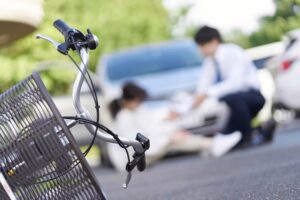
Get A Free Consultation

Are Rental Cars Required to Provide Child Seats in Florida?

When traveling with young children, ensuring their safety in a rental car becomes a top priority. Florida law mandates that all children aged 5 and under must be secured in a federal crash-tested child restraint device—whether it’s a separate carrier, integrated seat, or booster seat. 

But what happens when you rent a vehicle? Is the rental company responsible for providing that seat, or is it your responsibility to bring your own?

This blog tackles the common question: Are rental car companies in Florida legally required to provide car seats? We’ll explore what the law says, what practice looks like in the real world, and what steps you can take to protect your child and stay compliant while traveling. 

Whether you’re flying in for a visit or need a car for vacation, knowing what’s expected—and what’s available—can help you avoid legal issues and unnecessary risk.

Let’s dive into how these regulations apply and what parents and caregivers should consider before driving off with young passengers.

Florida’s Child Restraint Law: What the Statute Says

Florida law is clear when it comes to child passenger safety. 

According to Florida Statute § 316.613, all children aged 5 and under must be secured in a federally approved child restraint device while riding in a motor vehicle. 

Children under 3 must be in a separate carrier or vehicle-integrated seat, while those aged 4 to 5 can use a booster seat. These laws apply regardless of whether the vehicle is privately owned or rented.

However, the statute does not explicitly state that rental car companies must provide child seats by default. A gavel, stethoscope, and legal books on a table, symbolizing the work of a child injury lawyer.

The legal obligation to follow the law falls on the driver or parent, not the rental agency. That means it’s the renter’s responsibility to ensure the child is safely secured in the proper seat, whether they bring one from home or request one from the rental company.

Failure to comply can result in fines, points on your license, and—more importantly—increased danger to your child in the event of a crash. For families renting a car in Florida, understanding the legal baseline is essential. Simply assuming a car seat will be included can lead to last-minute stress or even unsafe driving conditions.

Do Rental Car Companies Offer Car Seats?

While not legally obligated to provide child safety seats, most major rental car companies in Florida do offer car seats for rent. Brands like Hertz, Enterprise, and Avis typically stock infant, toddler, and booster seats for an additional daily fee. These rentals are meant to provide convenience for traveling families, especially those flying into the state who cannot bring their own equipment.

However, these seats are subject to availability, and you often need to reserve them in advance to guarantee one will be waiting for you. Even then, the quality and cleanliness of rental car seats can vary. Some parents report dissatisfaction with the condition or age of the seats provided, which raises safety concerns.

It’s important to note that just because a car seat is offered doesn’t mean it’s installed correctly. Rental agencies generally won’t install seats for liability reasons, meaning it falls on the parent or caregiver to ensure the seat is secured properly. Bringing your own or using a seat from a trusted third-party provider may be the safest option if you’re unsure about relying on a rental seat.

Your Responsibilities as a Renter With Children

As a renter, it’s your legal and moral responsibility to ensure that every child under your care is riding safely in accordance with Florida’s child restraint laws. 

This responsibility doesn’t shift just because the vehicle belongs to a rental agency. Before arriving to pick up your rental, you should already have a plan for how you’ll secure any children who require safety seats.

If you’re traveling with your own car seat, confirm that the rental vehicle you’re choosing is compatible. 

Not all rental sedans have enough room for rear-facing or larger car seats. If you’re relying on the rental company for a child seat, call ahead and confirm availability. Simply checking a box on a website form is not a guarantee.

You should also inspect the seat upon pickup. Make sure the straps aren’t frayed, the seat isn’t expired (most have a 6–10 year shelf life), and no pieces are missing. 

If you’re unsure how to install it, consult the manual or find an online video from the manufacturer. Your child’s safety hinges on more than availability—it depends on proper use.

The Risks of Improper or Missing Child Seats

Choosing not to use a proper child restraint system—or using one incorrectly—can significantly increase the risk of injury or death in a crash. Children are particularly vulnerable in auto accidents due to their smaller bodies and developing bones and organs. Without the proper car seat or booster seat, even a low-speed collision can cause life-threatening injuries.

Improper installation is another issue. A seat that’s too loose, at the wrong recline angle, or with misrouted belts may not function as intended during impact. Sadly, many injuries sustained in rental vehicles could have been prevented with the correct use of safety restraints. This is especially true in unfamiliar rental vehicles where parents may be in a rush or unaware of how the car’s seatbelt systems differ.

If your child is injured due to the absence or malfunction of a rental car seat—or due to faulty equipment you were provided—you may have legal options. However, determining liability can be complex, especially if multiple parties are involved. Speaking with a personal injury lawyer familiar with Florida traffic laws can help you understand whether you have a valid claim and what steps to take next.

Travel Tips for Families Renting Cars in Florida

Planning ahead is key to ensuring your child’s safety when renting a car in Florida. If you’re flying into the state, consider bringing your own car seat as carry-on or checked luggage. Most airlines allow one car seat per child at no additional cost. This guarantees you’re using a seat you trust, one that fits your child properly and that you know how to install.Child Pedestrian Accident lawyer in seattle washington

If you must rent a car seat, reserve it ahead of time and call the rental location to confirm availability. Don’t assume it will be waiting for you. Also, arrive early to inspect the seat and test installation. If it appears damaged, expired, or unsafe in any way, ask for a replacement or consider sourcing one from a nearby retailer.

You might also want to research third-party baby gear rental services, which offer high-quality, thoroughly sanitized child seats delivered to your destination. Many parents find this to be a safer and more reliable alternative to depending on the rental car agency.

Florida’s roads are busy and often include high-speed highways. Taking the time to secure your child properly before leaving the lot is a simple step that can make all the difference if the unexpected happens.

When You May Need a Lawyer

While most rental car experiences are uneventful, there are situations where legal help may become necessary. For example, if your child was injured in a crash while riding in a rented vehicle—especially one involving a defective or poorly maintained child seat—you may want to explore whether the rental company failed in its duty of care.

There’s also the possibility that another driver caused the crash, and your child’s injuries were made worse due to the absence or failure of a proper safety seat. In such cases, liability might be shared between multiple parties, including the rental agency and the at-fault driver.

Personal injury attorneys can help investigate these scenarios. They may examine the accident report, inspect the car seat, check its maintenance history, and determine whether the seat was expired or improperly stored. Depending on the facts, you may be entitled to compensation for medical bills, pain and suffering, and emotional distress.

Legal claims involving children are often handled with special attention in Florida courts. Consulting a lawyer doesn’t mean you’re filing a lawsuit—it means getting answers and clarity. The sooner you act, the easier it will be to gather evidence and protect your family’s rights.

The Burden of Proof in Child Injury Claims Against Rental Companies

If your child was injured due to a missing or defective car seat in a rental car, and you’re considering legal action, you should understand how the burden of proof works in civil cases like these. 

In Florida, the burden is on the claimant—the person bringing the lawsuit—to prove that the defendant’s negligence directly caused the injury.

That means it’s not enough to show your child was hurt. You’ll need to establish that:

  • The rental company owed your family a duty of care.
  • That duty was breached (e.g., by failing to provide a proper child safety seat or by supplying a faulty one).
  • That breach was a direct cause of your child’s injuries.
  • Damages were suffered (medical bills, pain and suffering, etc.).

Evidence might include rental contracts, maintenance records, photos of the car seat, medical reports, and expert testimony. A personal injury attorney can help collect and present this evidence in a compelling way. 

Rental car companies may deny responsibility or attempt to shift blame, so having legal support can make a meaningful difference when trying to prove your claim.

Filing a Claim Costs You Nothing—But Walking Away Might

If you’re unsure whether you have a strong claim after a rental car incident involving a child safety seat, it’s important to remember: filing a claim carries no financial risk. 

Many parents hesitate to pursue compensation out of fear that it’s costly, time-consuming, or unlikely to succeed. In reality, personal injury attorneys often work on a contingency fee basis—meaning you don’t pay unless your case wins or settles.

Filing a claim can uncover serious lapses in safety and protect other families from the same danger. It can also cover costs like medical bills, therapy, and future care that you shouldn’t have to shoulder alone. More importantly, it opens the door to accountability. Rental companies and manufacturers should be held responsible when their negligence endangers children.

Without a claim, you risk settling for nothing—or accepting whatever the insurance company offers. With a claim, you take the first step toward recovering what you and your child may be rightfully owed. There’s no harm in reaching out for legal advice, and everything to gain if your case is valid.

Call Boohoff Law for a Free Consultation

If your child was injured in a rental car accident involving a missing or defective safety seat, it’s important to understand your legal rights. Boohoff Law has experience handling personal injury claims across Florida and can help guide your family through this difficult situation.

We offer free consultations and are available by phone, video, or in-person to discuss your case. Whether you’re unsure who’s responsible, need help gathering evidence, or just want honest guidance—we’re here to help.

Call (813) 445-8161 in Tampa, (813) 321-7878 in Brandon, (941) 888-0848 in North Port, or (877) 999-9999 in Seattle.

There’s no cost to speak with us, and you won’t pay anything unless we’re able to help you recover compensation. Don’t let confusion or legal red tape stop you from taking action—your child’s safety and well-being come first. Let us help you move forward.

Frequently Asked Questions (FAQs)

Do rental car companies have to provide child car seats in Florida?

No, they are not required to provide them by law, but most offer car seats for an additional fee. However, they are expected to provide safe, usable seats when offered.

What if the car seat provided was defective or improperly installed?

You may be able to hold the rental company liable if the defect or poor installation contributed to your child’s injuries. Evidence such as photos, receipts, and witness statements can help build your case.

Can I sue a rental company even if I signed a waiver?

Possibly. Waivers don’t automatically shield companies from negligence claims — especially if the waiver was unclear or didn’t cover the issue at hand.

What types of damages can I seek in a child injury claim?

Compensation may include medical costs, pain and suffering, emotional distress, and future care expenses depending on the severity of the injuries.

How long do I have to file a claim in Florida?

The statute of limitations for personal injury in Florida is generally two years, but there are exceptions involving children. It’s best to consult a lawyer as soon as possible.

A boy and girl wearing backpacks cautiously use the crosswalk while heading to school.

Pedestrian Collisions: What Are My Rights if I’m Hit While Crossing the Street?

One moment you’re crossing the street, the next, your world is upended by a collision with a vehicle. Pedestrian accidents throw your life a curveball, but with the help of a pedestrian accident lawyer, you generally have the right to seek compensation for your injuries and losses.

When a vehicle hits you while on foot, consulting a pedestrian accident lawyer and learning to protect and exercise your rights is the first step toward recovery.

Get A Free Consultation

Pedestrian Accidents and Your Rights

Every driver on the road is responsible for paying attention to their surroundings, including people crossing the street. If drivers get distracted, speed, or break traffic laws, they may not meet this duty.

When their failure to act carefully leads to you being hit by a car while walking, they are often considered negligent. This negligence is a key part of asserting your pedestrian accident rights.

Walking in a Crosswalk

Crosswalks exist to give pedestrians a safer place to cross. Drivers are generally required to yield to pedestrians in crosswalks. If you’re struck by a vehicle in a crosswalk, the driver is often presumed to be at fault.

Outside a Crosswalk

A boy and girl wearing backpacks cautiously use the crosswalk while heading to school.

Sometimes pedestrians cross outside marked crosswalks, which makes the situation more complex. However, it doesn’t automatically mean you lose your path to compensation. Drivers still have a general duty to avoid hitting pedestrians if possible.

Factors like driver speed, visibility, and attention play a role. A lawyer can investigate the specifics of your accident to understand your rights when struck by a vehicle outside of the marked crosswalk.

Key Factors Affecting Your Pedestrian Accident Claim

Several elements influence your claim after a driver hits you while crossing the street. These factors help determine responsibility and the compensation you might receive. An attorney investigates these factors to clarify your rights and build a strong case.

The Role of Negligence in Your Pedestrian Injury Case

Negligence means someone failed to act with reasonable care, and that failure caused harm. In pedestrian accidents, driver negligence is common. Examples include texting while driving, speeding, impaired driving, or ignoring traffic signals.

If a driver’s negligence caused them to hit you while you were walking, they’re usually liable for your injuries. Proving this negligence is a fundamental part of exercising your pedestrian accident rights.

Comparative Negligence in Pedestrian Accidents

Sometimes, both the driver and the pedestrian share some responsibility for the accident. This concept is called comparative negligence, and each state has its own rules.

In some states, like Washington, you may still recover damages even if you are partially at fault, but your percentage of fault reduces your compensation.

Other states use a modified comparative fault system that limits the amount of your fault you can have and still receive compensation. For example, you cannot recover damages in Florida if you’re more than 50% at fault.

Hit-and-Run Accidents: Protecting Your Rights If the Driver Flees

If the driver who hit you leaves the scene, it complicates matters, but you still have options. Your own auto insurance policy might offer coverage. Depending on your state and specific insurance policy, uninsured Motorist (UM) coverage or Personal Injury Protection (PIP) may provide for your injuries.

A lawyer can help you untangle the insurance mess left behind by a hit-and-run driver. They’ll examine your case and help you file a claim under the correct policy.

What To Do After a Driver Hits You While You’re Crossing the Street

If you have already sought medical attention, taking specific steps can protect your legal rights if you’re hit while crossing the street.

These actions help if you decide to pursue a claim for your injuries:

  1. Report the Accident: A police report is an official record of the incident. Obtain a copy as soon as it’s available. It contains details about the accident and sometimes an initial assessment of fault.
  2. Gather Information: If you can, get the driver’s name, contact information, insurance details, and license plate number. Collect names and contact information from any witnesses.
  3. Document Everything: Use your phone to take pictures of the accident scene. Photograph any visible injuries you have and any damage to the vehicle involved. Note the weather conditions, time of day, and any traffic signals or signs.
  4. Keep Records: Save all documents related to the accident and your injuries, including medical bills, receipts for related expenses, and any correspondence with insurance companies. These records document your losses.
  5. Avoid Speaking With Insurers: The other driver’s insurance adjuster may contact you. Their goal is often to settle the claim for as little as possible. Consult a personal injury attorney before giving a recorded statement or accepting any settlement offer.

Get A Free Consultation

Compensation You Might Receive If You’re Hit While Crossing the Street

If a driver’s negligence caused your pedestrian accident, you can seek compensation for various losses (damages). The amount and types of compensation depend on the specifics of your case.

Common factors include the severity of your injuries and the impact on your life.

Medical Expenses

Being hit by a car often results in significant medical bills. Compensation helps cover the costs of emergency room visits, hospital stays, surgeries, and doctor appointments.

Future medical care is also a consideration if you’re hit by a car while walking. This may involve physical therapy, medication for chronic pain, or additional surgeries.

Lost Income and Earning Capacity

Your injuries might prevent you from working, leading to lost wages. Compensation for lost income covers the earnings you missed during your recovery, helping ease financial stress while you heal.

If your injuries are severe, they might affect your ability to earn money in the future. This is called loss of earning capacity, and your claim may include compensation for this long-term financial impact.

Pain, Suffering, and Other Non-Economic Damages

A pedestrian accident causes more than just financial harm. You’ll likely experience physical pain and emotional distress. The legal system acknowledges these non-economic damages to compensate for the intangible yet very real effects on your well-being.

Unlike medical bills or lost wages, there are no receipts or invoices to document the extent of emotional anguish or loss of enjoyment of life. To substantiate pain and suffering claims, lawyers commonly use expert testimony, personal journals, and accounts of daily life disruption.

Compensation for pain and suffering attempts to recognize the human impact of your injuries and covers loss of enjoyment of life, emotional anguish, and disfigurement.

How a Lawyer Protects Your Rights as a Pedestrian

Navigating the legal portions of a pedestrian accident is challenging by yourself, but an experienced personal injury lawyer guides you through the legal process. Lawyers understand the complexities of personal injury law and handle the legal burdens, allowing you to focus on your recovery.

Investigating Your Pedestrian Accident

pedestrian crossing sign against blue sky

A lawyer conducts a detailed investigation into how the accident happened by gathering all available evidence to support the claim. This includes the police report, witness statements, photos, and any available video footage, such as CCTV or dashcam recordings.

They may also work with accident reconstruction professionals to establish the driver’s fault. A thorough investigation strengthens your position when seeking justice for your pedestrian accident rights.

Dealing With Insurance Companies

Insurance companies are businesses that aim to minimize payouts. Their adjusters may try to get you to accept a low settlement or make statements that hurt your claim.

Your lawyer will handle all communications with insurance companies. They know the tactics adjusters use and protect you from unfair practices. They negotiate forcefully on your behalf to achieve a fair settlement.

Calculating Your Personal Injury Claim

Determining the full extent of your damages is a complex task. A lawyer assesses all your losses, including current and future medical expenses, lost income, lost earning capacity, and non-economic damages like pain and suffering.

They make sure no aspect of your harm is overlooked. Accurately calculating your damages is vital to ensuring you receive the compensation you deserve for your injuries when a car hits you as a pedestrian.

Representing You in Negotiations or Court

Most personal injury cases resolve during the settlement negotiations. Lawyers are skilled negotiators who present your case effectively to the insurance company. Your lawyer can take your case to court if the insurance company refuses a reasonable settlement.

Handling Complex Legal Procedures and Deadlines

Personal injury law involves many rules, procedures, and deadlines. One of the most significant is the statute of limitations. This is the time limit for filing a lawsuit after being hit by a car while walking, and missing it means you lose your right to sue for damages.

A lawyer manages all these legal complexities, filing paperwork correctly and on time.

FAQ for What Are My Rights If I’m Hit While Crossing the Street?

What Should I Do To Protect My Rights if I’m Hit While Crossing the Street?

After ensuring your medical needs are met, report the accident to the police to create an official record. If possible, get the driver’s name, insurance details, and contact information, as well as contact information for any witnesses.

Document the scene with photos of your injuries, the vehicle, and the surrounding area, and write down everything you remember about the incident. Then, contact a personal injury lawyer.

Does It Matter if I Was in a Crosswalk When the Car Hit Me?

Yes, being in a crosswalk often strengthens your claim when a car hits you, as drivers generally must yield to pedestrians in marked crosswalks. However, even if you weren’t in a crosswalk, drivers still have a duty to exercise reasonable care to avoid hitting pedestrians.

The circumstances of the accident, including your location and the driver’s actions, are considered when determining your rights when hit by a car as a pedestrian.

What if the Driver Who Hit Me Was Uninsured or Fled the Scene?

If an uninsured driver hit you or if it was a hit-and-run, you may still recover compensation through your own auto insurance policy. Your Uninsured/Underinsured Motorist (UM/UIM) coverage often applies in these situations.

In states like Florida, Personal Injury Protection (PIP) coverage also provides benefits regardless of who was at fault.

How Is Fault Determined in a Pedestrian Accident?

Fault in a pedestrian accident is determined by examining all available evidence to see who acted negligently. Common evidence includes police reports, witness statements, photographs or videos of the scene, and sometimes, analysis by accident reconstruction professionals.

How Long Do I Have To Take Legal Action After Being Hit by a Car?

Each state has a specific time limit, known as the statute of limitations, for filing a personal injury lawsuit after being hit by a car.

In Florida, for most negligence cases, this is generally two years from the accident date, while in Washington, it’s typically three years.

Missing this deadline means you forfeit your right to sue for damages related to your pedestrian accident rights, so act promptly.

Reclaim Your Steps: Secure Your Rights After a Pedestrian Accident

You don’t have to travel the road to recovery alone after being hit by a car while crossing the street. Protecting your future starts with understanding your legal options, and the team of personal injury lawyers at Boohoff Law, P.A. is here to provide clarity and strong advocacy.

Call Boohoff Law, P.A. now at (813) 445-8161 for a FREE, no-obligation consultation to understand your rights and how we can help you move forward.

Get A Free Consultation

An adult and child holding hands cross a wide street, carrying a bag of red apples.

Can You File a Claim If You Were Jaywalking During a Pedestrian Accident in Tampa?

Pedestrian accidents can result in serious injuries and even death. When a car hits a pedestrian, questions often arise about who is at fault and what legal options are available. Many pedestrians assume that if they were jaywalking at the time of the accident, they cannot file a claim—but this is not always the case.

If you were involved in a pedestrian accident while jaywalking in Tampa, you may be unsure of your rights and whether you can file a claim for compensation. It is natural to feel concerned and confused in this situation. While jaywalking is illegal, it does not automatically disqualify you from seeking compensation if you suffered an injury due to someone else’s negligence.

The circumstances of each case are unique, making it imperative to consult with a Tampa pedestrian accident attorney who can assess the specifics of your situation and guide you on the best course of action. Contact a Tampa pedestrian accident attorney to discuss your case and understand your legal rights.

Get A Free Consultation

Understanding Florida’s Pedestrian Laws and Jaywalking

Like many other states, Florida has specific laws regarding pedestrian safety and jaywalking. Understanding these laws is imperative in determining your rights and liability in the event of a pedestrian accident while jaywalking in Tampa.

What is Jaywalking?

Jaywalking occurs when a pedestrian crosses a street outside a designated crosswalk or against a traffic signal. In Florida, jaywalking is against the law, as it poses a risk to pedestrians and drivers. The purpose of designated crosswalks and traffic signals is to ensure the safe movement of both pedestrians and vehicles.

Legal Crossings vs. Jaywalking

An adult and child holding hands cross a wide street, carrying a bag of red apples.

Florida’s pedestrian laws require pedestrians to use designated crosswalks and pedestrian bridges and obey traffic signals. These laws aim to prevent accidents and protect the safety of pedestrians. When crossing a street, pedestrians should always use marked crosswalks and wait for a signal indicating it is safe to cross.


Jaywalking, on the other hand, involves crossing a street outside of these designated areas without following traffic signals. It increases the risk of accidents and makes it more difficult for drivers to anticipate pedestrian movements.

Why Jaywalking Doesn’t Automatically Bar a Claim

While jaywalking is against the law and can contribute to accidents, it does not automatically disqualify a pedestrian from filing a claim for compensation if they suffered an injury due to someone else’s negligence. If the driver acted negligently, speeded, distracted, or violated traffic laws, they can still be liable for the pedestrian’s injuries.

Courts examine multiple factors to determine liability in pedestrian accident cases. They consider whether the driver was driving under the influence of alcohol or drugs, ignoring traffic signals, or failing to yield when required. If the driver’s negligence causes the accident, the pedestrian may still qualify for compensation, even if they were jaywalking.

If you were involved in a pedestrian accident while jaywalking in Tampa, consult with a pedestrian accident attorney who can evaluate the specifics of your case and guide you through the legal process.

Who is Liable in a Jaywalking Pedestrian Accident?

Determining liability in a jaywalking pedestrian accident can be complex. While jaywalking is against the law in Florida, it does not automatically absolve the driver of their responsibility to exercise caution and avoid hitting pedestrians. Florida law places a duty of care on drivers to be attentive and cautious, regardless of whether the pedestrian is jaywalking or crossing legally at a designated crosswalk.

Driver’s Duty of Care

Florida law requires drivers to exercise reasonable care to avoid causing harm to others, including pedestrians. This duty of care applies even if the pedestrian was jaywalking. The drivers are responsible for maintaining a proper lookout, obeying traffic laws, and being aware of pedestrians and their movements. If a driver fails to fulfill this duty and causes a pedestrian accident, they may be liable for the pedestrian’s injuries.

Negligence of the Driver

In a jaywalking pedestrian accident, the driver may still be negligent if they were engaging in any of the following actions:

  • Speeding or driving recklessly
  • Driving distracted (texting, using GPS, or adjusting the radio)
  • Driving under the influence of alcohol or drugs
  • Ignoring traffic signals or failing to yield when required

If the driver’s negligence contributed to the accident, they can be held responsible for the pedestrian’s injuries, even if the pedestrian jaywalked.

Be sure to reach out to a knowledgeable Tampa pedestrian accident lawyer who can assess the specifics of your case and determine the degree of fault of each party involved. An experienced lawyer can gather evidence, handle negotiations with the insurance company, and pursue maximum compensation for your injuries.

Compensation Available for Injured Pedestrians

If you have suffered an injury in a pedestrian accident while jaywalking in Tampa, you may be entitled to compensation. The extent of compensation will depend on the severity and impact of your injuries. A Tampa pedestrian accident attorney can assess your damages and seek appropriate compensation for your case.

Medical Expenses

Medical expenses can quickly accumulate after a pedestrian accident. Compensation for medical expenses typically covers hospital bills, surgeries, rehabilitation, physical therapy, prescription medications, assistive devices, and any other necessary medical treatment. You must keep track of all your medical expenses and provide documentation to support your claim.

Lost Income and Future Earnings

If your injuries prevent you from working, you may be entitled to compensation for lost earnings. This includes the income you have already lost due to your injuries as well as any potential future income loss if your injuries result in long-term or permanent disability. Documentation from your employer and medical professionals may be required to support your claim for lost income.

Pain and Suffering

Pedestrian accidents can cause not only physical pain but also emotional distress and a reduced quality of life. Compensation for pain and suffering aims to provide financial relief for the intangible aspects of your injuries. This compensation can help alleviate the emotional and psychological toll of the accident and its aftermath.

Permanent Disability and Rehabilitation Costs

In some pedestrian accident cases, the injuries sustained may result in a long-term disability that impacts your ability to work and perform daily activities. Compensation for permanent disability provides financial support for ongoing medical care, rehabilitation expenses, assistive devices, and modifications to your living environment to accommodate your disability.

A Tampa pedestrian accident lawyer will thoroughly assess your damages and work towards securing fair compensation for all your losses. They will consider the economic and non-economic impacts of your injuries to protect your rights.

Common Defenses Insurance Companies Use to Deny Jaywalking Claims

When filing a claim for a pedestrian accident while jaywalking in Tampa, you should be aware of the common defenses that insurance companies may use to deny or minimize your claim. Insurance companies are focused on minimizing their payouts and often try to shift blame onto the victim to reduce their liability.

Claiming the Pedestrian Was Solely at Fault

One common defense insurance companies use is to argue that the pedestrian was solely at fault for the accident due to jaywalking. They may argue that the pedestrian willingly put themselves in harm’s way by jaywalking and should not be entitled to compensation. However, as discussed earlier, Florida law places a duty of care on drivers to exercise caution and avoid hitting pedestrians, even if they are jaywalking. You will want a skilled Tampa pedestrian accident attorney who can challenge this defense and prove that the driver’s negligence was a contributing factor.

Disputing the Severity of Injuries

Insurance companies may also dispute the severity of the pedestrian’s injuries to lower the compensation they have to pay. They may argue that the injuries are not as serious as reported or that they were pre-existing conditions unrelated to the accident. You must have strong medical evidence and professional opinions supporting the extent and impact of your injuries to counter this defense.

Delaying the Claims Process

Insurance adjusters may purposely prolong the claims process in hopes that you will settle for a lesser amount out of frustration or financial need. They may request excessive documentation or initiate unnecessary investigations to delay the resolution of your claim. Having a Tampa pedestrian accident lawyer on your side can help expedite the process and promptly ensure you receive a fair settlement.

Using Recorded Statements Against You

Be cautious when speaking with insurance adjusters, and avoid providing recorded statements without consulting with a Tampa pedestrian accident attorney first. Insurance adjusters may try to manipulate your words or twist your statements to minimize their liability. Legal representation protects your rights and prevents you from inadvertently providing information that others can use against you.

How a Tampa Pedestrian Accident Lawyer Can Help

Facing the legal process and taking on insurance companies can be overwhelming, especially when dealing with the aftermath of a pedestrian accident while jaywalking in Tampa. Hiring a Tampa pedestrian accident lawyer can make a significant difference in the outcome of your case and ensure that your rights are protected.

Gathering Evidence to Prove Liability

A seasoned Tampa pedestrian accident lawyer can gather the necessary evidence to establish liability in a jaywalking pedestrian accident. They can obtain surveillance footage, interview witnesses, analyze accident reports, and consult with accident reconstructionists. Such evidence is necessary to build a strong case and prove that the driver’s negligence was the primary cause of the accident.

Negotiating with Insurance Companies

Dealing with insurance companies can be challenging, as they often try to minimize payouts and blame the victim. A Tampa pedestrian accident attorney is experienced in handling negotiations with insurance companies and can fight for your rights. They will vigorously advocate for the maximum compensation you deserve, considering all your damages, including medical expenses, lost earnings, pain and suffering, and other applicable losses.

Representing You in Court If Necessary

While most pedestrian accident cases settle through negotiations with insurance companies, some cases involve situations where a fair settlement is impossible. A Tampa pedestrian accident attorney can represent you in court and present your case before a judge and jury. They will use their experience and legal skills to present compelling arguments and seek a favorable outcome on your behalf.

Ensuring Compliance with Florida Laws

The legal process can be complex, and you must follow strict deadlines and requirements to pursue a pedestrian accident claim. Your Tampa pedestrian accident lawyer will file all necessary documents correctly and within the specified time limits. They will navigate the legal system on your behalf, freeing you from the stress and ensuring compliance with Florida laws.

Having a pedestrian accident lawyer by your side can give you peace of mind and confidence throughout the legal process. They will be your advocate, fighting for your rights and ensuring you receive the compensation you deserve.

Florida’s Statute of Limitations for Pedestrian Accident Claims

A green pedestrian signal light is illuminated, indicating it is safe for pedestrians to cross the street.

When filing a claim for a pedestrian accident while jaywalking in Tampa, you must be aware of Florida’s statute of limitations. The statute of limitations sets a time limit for filing a lawsuit, and failing to file within this timeframe can cause you to lose your right to seek compensation for your injuries.

In Florida, the statute of limitations for pedestrian accident claims is generally two years from the accident date. You have two years from the accident date to file a lawsuit against the at-fault party. If you fail to file within this timeframe, the court may dismiss your case, and you may lose the opportunity to pursue compensation.

There are exceptions to the statute of limitations in certain cases. For instance, if the victim is a minor at the time of the accident, the claim deadline may be extended.

Act quickly and consult a pedestrian accident lawyer if you have a valid claim. Delays can weaken evidence, make it harder to secure full compensation, and jeopardize your ability to file a lawsuit within the statute of limitations.

Contact a Tampa Pedestrian Accident Lawyer Today

If you have been involved in a pedestrian accident while jaywalking in Tampa, don’t assume you have no case. Even if you were jaywalking, you may still be entitled to compensation for your injuries. Seeking legal advice from a reputable Tampa pedestrian accident lawyer is the best way to understand your rights and legal options.

Protecting your rights and securing maximum compensation is imperative, and the sooner you consult an attorney, the stronger your case will be. Contact a Tampa personal injury lawyer today to learn about your options and take the first step toward justice and recovery.

Get A Free Consultation

Comparative Negligence is shown on the conceptual photo using the text.

How Florida’s Comparative Negligence Law Affects Pedestrian Accident Claims

Pedestrian accidents can be devastating, causing serious injuries or even death. If you or a loved one has been in a pedestrian accident in Florida, understanding how Florida’s comparative negligence law impacts your claim is essential.

Comparative negligence means that the injured pedestrian can recover compensation for their damages, even if they were partially at fault for the accident. However, the insurance company can reduce their total compensation based on the percentage of fault attributed to them.

If you suffer harm in a pedestrian accident, consult an experienced attorney who will handle Florida’s comparative negligence law and fight for the maximum compensation you deserve. A pedestrian accident attorney can also guide you through the legal process, ensuring you meet all necessary deadlines and avoid costly mistakes.

Get A Free Consultation

Causes of Pedestrian Accidents

Driver negligence, such as distracted driving, speeding, running red lights, or failing to yield at crosswalks, often causes pedestrian accidents. Drunk or impaired driving also significantly increases the risk of pedestrian injuries. Poor road conditions, lack of proper lighting, and dangerous intersections contribute to accidents, making it harder for both drivers and pedestrians to react in time. Poorly designed crosswalks, missing sidewalks, and inadequate traffic signals can create hazardous conditions. Regardless of the cause, pedestrians injured in accidents may have the right to seek legal compensation.

Understanding Comparative Negligence in Florida

Comparative Negligence is shown on the conceptual photo using the text.

Florida follows a modified comparative negligence system, which means that accident victims can only recover damages if they are less than 51 percent at fault. This is a significant change from the previous pure comparative negligence system, where victims can recover damages even if they are 99 percent at fault.

In Florida, determining fault in a pedestrian accident involves assessing all contributing factors to decide each party’s percentage of responsibility. Insurance adjusters, courts, and attorneys take into account factors such as jaywalking, crossing outside of crosswalks, failing to follow traffic signals, speeding, running red lights, failing to yield to pedestrians in a crosswalk, driving while distracted, intoxicated, or fatigued, and not adjusting for weather or road conditions.

Why This Law Matters for Pedestrian Accidents

Pedestrians are often blamed for accidents, especially in cases involving jaywalking, crossing outside of crosswalks, or failing to follow traffic signals. However, drivers must also exercise caution and obey traffic laws to prevent accidents. Florida’s comparative negligence law allows pedestrians who are partially at fault to seek compensation for their injuries and damages.

In many pedestrian accident cases, insurance companies may shift blame onto pedestrians to minimize payouts. They may argue that the pedestrian was reckless or inattentive, even if the driver was clearly at fault. This is where hiring a skilled Florida pedestrian accident lawyer becomes imperative.

If you experience a pedestrian accident in Florida, contact a Florida pedestrian accident attorney to understand your rights, challenge unfair liability claims, and maximize compensation. An attorney can help gather evidence such as traffic camera footage, accident reconstructions, and professional testimony to build a strong case in your favor. They can also challenge biased police reports or insurance determinations that may place more blame on the pedestrian without thoroughly investigating the driver’s actions.

Insurance companies may try to offer lowball settlement offers or unfairly assign fault to the pedestrian, causing them to receive less compensation than they deserve. A Florida pedestrian accident lawyer will negotiate with insurance companies on your behalf, ensuring you receive the full and fair compensation you are entitled to. If negotiations fail to reach a fair settlement, the attorney will represent you in court to pursue the full damages you deserve.

Under the previous pure comparative negligence system, pedestrians can recover damages even if they were 99 percent at fault. However, the new law limits recovery. If a pedestrian is found more than 50 percent at fault for the accident, they cannot recover any damages.

The purpose of comparative negligence is to ensure that all parties involved in an accident take responsibility for their actions. It provides a fair and balanced approach to determining fault and compensating the injured party.

How Comparative Negligence Applies to Pedestrian Accidents

In pedestrian accident cases, both pedestrians and drivers can share fault. Situations, where pedestrians may share fault, include jaywalking or crossing against a signal, walking while distracted, crossing outside designated crosswalks, and walking in the roadway instead of on the sidewalk.

On the other hand, drivers may be at fault for speeding, running a red light, failing to yield to pedestrians in a crosswalk, driving while distracted, intoxicated, or fatigued, and not adjusting for weather or road conditions.

Even if pedestrians are partially at fault for the accident, they can still seek compensation for their injuries and damages. However, the percentage of fault attributed to them will reduce their compensation.

How Fault Affects Compensation in a Florida Pedestrian Accident Case

Let’s consider some example scenarios to understand how fault affects compensation in a Florida pedestrian accident case.

If a pedestrian is 20 percent at fault for crossing outside a crosswalk, the insurer will reduce their compensation by 20 percent. Similarly, if a pedestrian is 51 percent or more at fault, they lose the right to recover damages.

Fault in a pedestrian accident can impact compensation for losses, including medical expenses, lost earnings, pain and suffering, permanent disability, and long-term care costs. Having a skilled Florida pedestrian accident lawyer on your side who can accurately assess fault and determine the appropriate compensation you should receive is imperative.

Challenges in Proving Fault in a Pedestrian Accident

Proving fault in a pedestrian accident can be challenging, especially when dealing with insurance companies who may try to shift blame onto the pedestrian. There are several common challenges that victims of pedestrian accidents may face:

  • Insurance Companies Shifting Blame: Insurance companies often argue that pedestrians were reckless or inattentive to minimize payouts. They may try to blame the pedestrian even when the driver was clearly at fault.
  • Lack of Video or Witness Evidence: Proving the driver’s negligence may be difficult without traffic camera footage or witnesses. In such cases, having a Florida pedestrian accident attorney can gather evidence and build a strong case.
  • Police Report Favoring Drivers: In some cases, police reports may place more blame on the pedestrian without fully investigating the driver’s actions. A knowledgeable Florida pedestrian accident attorney can challenge biased police reports and present evidence to prove the driver’s negligence.

Get A Free Consultation

What to Do After a Pedestrian Accident to Protect Your Claim

If you experience a pedestrian accident in Florida, follow specific steps to protect your claim:

  • Seek Immediate Medical Attention: Even if your injuries seem minor, seeking medical attention as soon as possible is essential. Medical records serve as valuable evidence for your claim.
  • Avoid Speaking to Insurance Adjusters Without Legal Representation: Insurance adjusters may try to get a statement from you that they can use against you to reduce your claim. You should consult a Florida pedestrian accident lawyer before discussing your case with insurance companies.
  • Consult a Florida Pedestrian Accident Lawyer: An attorney well-versed in pedestrian accidents can guide you through the legal process, establish liability, negotiate with insurance companies, and fight for the full compensation you deserve.

How a Florida Pedestrian Accident Lawyer Can Help

Hiring a Florida pedestrian accident attorney can significantly improve your chances of receiving fair compensation for injuries and damages. A skilled attorney can help in the following ways:

Investigating the Accident

Your lawyer will gather evidence such as video footage, witness statements, and police reports to build a strong case in your favor. They may also work with accident reconstructionists to establish liability. This thorough approach considers all aspects of the accident, strengthening your chances of a successful claim.

Negotiating with Insurance Companies

Insurance companies may try to offer lowball settlement offers or unfairly assign fault to the pedestrian. A lawyer will protect your rights and negotiate with insurance companies to ensure you receive the full and fair compensation you are entitled to. They will also counter tactics used by insurers to minimize your claim and work to secure the best possible outcome for you.

Taking the Case to Court If Necessary

If negotiations fail to reach a fair settlement, a Florida pedestrian accident lawyer will represent you in court to pursue the full damages you deserve. They will present your case and argue on your behalf.

Ensuring You Meet Florida’s Filing Deadlines

Florida has a statute of limitations for filing a pedestrian accident claim. Missing the deadline can bar you from recovering compensation. A lawyer will ensure you meet all the necessary deadlines and protect your legal rights. Timely action is essential to preserve evidence and strengthen your case.

Florida’s Statute of Limitations for Pedestrian Accident Claims

In Florida, you have two years from the accident date to file a personal injury lawsuit. However, certain exceptions may extend or shorten this deadline depending on the circumstances of the case. Understanding these exceptions is significant in these cases, as missing the deadline can result in losing the right to seek compensation.

The Discovery Rule (Delayed Injury Discovery Exception)

Pedestrians in crosswalk face danger from fast-moving city traffic, highlighting risks of unsafe driving behavior.

In some cases, the full extent of a pedestrian accident injury may not be immediately apparent. Suppose a victim did not discover their injury right away. In that case, the statute of limitations may be extended from when they became aware (or should have reasonably become aware) of the injury. However, proving delayed discovery can be challenging and requires strong medical evidence and professional testimony. Seek medical attention promptly and consult an attorney to protect your rights.

Claims Involving Minors

If the pedestrian accident victim is a minor (under 18 years old) at the time of the accident, the statute of limitations may extend. In many cases, the clock does not start until the minor turns 18, meaning they may have until their 20th birthday to file a personal injury claim. However, if a parent or guardian is filing on behalf of the minor, the standard two-year deadline may still apply.

Wrongful Death Claims

If a pedestrian accident results in fatal injuries, the victim’s family or estate may file a wrongful death claim instead of a personal injury claim. The statute of limitations for wrongful death lawsuits in Florida is two years from the date of the victim’s death (not necessarily the date of the accident). This is important in cases where a pedestrian initially survives but later succumbs to their injuries. Acting quickly ensures the family can pursue justice and seek compensation for their loss.

Cases Involving Government Entities

If the accident involves a government entity, such as a city bus, government vehicle, or poorly maintained crosswalk, special rules apply:

  • Claims against state or local government agencies must first go through an administrative claims process before filing a lawsuit.
  • The deadline for notifying the government is usually within six months of the accident.
  • If the government denies the claim or fails to respond, the victim may have three years instead of two to file a lawsuit.

Mental Incapacitation of the Victim

If the pedestrian accident victim has a mental disability or is legally incapacitated, the statute of limitations may extend. However, once the victim regains mental competency, the two-year deadline generally begins.

Even if an exception applies, delaying legal action can weaken your case. Witnesses may forget key details, evidence may disappear, and insurance companies challenge claims more aggressively. Consulting a Florida pedestrian accident lawyer as soon as possible ensures your case is handled correctly within the appropriate legal timeframe.

Were You Injured in a Florida Pedestrian Accident? Contact a Florida Pedestrian Accident Lawyer Today

Suppose you or a loved one experiences a pedestrian accident in Florida. In that case, you should contact a Florida pedestrian accident attorney to understand your rights and protect your legal interests. You may still have a case even if you were partially at fault. A lawyer can help fight unfair fault determinations and maximize your settlement. Schedule a free consultation with a seasoned Florida personal injury attorney to discuss your case and explore your legal options. Don’t wait—take action today and ensure your rights are protected.

Get A Free Consultation

Doctor bandaging patient's burned hand at table.

What Compensation Can You Claim for Severe Burn Injuries

Severe burn injuries have a profound and lasting impact on the lives of victims and their families. The physical, emotional, and financial toll can be overwhelming. These injuries can cause debilitating pain, permanent disfigurement, and, in some cases, even death.

The recovery process is often long and challenging, requiring extensive medical treatments, surgeries, and rehabilitation. The emotional trauma and psychological effects of severe burn injuries can also be significant, leading to anxiety, depression, and a loss of self-confidence.

Furthermore, the financial burden of medical expenses, lost earnings, and necessary lifestyle adjustments can be immense. It is imperative for burn injury victims to understand their rights and the compensation they may be entitled to ease the burden and secure their future.

If you or a loved one has experienced severe burns due to the negligence or misconduct of another party, you may be entitled to compensation. Burn injury cases can vary greatly, and the compensation you can claim depends on factors such as the extent of your injuries, the impact they have on your daily life, and the long-term consequences you may face. To ensure you receive the full compensation you deserve, seek legal advice from an experienced attorney well-versed in burn injury cases. Contact a Brandon burn injury attorney near you today to discuss your options and protect your rights during this difficult time.

Get A Free Consultation

Understanding Severe Burn Injuries and Their Consequences

Severe burn injuries can occur in various settings, including car accidents, workplace incidents, electrical malfunctions, exposure to hazardous chemicals, and fires due to negligence.

First-Degree Burns

Doctor bandaging patient's burned hand at table.

First-degree burns are considered minor burns that affect only the outer layer of the skin. They typically cause redness, pain, and swelling. First-degree burns often heal on their own within a week without the need for medical intervention.

Second-Degree Burns

Second-degree burns are more severe burns that penetrate deeper into the skin. They cause blisters, intense pain, and redness. These burns generally require medical attention to promote proper healing and minimize the risk of infection.

Third-Degree Burns

Third-degree burns are severe burns that extend through all layers of the skin. They destroy the skin, nerves, muscles, and other underlying tissues. Third-degree burns often appear white, charred, or leathery. Treatment for these burns typically involves surgical interventions such as skin grafts to repair the damaged areas.

Fourth-Degree Burns

Fourth-degree burns are the most severe and devastating. They extend beyond the skin and affect muscles, bones, and organs. These burns often require extensive medical interventions, including amputation, reconstructive surgeries, and ongoing medical care.

Common Causes of Severe Burn Injuries

Understanding the common causes of severe burn injuries can help identify the responsible party and establish liability in your claim. Here are some of the most frequent causes:

  • Car accidents and fuel fires: Car accidents can result in severe burn injuries, especially when fuel leaks or combustion occurs. The flammable nature of gasoline and other car fluids can lead to catastrophic consequences for those involved.
  • Workplace accidents: Certain industries, such as construction and industrial settings, pose a higher risk of severe burn injuries. Accidents involving faulty equipment, electrical malfunctions, chemical exposures, or explosive materials can cause devastating burns to workers.
  • Electrical burns: Electrical burns occur when a person comes into contact with faulty wiring or equipment. These burns can be severe, and the consequences may include muscle damage, nerve damage, organ damage, or even death.
  • Chemical burns: Exposure to hazardous chemicals in the workplace, such as acids, alkalis, or solvents, can result in severe chemical burns. These burns may cause deep tissue damage and require extensive medical treatment.
  • Apartment or house fires: Negligence, such as lack of fire safety measures or failure to maintain fire exits, can lead to devastating fires in residential buildings. Victims of these fires can suffer severe burn injuries due to smoke inhalation and direct exposure to flames.

Understanding the causes and types of burn injuries can help victims and their families through the legal process more effectively and pursue the compensation they deserve.

What Compensation Can You Claim for Severe Burn Injuries?

Severe burn injuries often necessitate extensive medical care, significant lifestyle adjustments, and ongoing treatments. Compensation for these injuries aims to alleviate financial burdens and ensure victims have access to the resources needed to recover and rebuild their lives. Here are the various types of damages you can claim for severe burn injuries:

Medical Expenses

Severe burn injuries require immediate medical attention and ongoing care to promote proper healing and prevent complications. Compensation for medical expenses may cover the following:

  • Emergency room visits, surgeries, and hospital stays
  • Costs of skin grafts, reconstructive surgeries, and physical therapy
  • Long-term medical care, including pain management and rehabilitation
  • Psychological counseling for trauma, PTSD, and emotional distress

Lost Earnings and Reduced Earning Capacity

Severe burn injuries often result in an extended period of time away from work, leading to lost earnings. Compensation for lost earnings may include:

  • Time off work due to burn injuries and recovery process
  • Loss of future earnings if the victim can no longer perform their job
  • Vocational retraining if the victim must switch careers due to their injuries

Pain and Suffering

Severe burn injuries cause not only physical pain but also emotional distress. Compensation for pain and suffering may cover the following:

  • Physical pain, nerve damage, and chronic discomfort from the burn injuries
  • Emotional trauma, depression, and loss of self-confidence due to disfigurement
  • Loss of enjoyment of life and inability to participate in daily activities or hobbies

Disfigurement and Scarring Compensation

Severe burn injuries often result in permanent physical changes that impact a person’s self-esteem and mental well-being. Compensation for disfigurement and scarring may include:

  • The cost of cosmetic surgeries and skin treatments to improve appearance
  • Compensation for the emotional and psychological impact of disfigurement

Home and Lifestyle Adjustments

Severe burn injuries may require significant adjustments to a person’s living environment and daily life. Compensation for home and lifestyle adjustments may cover the following:

  • Costs for wheelchair accessibility, prosthetics, and other medical devices
  • Home modifications, such as ramps, special furniture, and accessible bathrooms
  • Transportation expenses for specialized medical appointments

Punitive Damages

In some cases, severe burn injuries occur due to gross negligence, reckless behavior, or intentional harm. Punitive damages can be awarded to victims in these circumstances to punish the responsible party and discourage similar actions in the future. Examples of situations that may warrant punitive damages include:

  • Employers who ignored safety regulations, resulting in severe burn injuries to employees
  • Manufacturers of defective products that caused the injuries
  • Negligent landlords who failed to maintain safe living conditions, leading to burn injuries

Get A Free Consultation

Factors That Affect the Value of a Burn Injury Claim

Several factors influence the value of a burn injury claim. Understanding these factors can help you through the legal process and have realistic expectations regarding the compensation you may receive. Here are the key factors that affect the value of a burn injury claim:

Severity and Degree of Burns

The severity and degree of burns play a significant role in determining the value of a burn injury claim. More severe burns, such as third-degree or fourth-degree burns, typically result in higher compensation due to the extensive medical treatment and long-term care required.

Long-Term Medical Needs

The cost of ongoing medical needs is another factor that affects the value of a burn injury claim. This includes factors such as the need for future surgeries, skin grafts, physical therapy, pain management, and rehabilitation. The estimated cost of long-term medical needs will be considered when calculating the claim’s full value.

Impact on Daily Life

The impact of severe burn injuries on a person’s daily life is also taken into account. This involves considering how the injuries affect mobility, employment, and personal life. Compensation may be adjusted based on the extent to which the injuries hinder the victim’s ability to perform daily activities, work, or enjoy their usual hobbies and recreational activities.

Liability and Negligence

Establishing liability and proving negligence is critical in a burn injury claim. It strengthens the case for compensation if it can be demonstrated that another party acted recklessly or violated safety laws. The degree of liability and negligence on the part of the responsible party will affect the potential compensation awarded.

Availability of Insurance Coverage

The availability of insurance coverage held by the responsible party also plays a role in determining the value of a burn injury claim. The limits and policies of the insurance coverage and the ability to make a claim against them will affect the potential compensation.

Consult a knowledgeable burn injury lawyer to assess how these factors apply to your case. They will gather the necessary evidence, evaluate the extent of your injuries and damages, and provide an accurate assessment of the compensation you may be entitled to.

Challenges in Burn Injury Claims and How a Lawyer Can Help

Burn injury claims present unique challenges that can be difficult to navigate without legal representation. An experienced burn injury lawyer can provide invaluable assistance throughout the legal process. Here are some common challenges in burn injury claims and how a burn injury attorney can help:

Proving Negligence and Liability

Magnifying glass and "CLAIMS" card on wood, symbolizing challenges in burn injury claims and legal assistance needed.

Proving negligence and liability in a burn injury claim can be complex. A burn injury lawyer will investigate the accident scene, gather relevant evidence such as medical records and witness statements, and determine all responsible parties, whether individuals, businesses, or product manufacturers. Their experience in burn injury laws enables them to build a strong case and establish liability.

Dealing with Insurance Companies

Insurance companies may downplay the severity of burn injuries or delay the claims process to minimize their payout. A qualified burn injury attorney understands the tactics used by insurance adjusters and can negotiate aggressively on your behalf. Their goal is to ensure that you receive a fair settlement that covers all current and future damages.

Calculating the Full Value of a Claim

Determining the full value of a burn injury claim requires careful consideration of all current and future damages. A burn injury lawyer has the knowledge and skills to assess long-term medical needs, pain and suffering, lost earnings, and other related factors. They will ensure that your claim accurately reflects the full extent of your damages.

Filing a Lawsuit if Necessary

A burn injury lawyer can file a lawsuit on your behalf if a fair settlement cannot be reached through negotiation. They will guide you through the litigation process, representing your interests in court and advocating for the maximum compensation. Their experience in the courtroom enhances your chances of a successful outcome.

By working with a burn injury attorney, you can focus on your recovery while entrusting the legal complexities to a skilled professional. They will handle the challenges of your burn injury claim, allowing you to have peace of mind and a higher likelihood of receiving the compensation you need.

No Upfront Fees – You Only Pay If You Win

Most burn injury lawyers work on a contingency fee basis, which means they only get paid if you win your case. This fee structure ensures you can access legal representation without upfront costs or financial risks. You can focus on your recovery while knowing that your burn injury attorney is working tirelessly to secure the compensation you deserve.

Contact a Burn Injury Lawyer Today

Severe burn injuries require extensive medical care and financial support. Therefore, burn injury cases involve challenging legal procedures and medical knowledge. An attorney experienced in burn injuries will have the knowledge to handle the various factors of your case. They can analyze your medical records, consult with medical experts, and build a solid legal strategy to ensure that you receive maximum settlement or award you are owed.

Working with a knowledgeable burn injury attorney in your area is essential when seeking legal representation for your burn injury claim. They possess the local legal skills and experience to handle your case effectively. A compassionate burn injury attorney can fight for your rights and ensure you receive the necessary compensation. Contact a Brandon personal injury attorney near you today for a free consultation and take the first step toward justice.

Get A Free Consultation

A fallen bicycle in focus, with a blurred accident scene involving a cyclist and car.

What Is a ‘No-Contact’ Bicycle Accident, and Can You Still File a Claim?

A ‘no-contact’ bicycle accident refers to a situation where a cyclist gets injured without any actual contact with a vehicle or another person. This can occur when a cyclist swerves or falls to avoid a potential collision, leading to injuries.

If you have been involved in a no-contact bicycle accident, it is understandable that you may feel confused and unsure about your rights and legal options. However, you may still be eligible to file a claim and seek compensation for your injuries and damages. To understand the specifics of your case and determine the best course of action, consult with an experienced Tacoma bicycle accident attorney who can guide you through the legal process.

Get A Free Consultation

What Is a ‘No-Contact’ Bicycle Accident?

A no-contact bicycle accident is a type of accident where a cyclist crashes or gets injured while trying to avoid a vehicle, even though there is no direct impact between the cyclist and the vehicle. These accidents can be just as serious as direct collisions, resulting in significant injuries and damages for the cyclist.

Common Causes of No-Contact Bicycle Accidents

No-contact bicycle accidents can occur due to various factors, including:

A fallen bicycle in focus, with a blurred accident scene involving a cyclist and car.

  • A driver cutting off a cyclist or turning suddenly without checking for bikes.
  • A vehicle stopping abruptly in front of a cyclist.
  • A driver veering into a bike lane, forcing the cyclist off the road.
  • Car doors opening (dooring accidents), causing the cyclist to swerve and crash.
  • Aggressive or distracted driving, where a motorist forces a cyclist into a dangerous situation.

These are just a few examples of situations that can lead to a no-contact bicycle accident. Whether there is direct contact or not, these accidents can cause severe injuries and should be taken seriously.

No-Contact Accidents Can Be Just as Dangerous as Direct Collisions

Although there is no direct impact between cyclists and vehicles, no-contact accidents can still be just as dangerous as direct collisions. Here are a few reasons why:

  • Cyclists may crash into a curb, pole, or other obstacle while trying to avoid the vehicle, leading to severe injuries.
  • A cyclist may fall into traffic lanes, increasing the risk of a secondary collision with another vehicle.
  • The sudden maneuver to avoid a collision can cause the cyclist to lose control and fall, resulting in injuries.
  • No-contact accidents can cause psychological trauma, such as a fear of riding again or post-traumatic stress disorder (PTSD).

Recognizing the seriousness of no-contact bicycle accidents and taking appropriate legal action to seek compensation for the injuries and damages suffered is essential.

Can You File a Claim for a No-Contact Bicycle Accident?

You may be wondering if you can still file a claim for a no-contact bicycle accident, considering there was no direct impact between the cyclist and the vehicle. The answer is yes; you can still file a claim if the driver’s reckless or negligent behavior caused the accident. Here are some key factors that determine liability in a no-contact bicycle accident:

Is the Driver Still Liable Even Without a Direct Impact?

Liability can still be established even without a direct impact between the cyclist and the vehicle. If the driver’s actions or negligence led to the cyclist’s injuries, they may be held responsible for the accident. Some key factors that determine liability include:

  • Whether the driver violated traffic laws or was driving aggressively.
  • Whether there are witnesses or surveillance footage that confirms the driver’s actions.
  • If the driver left the accident scene, it can be a hit-and-run case.

Gathering as much evidence as possible to support your claim and establish the driver’s liability in a no-contact bicycle accident is important. Your bicycle accident attorney will know what evidence is relevant to your case and how to collect it.

Potential Injuries Caused by No-Contact Bicycle Accidents

No-contact bicycle accidents can result in severe injuries, even without a direct collision with a vehicle. When a cyclist is forced to swerve, brake suddenly, or lose control due to a driver’s reckless behavior, they may crash into curbs, guardrails, potholes, or other road hazards. These crashes can lead to serious, sometimes life-threatening injuries.

Common injuries include broken bones, fractures, and dislocations, particularly in the wrists, collarbone, and ribs, as cyclists instinctively brace for impact. Head injuries, concussions, and traumatic brain injuries (TBIs) are also prevalent, especially if the rider falls onto hard pavement. Road rash, deep lacerations, and soft tissue injuries can cause long-term pain and scarring. In more severe cases, cyclists may suffer spinal cord injuries (SCI) or internal organ damage, requiring extensive medical treatment.

If you’ve suffered injuries from a no-contact bicycle accident, a reputable bicycle accident lawyer can help explore your legal options and seek fair compensation on your behalf.

What Compensation Can You Seek After a No-Contact Bicycle Accident?

If you have been involved in a no-contact bicycle accident, you may be eligible to seek compensation for your injuries and damages. Here are some of the compensatory damages that you can potentially claim:

  • Medical Expenses: This includes emergency treatment, hospital stays, rehabilitation costs, physical therapy, surgery, long-term medical care, prescription medications, and assistive devices such as crutches or wheelchairs.
  • Lost Earnings and Reduced Earning Capacity: You may be entitled to compensation for missed workdays due to your injuries and future lost income if your injuries prevent you from performing your job.
  • Pain and Suffering: Physical pain from fractures, head injuries, and road rash, as well as emotional distress, PTSD, and fear of riding again can also be included in your compensation claim.
  • Property Damage: If your bicycle was damaged in the accident, you can seek compensation for repair or replacement costs. Damaged helmets, gear, and personal belongings can also be accounted for.
  • Punitive Damages: In cases where the driver’s actions were particularly reckless or aggressive, you may be awarded additional punitive damages meant to punish the driver and deter similar behavior in the future.

You will want to consult with a bicycle accident attorney to accurately assess the damages you have incurred and ensure you seek the full compensation you deserve.

Get A Free Consultation

Challenges in No-Contact Bicycle Accident Claims and How to Overcome Them

Filing a claim for a no-contact bicycle accident can present some challenges. Here are a few common challenges and ways to overcome them:

Proving Liability Without Direct Contact

Proving liability in a no-contact bicycle accident can be challenging due to the absence of direct impact. However, there are ways to establish liability with the help of:

  • Witness Testimony: The accounts of witnesses who saw the accident can be invaluable in establishing the driver’s negligence and the circumstances of the accident.
  • Video Footage: If there is any available surveillance footage or dashcam footage that captured the accident, it can serve as concrete evidence to support your claim.
  • Accident Reconstruction: Accident reconstruction experts can analyze the evidence, such as skid marks or debris, to recreate the events leading up to the accident and determine liability.

By gathering as much evidence as possible, your bicycle accident attorney can strengthen your claim and increase the chances of a successful outcome.

Insurance Companies Denying Claims

Insurance companies may try to deny or downplay your claim, arguing that the accident was unavoidable or that the cyclist was at fault. To navigate these challenges:

  • Work with an Attorney: An experienced bicycle accident attorney can advocate for your rights, negotiate with insurance companies, and help secure a fair settlement for your injuries and damages.
  • Provide Strong Evidence: Provide comprehensive evidence, including witness statements, video footage, and expert opinions, to support your claim and counter any potential arguments from the insurance company.

Legal representation can significantly improve your chances of receiving the compensation you deserve despite the insurance company’s tactics to devalue or deny your claim.

Hit-and-Run Scenarios

If the driver leaves the accident scene, it can complicate the claims process. However, there are still options available to pursue compensation:

  • Uninsured Motorist Coverage: If you have uninsured motorist coverage as part of your insurance policy, you can file a claim to seek compensation for your injuries and damages.
  • Alternate Legal Avenues: If other parties, such as a government entity responsible for road maintenance or a business owner who contributed to the accident, can be held liable, you can explore alternate legal avenues to seek compensation.

Consulting with a bicycle accident attorney is imperative in hit-and-run scenarios so you can explore all available options and protect your rights.

What to Do After a No-Contact Bicycle Accident

If you have been involved in a no-contact bicycle accident, taking specific steps to protect your rights and preserve evidence is essential. Here is a recommended course of action:

An injured woman sits against a car while an officer takes notes beside a fallen bicycle.

Seek Immediate and Ongoing Medical Treatment

It is best to get a medical evaluation after the accident, even if your injuries seem minor. It helps document your injuries and establishes a medical record for your claim.

Report the Accident to the Police

Contact the local authorities and file a police report. It creates an official record of the incident and strengthens your case. Your bicycle accident lawyer can obtain this report to use as supporting evidence in your case.

Gather Evidence

Take photos of your injuries, the accident scene (if possible), and any vehicle details involved. These photos will help prove the extent of your damages and injuries and substantiate your need for full and fair compensation.

Keep Track of Expenses and Losses

Maintain a record of all medical bills, bike repair costs, and other expenses incurred due to the accident. Additionally, keep track of any missed workdays and income loss. Your bicycle accident lawyer will use this information to help determine the value of your claim.

Avoid Speaking with Insurance Adjusters

Insurance companies may try to obtain statements from you that can be used against your claim. It is best to consult with an attorney before communicating with insurance adjusters.

Consult a Skilled Bicycle Accident Lawyer

Contact a skilled bicycle accident attorney as soon as possible. They can investigate the accident, gather evidence, prove liability, and help through the legal process to secure the maximum compensation you deserve.

Why You Should Contact a Bicycle Accident Lawyer

When it comes to no-contact bicycle accidents, consulting with a bicycle accident lawyer is essential for several reasons:

Experience Handling No-Contact Bicycle Accidents

Experienced bicycle accident lawyers understand the complexities of no-contact accidents and know how to prove driver negligence even without direct impact. They have the knowledge and experience to build a strong case on your behalf.

Maximizing Compensation for Victims

A bicycle accident lawyer will work diligently to ensure that all medical costs, lost income, pain and suffering damages, and other losses are included in your compensation claim. They fight for your rights and work towards securing the maximum compensation you deserve for your injuries and damages.

Negotiating with Insurance Companies

Insurance companies may try to offer unfair settlements or deny your claim altogether. A bicycle accident lawyer can negotiate with the insurers, advocating for your rights and fighting for a fair settlement for your injuries and damages.

No Upfront Fees – You Only Pay If You Win

Most bicycle accident lawyers work on a contingency fee basis. This means that they only get paid if they win your case. When seeking legal representation, you don’t have to worry about upfront legal fees or financial risks. They don’t get paid until and unless they secure compensation on your behalf.

Contact a Bicycle Accident Lawyer Today

No-contact bicycle accidents can be legally complex and may leave you feeling overwhelmed and unsure about your rights. While no-contact accidents may seem less severe than collisions with vehicles or other objects, they can still result in significant injuries and damages. You have the right to seek compensation for your injuries and damages.

By contacting a knowledgeable Tacoma personal injury lawyer near you, you can have a trusted advocate who will guide you through the legal process, protect your interests, and help you receive the full compensation you deserve. Call today for a free consultation and take the first step toward justice.

Get A Free Consultation

Recovery is personal.

We recover millions for our clients every month, but we know that every case is different and that recovery is personal.
stars
“Boohoff Law definitely stands behind integrity. Tatiana is not only a fantastic attorney in her expertise, she’s also down-to-earth – truly a people person.”
– Elissa M.
% star rating
“Really pleased with Boohoff Law! Received immediate responses when I had any questions. Treated amazingly by all staff … made this process a true breeze!”
– Caitlyn M.
5 star rating
“Everyone here is so helpful. They jumped through every hoop necessary to get me the settlement I rightfully deserved. They made me feel right at home.”
– Brandy K.

You're better off with Boohoff.