No Fees
Unless We Win
Millions Recovered!

Olympia Drunk Driving Accident Lawyer
The criminal case is not your case. The prosecutor works for the state, restitution covers a fraction of what a serious injury costs, and nobody in that courtroom is responsible for your medical bills or your lost year. An Olympia drunk driving accident lawyer handles the separate claim that does cover those things, and it runs on its own track from day one.
Boohoff Law takes these cases from our Olympia office, which is open by appointment, on a contingency fee. The review is free and we answer at any hour.
Available 24/7
Our specialists are here to listen and help for free, no strings attached.
877-999-9999
for a free consultation

Is the Criminal Case the Same as Your Claim?
No. They are two proceedings with different goals, different standards, and different outcomes.
The criminal case punishes the driver. The state has to prove impairment beyond a reasonable doubt under RCW 46.61.502, which covers an alcohol concentration of 0.08 or higher within two hours of driving, a THC concentration of 5.00 or higher, or being under the influence of or affected by liquor, cannabis, or any drug.
Your civil claim compensates you. It uses a lower standard of proof, and it can proceed whether or not the driver is convicted, whether charges are reduced, and whether the case is dismissed on a technicality that has nothing to do with what happened to you.
Restitution ordered in the criminal case is real money, and it is rarely close to enough. It typically covers documented out-of-pocket losses, not future medical care, not lost earning capacity, and not what the crash did to your life.
A conviction does help. It is admissible and it takes the fault argument off the table, which is why the two cases are worth coordinating rather than treating separately.
Who Else Can Be Responsible Besides the Driver?
 More often than people expect, and it matters because impaired drivers are frequently underinsured.
When Is a Bar or Restaurant Responsible?
When it served someone who was already visibly intoxicated. Washington law says plainly in RCW 66.44.200 that “no person shall sell any liquor to any person apparently under the influence of liquor,” and Washington courts have allowed injured people to hold commercial vendors responsible using that standard.
These claims are won with specifics: card transactions showing how many drinks and how fast, server and bartender testimony, surveillance video from inside the bar, and witnesses who watched someone stumble out to a car.
That evidence is on a clock. Bar video is usually overwritten within 30 days, and transaction records get harder to obtain the longer anyone waits.
What About a Private Party or a Host?
Washington treats social hosts differently from businesses. A host who serves alcohol to an adult guest is generally not liable for what that guest does afterward.
Furnishing alcohol to someone under 21 is a different situation, and it can create responsibility. So can an employer who served alcohol at a work function and then let an employee drive home, since the workplace connection changes the analysis.
What If the Driver Was Working?
Then an employer’s commercial policy usually sits behind them, and the employer may be directly responsible for putting that person on the road. Company vehicles, delivery drivers, and anyone driving in the course of their job bring a second layer of coverage into the claim.
Why Does It Matter How Many Defendants There Are?
Because of how Washington divides the bill. Normally each defendant pays only their own percentage of fault, under RCW 4.22.070.
There is a critical exception for people in your position. When the injured person is found to be entirely fault-free, the defendants against whom judgment is entered are “jointly and severally liable for the sum of their proportionate shares.”
In plain terms: a sober driver hit by a drunk driver, with a bar also at fault, can collect the full judgment from whichever defendant can actually pay. That is one of the most valuable rules in Washington injury law, and it applies most often in exactly these cases.
Ask us to identify every policy behind your crash, at no cost.
What Evidence Decides These Claims?
The criminal file is the starting point, not the finish line. We request the complete investigation: the trooper or officer’s full report, body camera and dash camera footage, field sobriety test video, the breath test records and maintenance logs for the machine, and any blood draw results and chain of custody.
Then the parts the criminal case does not care about, because they go to money rather than guilt. Where the driver was drinking, for how long, and who served them. Bar and restaurant video, receipts, and point-of-sale records. Text messages from the night. Rideshare requests that were canceled.
The vehicles matter too. The event data recorder stores speed, braking, and throttle in the seconds before impact, and it frequently shows an impaired driver who never reacted at all.
We send preservation demands for all of it early, because bar video, phone records, and vehicle data all expire on schedules that have nothing to do with your recovery.
Where Do These Crashes Happen Around Olympia?
Impaired driving crashes in Thurston County follow the hours more than the map.
Downtown Olympia’s bar district around Fourth Avenue empties between 11 p.m. and 2 a.m., and the routes out of it run through Capitol Way and State Avenue toward the freeway ramps.
Harrison Avenue, Black Lake Boulevard, and Cooper Point Road carry late traffic between west-side restaurants and residential neighborhoods, on roads with long gaps between lights.
The interstate is where the worst ones happen. Wrong-way entries on I-5 ramps, and high-speed rear-end crashes into slower traffic, produce the catastrophic injuries these cases are usually about. Holiday weekends and the end of legislative session weeks both show up in the pattern.
Alcohol remains the most common substance in Washington’s impaired driving deaths, ahead of cannabis and methamphetamine, according to the Washington Traffic Safety Commission.
What If the Drunk Driver Has Little or No Insurance?
That is the common outcome, and it is why coverage investigation matters as much as fault here.
Your own uninsured and underinsured motorist coverage is usually the backbone of the claim. It pays what the at-fault driver should have paid, up to your limits, and it applies to hit-and-run crashes as well.
A bar or restaurant brings commercial liquor liability coverage, which is typically far larger than a personal auto policy. An employer brings a commercial auto or general liability policy. A vehicle owner who lent the car may bring another.
Layering those sources is frequently the difference between a claim that covers a lifetime of care and one that stops at a $25,000 policy limit.
What Can You Recover?
Everything the crash actually cost you, in money and in life.
The economic side covers emergency care, surgery, rehabilitation, prescriptions, the future treatment your doctors expect, lost wages, reduced earning capacity, and out-of-pocket costs from rental cars to home modifications.
The human side covers pain, permanent limitations, sleep and anxiety problems, and the activities and relationships that changed. Washington does not cap these damages.
Washington does not allow punitive damages in most cases, which surprises people who assume a drunk driver will pay extra for the conduct itself. What the conduct does affect is leverage, because no insurer wants a jury hearing about a 0.19 breath test and a bar that served four more drinks after it was obvious.
What Injuries Come Out of Impaired Driving Crashes?
 The severity is the defining feature. An impaired driver does not brake, does not swerve, and frequently arrives at full speed, so the forces involved are higher than in an ordinary collision.
Head injuries lead the list, from concussions with symptoms that build over days to traumatic brain injuries that change personality, memory, and the ability to work. Spinal injuries follow, including fractures and disc damage that end in fusion surgery.
Multiple fractures are common in these crashes, particularly in the legs, hips, and ribs, and so are internal injuries that are not obvious at the scene.
Wrong-way and head-on crashes produce the catastrophic outcomes: injuries requiring lifetime care, home modification, and full-time assistance.
There is also the part nobody bills for. People hit by drunk drivers often carry anxiety about being in a car afterward, and that is a real and compensable loss when it affects how you live.
How the Claim Moves From Crash to Resolution
Three tracks run at once, and they move at different speeds.
The evidence track moves fastest and has the hardest deadlines. Preservation demands, the criminal investigative file, bar and business video, phone and transaction records, and the vehicle data. Much of this is gone within 30 days if nobody asks.
The insurance track runs next. Identifying and notifying every carrier, including your own uninsured motorist coverage, opening the claims, and getting the policy limits disclosed so you know what you are working with.
The medical track sets the timeline for resolution. A claim cannot be valued responsibly until your doctors know whether you will recover fully or live with permanent limits. In serious cases that takes many months, and settling before then means guessing with your own future.
Once treatment is complete or your prognosis is clear, the demand goes out with the medical documentation, the wage records, and the proof of impairment. Carriers usually respond within a month or two, and negotiation follows.
If the numbers do not move, filing suit before the three-year deadline is the next step. Most filed cases still settle, often at mediation, because these are difficult facts for any insurer to take in front of a jury.
What If You Were Riding With the Impaired Driver?
You can still have a claim, and it runs against that driver’s insurance policy rather than against them personally. People hesitate here because the driver is often a friend, a coworker, or a relative, and it helps to remember the policy exists for exactly this.
Expect one specific defense. The other side will argue you knew the driver had been drinking and chose to get in the car anyway, which becomes an argument about your share of fault rather than a bar to recovery.
How much that argument is worth depends on what you actually knew and could observe. A passenger who was drinking elsewhere and got picked up is in a different position from someone who watched the driver finish six drinks.
Washington reduces your recovery by your percentage of fault and does not eliminate it, so even where some responsibility attaches, a serious injury claim remains worth pursuing.
What Should You Do After Being Hit by an Impaired Driver?
Get medical care immediately and keep going. Serious injuries in these crashes are common because impaired drivers rarely brake, and the force involved is higher than a typical collision.
Get the case number for the criminal matter and the name of the investigating agency, then ask about a victim advocate through the prosecutor’s office. They can keep you informed about hearings, and they are not a substitute for your own lawyer.
Do not give a recorded statement to any insurer before getting advice, including the driver’s carrier, which sometimes moves fast in these cases to close a claim before the criminal file becomes public.
Write down where the driver had been, if you know, and the names of anyone who told you anything about it at the scene. That detail is what makes an over-service claim possible, and it disappears from memory within days.
Washington gives you three years from the crash to file a lawsuit. The evidence that supports a claim against a bar or an employer expires much sooner.
If Your Family Lost Someone
A fatal crash produces a different claim, brought by the personal representative of the estate on behalf of the surviving spouse, domestic partner, children, or dependents. It requires opening an estate first, which takes time families do not realize they need.
Restitution in the criminal case will not come close to covering what the household lost. The civil claim is what accounts for the income, the services, and the relationship.
We’re here for you. Reach out whenever you are ready, day or night.
How We Handle Olympia Impaired Driving Claims
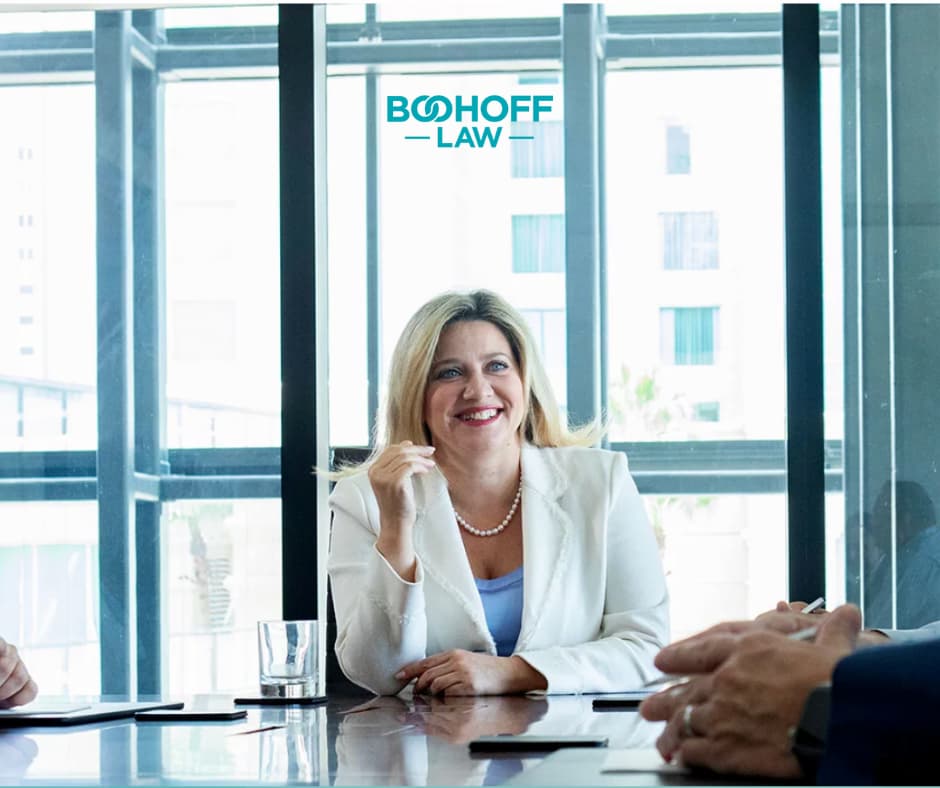
We work the criminal case and the civil claim in parallel. That means requesting the full investigative file, following the court docket, and getting preservation demands out to any bar, restaurant, or employer connected to the night before their records cycle.
At the same time, we handle the insurance side so you can treat: your own coverage, the driver’s, and any commercial policy we identify. You deal with your recovery, we deal with the adjusters.
Our Olympia office is at 203 4th Avenue East, Suite 207, downtown near Thurston County Superior Court, and we meet clients there by appointment. We work in English and Spanish, and if your injuries make travel difficult, we come to you at home or at the hospital.
Founder Tatiana Boohoff is admitted in Washington and Florida and is a Life Member of the Million Dollar Advocates Forum. The firm’s published results include $1,300,000 for a motorcyclist hit by a driver who turned left while impaired. Past results do not guarantee or predict similar outcomes in future cases.
Questions We Hear From Olympia Crash Victims
No, and waiting can cost you. The civil claim has its own three-year deadline that keeps running regardless of what the criminal court does. There are moments where it makes sense to let part of the prosecution play out, because the evidence developed there is useful, and that is a strategy decision rather than a rule.
No. Criminal charges get reduced for reasons that have nothing to do with whether the driver was impaired, including plea negotiations, testing issues, and procedural problems with the stop. Your claim is proven with different evidence and a lower standard, and the underlying facts about the driver’s condition remain available to you.
Generally yes, though amounts already paid through restitution are usually credited against the civil recovery so you are not paid twice for the same loss. Restitution tends to cover documented bills only, and it arrives slowly and in small payments. The civil claim is what addresses future care, lost earning capacity, and everything restitution does not touch.
Probably. Washington reduces your recovery by your share of fault rather than barring it, so the question becomes whether your condition contributed to the crash. A passenger, or a driver who was not impaired enough to affect the collision, can still recover. Be candid with your attorney early, because the other side will test this.
Possibly in the criminal case, if the prosecutor calls you and the matter goes to trial. In the civil claim, most clients give a deposition and never see a courtroom, because the large majority of these cases settle. If yours is the exception, you will know long in advance and you will be prepared for it.
The same three-year deadline applies, and the practical window is much shorter. Surveillance video is typically overwritten within 30 days, point-of-sale records get archived, and the servers who worked that night move on to other jobs. A claim against a bar that starts a year later is usually a claim built on memory alone, which is why the preservation letter is the first thing we send.
No. That lawyer represents the driver in the criminal case only and has no role in your compensation. Your claim goes to the driver’s insurance carrier, and to any other responsible party’s insurer. If a defense attorney or an investigator contacts you asking for a statement, you are not required to give one, and you should talk to your own lawyer before you do.
Usually yes, and not in the way people expect. Carriers know these facts play badly in front of a jury, which can make them more willing to pay policy limits in a clear case. It also makes them quicker to offer those limits early, before anyone knows what the injuries will cost, so an early offer here deserves more scrutiny rather than less.
Get the Full Picture Before You Decide Anything

You do not have to choose a lawyer today. What you should do this week is make sure nobody quietly loses the bar video, the phone records, or the vehicle data that your claim may depend on.
Send us the case number and what you know, and we will tell you which policies are likely available, what deadlines apply, and whether you need representation at all.
If your crash involved a commercial vehicle, our Olympia truck accident lawyer page explains the federal rules that apply. For collisions without impairment, our Olympia car accident lawyer page covers how those claims are handled.
Free consultation, 24 hours a day. Talk with an Olympia personal injury lawyer before you speak to any insurer.

Recovery is personal.

We’re here for you.
We’re close by. And if you can’t make it to us, we’ll meet you where you need us, at home or in the hospital.










© 2025 Boohoff Law, P.A. — Auto Accident Lawyers.
The information on this website is for general information purposes only. Nothing on this site should be taken as legal advice for any individual case or situation. This information is not intended to create, and receipt or viewing does not constitute, an attorney-client relationship.
Disclaimer: The results and testimonials presented on this website are based on the unique facts and circumstances of each case. Past results do not guarantee or predict similar outcomes in future cases. Every legal matter is different, and you should not rely on prior case results as an expectation of future performance.
