No Fees
Unless We Win
Millions Recovered!

Olympia Distracted Driving Accident Lawyer
A phone ticket at the scene does not win your case, and the absence of one does not sink it. What decides a distracted driving claim is whether anyone goes after the proof while it still exists. An Olympia distracted driving accident lawyer can start that on day one, by demanding the other driver’s phone records and vehicle data before they are gone.
Boohoff Law handles these claims from our Olympia office, which is open by appointment, on a contingency fee. The case review is free.
Available 24/7
Our specialists are here to listen and help for free, no strings attached.
877-999-9999
for a free consultation
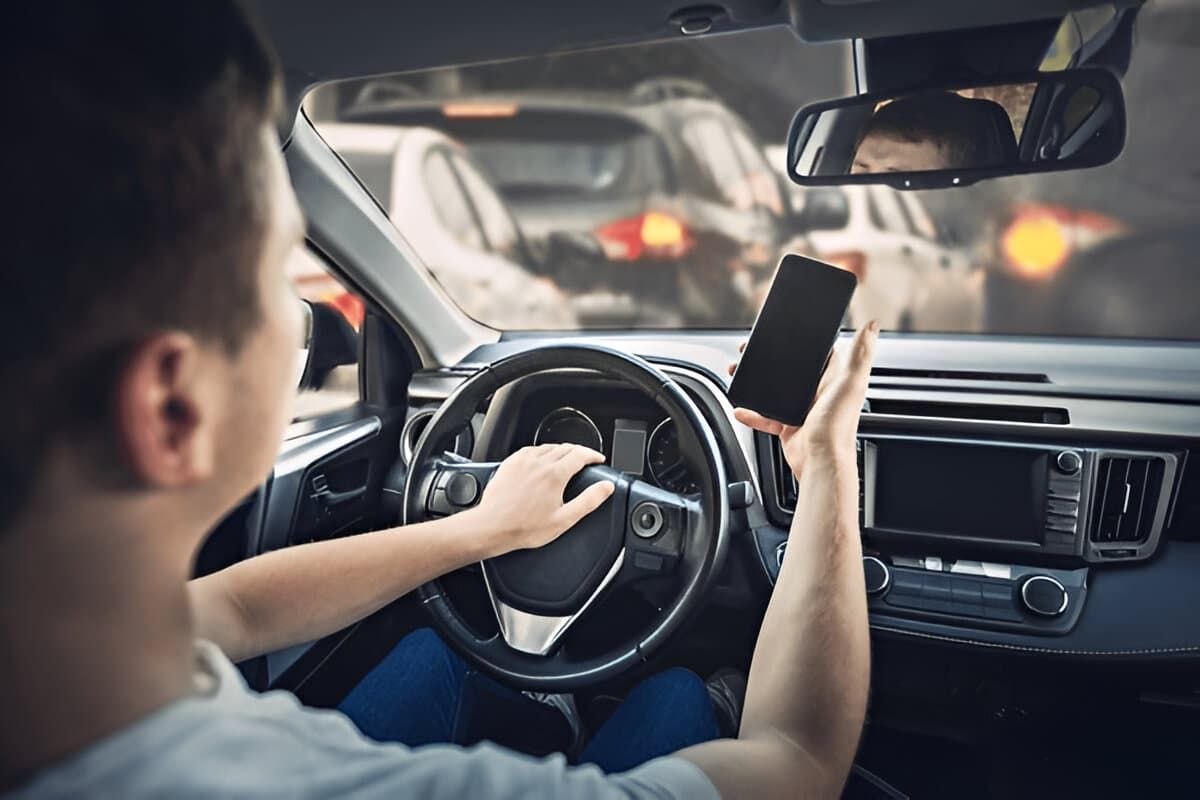
How Do You Prove a Driver Was on Their Phone?
Through records, not accusations. The three sources that matter are the driver’s cell carrier data, the vehicle’s infotainment and event data systems, and the human evidence at the scene.
Carrier records show the timing of calls, texts, and data sessions down to the second, and they can be matched against the moment of impact. Carriers keep those records for limited periods, and they release them to a subpoena in a lawsuit, not to a phone call.
Modern vehicles store more than most drivers realize. Infotainment systems log paired phone activity, including when a text was opened or a call was handled, and the event data recorder captures speed, braking, and throttle in the seconds before impact. A driver who never touched the brakes was looking somewhere else.
The scene evidence is simpler and often the most persuasive: what the driver said before they thought about it, what witnesses saw through the window, and whether the car drifted rather than swerved. Drift is its own signal.
A driver who is looking at the road and reacts late still steers. A driver who is looking down keeps going straight into whatever is in front of them, which is why so many of these collisions happen with no skid marks at all.
Washington’s E-DUI Law, in Plain Terms
Holding a personal electronic device while driving. RCW 46.61.672 makes it a traffic infraction for a driver to use a personal electronic device on a public highway, which covers phones and tablets in the hand, at a red light, and in stopped traffic.
The exceptions are narrow: contacting emergency services, transit employees using dispatch systems, certain commercial drivers, and operators of authorized emergency vehicles. A second citation within five years costs significantly more.
There is a second, lesser infraction as well. RCW 46.61.673 covers a driver who is “dangerously distracted” by any activity that interferes with safe operation, from eating to reaching into the back seat. An officer can only write it after stopping the driver for something else, so it rarely appears on a report even when it describes exactly what happened.
Does a Citation Decide Your Insurance Claim?
No, and neither does the lack of one. A traffic infraction is decided in a different proceeding, under a different standard, often without the officer having seen the crash.
What a citation does is shift the conversation. An adjuster reviewing a file with an E-DUI ticket in it knows how that document reads to a jury, and that changes the settlement math well before anyone files a lawsuit.
Distraction Is More Than Texting
 Anything that takes the driver’s eyes, hands, or attention away from the road. Insurers like to narrow the argument to phones, because phones are the one thing drivers deny confidently.
The pattern we see in Thurston County crashes covers far more: a driver reaching for coffee at a light on Pacific Avenue, a parent turning to a child in a car seat, someone entering an address into a navigation app while merging, a driver watching for a business entrance on Martin Way instead of the car ahead.
Washington’s own crash data shows how much of the problem this is. The Washington Traffic Safety Commission reported 103 traffic deaths involving distraction in its preliminary 2025 figures, down from 136 two years earlier, and still one of the largest categories in the state.
Not sure your crash qualifies? Ask. It costs nothing to find out.
Where These Crashes Cluster Around Olympia
They cluster where drivers expect to be bored, and where the road gives them room to look away.
The retail stretch of Martin Way, with its constant driveway turns, produces rear-end and pull-out collisions where the following driver never braked. Pacific Avenue and Capitol Way carry state-campus commuter traffic at predictable hours, and the same drivers make the same trip on autopilot every day.
Yelm Highway and Black Lake Boulevard offer long, straight, low-stimulus stretches, which is exactly where a driver reaches for a phone. School zones in Olympia, Lacey, and Tumwater add children and narrow reaction windows to the same behavior.
The crash type that follows is usually the same: a full-speed impact into stopped or slowing traffic, with no skid marks and an apologetic driver.
How Does Fault Work If the Driver Blames You?
The most common defense in a distracted driving claim is that the injured driver stopped short. Washington law gives you room even if some of that sticks.
Under RCW 4.22.005, contributory fault reduces your award in proportion to your share and does not bar recovery. A driver assigned 20 percent of the blame still recovers 80 percent, which is far more forgiving than the rule in many other states.
That is also why the fault percentage becomes the real negotiation. Data beats argument here, and it is why we push for the phone records and the vehicle download rather than trading opinions with an adjuster.
The deadline to file suit in Washington is three years from the crash date, and claims involving a public entity require a formal claim filing first, on a shorter track.
What Compensation Can an Olympia Crash Victim Pursue?
The claim should cover what the crash cost you in money and what it cost you in daily life.
The financial side includes emergency care, imaging, surgery, therapy, prescriptions, the treatment your doctors expect you to still need, lost wages, lost overtime, and reduced earning capacity if you cannot go back to the same work. Vehicle damage, rental costs, and the household help you had to hire belong there too.
The human side covers physical pain, sleep problems, anxiety in traffic, and the activities you have given up. Washington does not cap these damages.
One piece of practical advice we give every client: keep every appointment and describe every symptom, including the ones that seem minor. If pain is not in the medical records, the insurance company treats it as though it never happened.
At the Scene, When You Suspect a Phone Was Involved
Say something to the officer, specifically and without exaggeration. “The driver was looking down at their lap as they came toward me” is useful. “They were texting” is a conclusion you cannot see from another car, and a defense lawyer will take it apart later.
Photograph the interior of the other vehicle if it is visible and safe to do so, because a phone mounted on the dash or sitting in a cupholder is worth documenting. Photograph the scene, the vehicle positions, and the absence or presence of skid marks.
Ask witnesses what they saw the driver doing, and get their contact information yourself rather than assuming the officer collected it.
Listen. Drivers say a great deal in the first two minutes, before they have thought about insurance, and what they say at the roadside is admissible. Write it down as soon as you can, in their words.
Then get medically evaluated the same day, even if you feel able to drive home. Rear-end collisions produce injuries that announce themselves the following morning, and a same-day record connects them to the crash cleanly.
Injuries That Follow a Driver Who Never Braked
 The distracted driving pattern is distinctive, because the driver never braked. Full-speed impacts into stopped traffic transfer far more force than an ordinary collision.
Whiplash and cervical spine injuries are the most common result, and they range from muscle strain that resolves in weeks to disc herniations that end in injections or surgery. Lower back injuries follow the same range.
Concussions happen even without a head strike, from the rapid acceleration alone. Symptoms that arrive over the following days, headaches, light sensitivity, memory lapses, irritability, need to be reported to a doctor rather than waited out.
Shoulder injuries from seat belt loading, wrist and hand fractures from bracing on the wheel, and knee injuries from the dashboard round out the pattern.
Because the victim is usually stopped and the other driver is at full speed, these crashes also produce a high rate of multi-vehicle chain reactions, where a single inattentive driver injures people in three or four cars.
From Crash Report to Resolution
It runs on two tracks at once: the evidence track and the medical track.
The evidence track starts immediately. Preservation demands for phone records, vehicle data, and any commercial telematics. Requests for the full collision report and the officer’s notes. Canvassing for camera footage from nearby businesses, which is typically overwritten within two weeks.
The medical track sets the schedule. Your claim cannot be valued until your treatment is complete or your prognosis is known, because a settlement is permanent and future care is the most expensive part of most claims.
When both tracks are ready, a demand package goes to the carrier with the medical documentation, the wage loss records, and the evidence of distraction. Adjusters generally respond within 30 to 60 days.
If the response is unreasonable and the gap is real, filing suit puts subpoena power behind the phone records that a carrier was declining to produce voluntarily. That step alone resolves a number of these cases, because carriers know how a phone log reads to a jury.
What If the Distracted Driver Was Working at the Time?
Then an employer’s policy usually sits behind the driver, which changes the resources available and the investigation.
Employers are generally responsible for employees driving in the course of their work, and a company vehicle brings its own questions: what the dispatch or messaging system required of the driver, whether the company expected responses while driving, and what its own policy said about phone use.
Commercial telematics often settle the question outright, since fleet systems record speed, harsh braking, and in many cases distraction events. Those records get overwritten on a schedule, which is why a preservation demand needs to go out early.
Ask us to send the preservation letters while the data still exists.
How Is This Different From an Ordinary Rear-End Claim?
In the leverage, not in the law. The legal standard is the same: a driver who fails to use reasonable care and causes harm is responsible for it.
What changes is the quality of the proof. In a typical rear-end claim, fault is presumed but the insurer still argues about injury severity, treatment, and value. In a distraction case with documented phone activity, the conduct itself becomes part of the conversation, and carriers evaluate those files differently because they know how the evidence reads.
The injuries also tend to be worse. A driver who is paying attention brakes before impact and reduces speed. A driver looking at a screen arrives at full speed, and the difference in force shows up in the medical records.
There is a practical difference too. Distraction cases reward early action more than almost any other claim type, because the proof lives on servers with retention schedules rather than in a police report that will exist forever.
What If You Were a Passenger or on Foot?
Then your claim is usually stronger, because nobody can assign you a share of the driving.
Passengers have a claim against whichever driver was at fault, including the driver of the car they were riding in. That is uncomfortable when the driver is a friend or a relative, and it is worth remembering that the claim is against an insurance policy that exists for exactly this purpose.
People struck while walking or cycling face the hardest version of a distracted driver’s carelessness, with no vehicle around them. Washington’s vulnerable road user law increases what a negligent driver faces when they seriously injure someone on foot or on a bike, and the same conduct supports the civil claim.
In both situations, your own auto insurance can matter even though you were not driving. Personal injury protection and uninsured motorist coverage generally follow you as a person, which means your policy may pay for treatment after you were hit as a passenger or a pedestrian.
How Boohoff Law Handles Olympia Distracted Driving Claims
We start with evidence that expires. Preservation demands to the driver, the employer, and any business with a camera facing the road. A request for the full collision report and the officer’s notes, which sometimes contain admissions the summary leaves out.
Then we handle the claim so you can treat. Our office deals with both insurers, opens the coverage you have, gathers your records as treatment progresses, and keeps you out of recorded statements that exist to create contradictions.
Boohoff Law’s Olympia office is at 203 4th Avenue East, Suite 207, downtown near Thurston County Superior Court, and we meet clients there by appointment. We work in English and Spanish. If your injuries make travel hard, we will come to you at home or at the hospital, and we answer the phone around the clock.
Founder Tatiana Boohoff is admitted in Washington and Florida and is a Life Member of the Million Dollar Advocates Forum. Past results do not guarantee or predict similar outcomes in future cases.
Questions Olympia Drivers Ask About Distracted Driving Claims
You can still have a claim. Washington reduces your recovery by your share of fault rather than eliminating it, so the question becomes how much your phone use contributed to the collision. Be upfront with your lawyer about it early, because a fact the other side discovers later does more damage than one you addressed from the start.
No. Hands-free use is legal in Washington, but legal is not the same as safe, and it does not excuse a driver who failed to stop in time. What matters is whether they were paying attention to the road, and a hands-free call that ran through the moment of impact still shows where their attention was.
Often it helps identify coverage. Teen drivers are usually insured on a parent’s policy, which may carry higher limits than a young driver would buy alone, and the family vehicle may bring additional coverage. Washington also restricts phone use for drivers with intermediate licenses, which adds another violation to the file.
It can, which is why it should be reviewed before it is handed over. Most of the time, footage helps far more than it hurts, because it captures the other driver’s behavior and eliminates the “she stopped short” argument. Preserve it either way, and let your attorney decide how and when it gets produced.
The driver who caused the crash, even when that person is a friend or family member. The claim is against their insurance policy rather than against them personally, and passengers typically have the cleanest liability position in any crash, since no one can argue you were driving.
No, and that is the main reason these claims need legal help early. Carriers release subscriber records to the account holder, to law enforcement with legal process, or to a party with a subpoena in an active lawsuit.
A letter from an injured person does not get there. What you can do immediately is preserve everything on your side and make sure a formal preservation demand goes out before the retention window closes.
You can still recover. Washington law compensates the aggravation of a pre-existing condition, which means the claim covers the difference between where you were before the crash and where you are now.
Prior records help rather than hurt here, because they establish your baseline. Be upfront about the history from the beginning, since a prior injury discovered later by the defense does far more damage than one disclosed early.
Get a Straight Answer About Your Claim

Distraction cases are won with records, and records are on timers. Every week that passes is a week of phone data, camera footage, and vehicle memory that may quietly age out.
Tell us what happened and we will tell you what is worth chasing, what your claim realistically looks like, and whether you need a lawyer for it at all. If the answer is that you can handle the claim on your own, you will hear that from us, and we will tell you which two or three documents to request before you do.
Riders and cyclists face the same inattentive drivers with none of the protection, and our Olympia bicycle accident lawyer and Olympia motorcycle accident lawyer pages cover how those claims are handled.
Call for a free case review, 24 hours a day, or reach an Olympia, WA personal injury lawyer online.
No Fees. Unless We Win.

Recovery is personal.

We’re here for you.
We’re close by. And if you can’t make it to us, we’ll meet you where you need us, at home or in the hospital.












© 2025 Boohoff Law, P.A. — Auto Accident Lawyers.
The information on this website is for general information purposes only. Nothing on this site should be taken as legal advice for any individual case or situation. This information is not intended to create, and receipt or viewing does not constitute, an attorney-client relationship.
Disclaimer: The results and testimonials presented on this website are based on the unique facts and circumstances of each case. Past results do not guarantee or predict similar outcomes in future cases. Every legal matter is different, and you should not rely on prior case results as an expectation of future performance.
