Partly to Blame for a Trucking Accident

What if I Am Partly to Blame for a Trucking Accident?

Accidents that involve large trucks, including tractor-trailers, big rigs, and eighteen-wheelers, typically result from truck driver and trucking company negligence. In some situations, however, the truck driver or trucking company’s insurance will try to pin some or all the blame for an accident on you.

Never assume this eliminates your right to compensation, as most state laws still allow you to seek compensation, even if you are partly to blame. If you find yourself in such a situation, it’s crucial to consult with a qualified truck accident lawyer.

For example, under Florida law, an accident victim may not recover monetary compensation if their percentage of fault exceeds 50 percent. If they are 50 percent or less at fault for the accident, their recoverable compensation will decrease, depending upon their amount of fault.

If an insurance company says that you are fully or partially at fault for a truck accident, your lawyer can retain an accident reconstructionist or another expert who can prove otherwise.

Your lawyer can also handle every step of the claims-filing process in your case and handle all written and verbal communications with insurance company adjusters.

Additionally, maybe the trucking company’s insurer attempts to deny liability for your accident or otherwise refuses to offer you the fair monetary damages you deserve. Then your lawyer may file a personal injury lawsuit, handle every step of the litigation process, and represent you at all legal proceedings in your case, including a civil jury trial or binding arbitration proceeding.

Unlike the insurance company in your case, your attorney will have your best interests at heart and do everything possible to maximize the total monetary award you receive for your injuries — either through a favorable settlement offer from the insurance company or a favorable litigation result in the state court system.

Request A Free Consultation Today!

Negligent Parties in a Truck Accident Case
Partly to Blame for a Trucking Accident

In most truck accident claims, you can hold the truck driver and/or the trucking company that employs the driver responsible for the accident. Negligent truckers drive in a careless or unsafe manner or violate various state and federal motor carrier regulations.

In some situations, you can hold a trucking company responsible for the acts of their negligent employee truck drivers committed within the scope of their employment. You can hold a trucking company responsible for negligent entrustment if they fail to supervise a driver or allow a driver with a poor driving record to operate one of their vehicles.

Similarly, in some situations, a truck repair facility or a truck parts manufacturer may be fully or partially responsible for an accident that occurs.

If you recently suffered injuries in a truck accident, your truck accident attorney can identify potentially responsible parties and take the appropriate legal action on your behalf.

For example, your lawyer can file a personal injury claim against the at-fault truck driver or trucking company’s insurance policy, submit a settlement demand package on your behalf, and negotiate with insurance company adjusters for favorable monetary compensation.

Causes of Truck Accidents

Truck accidents typically occur when people drive carelessly and negligently. One common cause of truck accidents is a driver’s failure to follow standard traffic laws and regulations.

For example, a driver may drive over the posted speed limit, fail to yield the right-of-way to another vehicle at a traffic intersection, fail to use their turn signals, or fail to look into their mirrors while driving or backing up.

Fatigued Truck Driver

Additionally, a truck accident may happen when a truck driver or trucking company fails to follow applicable state and federal motor carrier regulations. These regulations pertain to weight limits, methods for properly securing cargo to the truck bed, overhead and undercarriage lighting for the tractor and trailer, and proper loading and unloading procedures for truck cargo.

When truck drivers and trucking companies fail to follow these regulations, cargo might become loose, slip off the truck, and fall onto the road, causing a severe accident. Additionally, if a truck driver or other trucking company employee fails to load cargo properly at the loading dock, the top-heavy vehicle may overturn in the middle of the road.

Truck accidents may also happen when drivers do not watch the road in front of them attentively. Instead of paying active attention to the road, a driver might eat and drink while driving, adjust the volume on a stereo system, use a cell phone without a hands-free Bluetooth device, text and drive, or program a GPS navigation device while driving.

All these activities may cause a truck driver to lose their focus, both physically and mentally, and bring about a serious accident with another vehicle or pedestrian.

Next, some truck accidents occur when drivers exhibit various types of road rage. Truck drivers are frequently in a hurry to get ahead of other traffic to arrive at their final destination ahead of schedule, thereby reaping financial bonuses and benefits.

However, when trying to move ahead, truck drivers may speed or resort to other reckless driving maneuvers, including weaving in and out of traffic, cutting off other vehicles in traffic, tailgating other vehicles, and failing to use their turn signals at the proper times. Unfortunately, all these aggressive driving maneuvers may lead to a truck accident that causes other drivers and passengers to suffer injuries.

Additionally, some truck accidents happen when drivers become fatigued at the wheel. To obtain a financial bonus, a truck driver might try to complete their journey without stopping to nap. As a result, they may become sleepy or disoriented while on the road.

If a truck driver falls asleep at the wheel and loses control of their truck, they may cause an accident. Even if the driver does not fall asleep at the wheel, they may still experience a lack of concentration, which prevents them from operating their vehicle carefully and safely.

Finally, some truck accidents happen when drivers get behind the wheel after having too much to drink. An intoxicated truck driver might experience blurred vision, dizziness, or nausea. Additionally, they may experience numerous mental impairments, including lack of concentration, delayed reaction time, delayed reflexes, lack of coordination, and an inability to judge distances between their truck and other vehicles. As a result, they may cause a severe accident or series of collisions.

If you suffered injuries in a truck accident that a negligent truck driver or trucking company caused, seek the legal help that you need right away. A skilled truck accident attorney in your area can investigate your accident circumstances, review all your legal options with you, and file a claim for monetary compensation and damages.

Categories of Truck Crashes

When truckers drive negligently, they may cause truck accidents, including:

  • Rollover accidents, where a driver speeds around a sharp curve, especially in wet weather, causing the tractor or trailer to overturn
  • Jackknife accidents, where the tractor and trailer portions of a truck fold inward towards one another, often causing the truck to skid down the hill and hit other vehicles in its path
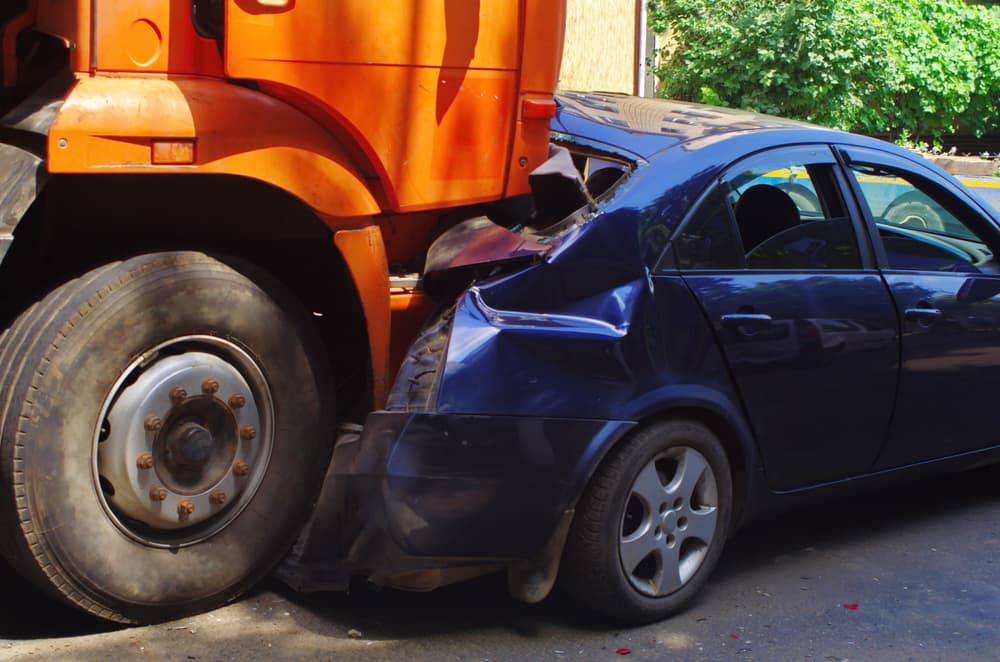
  • Rear-end accidents, where the front of a truck hits the back of another vehicle
  • Sideswipe accidents, where a truck driver negligently causes their truck to veer into another travel lane, for instance, by failing to look into their rearview mirror, thereby hitting the side of another vehicle traveling in the same direction
  • Broadside or T-bone accidents, where the front of a large truck strikes the side of another vehicle, usually because the truck driver does not yield the right-of-way to the other vehicle at a traffic intersection
  • Head-on collisions, where a negligent truck driver causes their vehicle to cross the double center line and strike an oncoming vehicle in an opposing travel lane.

If you sustained injuries in one of these types of truck accidents that a negligent driver caused, consult an experienced personal injury lawyer about your legal matter as quickly as possible. Your lawyer can determine the identity of all potentially responsible parties, file an insurance claim on your behalf, and start negotiating with the insurance company adjuster handling your claim.

Truck Accident Injuries

In accidents in which a large truck strikes a smaller passenger vehicle, bicycle, motorcycle, or pedestrian, the individual on the receiving end usually suffers the more severe injuries.

The injuries that a truck accident victim suffers will usually depend on the type of truck accident, the force of the collision, the number of vehicles involved, and the accident victim’s bodily movements during the crash.

Person injured in Truck Accident discussing with Truck Accident Lawyer

Some of the most common injuries that truck accident victims may suffer in an accident include open lacerations, bruises, rib fractures, broken bones, soft tissue neck and back injuries, eye injuries, traumatic head and brain injuries, permanent cognitive impairments, internal bleeding, internal organ damage, mouth and teeth Injuries, facial contusions, complete and incomplete paralysis injuries, and spinal cord damage.

Upon sustaining injuries in a truck accident, consult a medical professional as quickly as possible and complete your entire medical treatment regimen.

That way, you increase your chances of obtaining a full recovery from your accident-related injuries. You also show the truck driver’s or trucking company’s insurer that you suffered severe injuries in your accident that warrant significant monetary compensation.

While you complete your medical treatment, your truck accident attorney can investigate your accident circumstances further, gather important documents on your behalf, and assemble those documents into a settlement demand package. You need that demand package when your attorney negotiates with the insurance company for a favorable monetary settlement offer in your case.

The Burden of Proof in Truck Accident Cases

In a truck accident claim or lawsuit, the injured accident victim must establish their legal burden of proof to recover monetary compensation and damages.

First, the accident victim must demonstrate that the truck driver violated one or more traffic laws or motor carrier regulations or that they otherwise operated their vehicle in a careless, distracted, or intoxicated manner. Then they must show that their injuries occurred due to the truck driver’s negligence.

Evidence You May Introduce to Show That a Truck Driver Was at Fault in Your Accident

Sometimes, the truck driver or trucking company’s insurer might dispute fault for your accident. In other words, the insurance company may claim that you caused or contributed to your accident somehow.

To demonstrate the truck driver’s liability, your lawyer can:

  • Obtain a copy of the police investigation report, which details how the accident happened, including whether or not the police officer issued a traffic citation to the truck driver and, if so, for what
  • Retain an accident reconstructionist who can speak with witnesses, review police reports, review video camera footage of the accident, visit the accident scene, and determine how the accident occurred and who caused it.
  • Speak with witnesses who saw the accident firsthand and may testify at a discovery deposition or civil jury trial to support your case.

Your truck accident lawyer will do everything possible to obtain the evidence necessary to satisfy your legal burden of proof and establish that the truck driver or trucking company was fully responsible for your accident.

Truck Accident Monetary Damages

Victims of truck accidents may recover monetary damages for their accident-related losses.

First, they may pursue compensation for economic losses, such as medical expenses, loss of earning capacity, and lost income. They may also recover monetary damages for their intangible losses, including pain, suffering, inconvenience, mental distress, loss of life enjoyment, loss of spousal consortium, and loss of the ability to use an injured body part.

Your attorney will work to maximize the monetary recovery you receive for all the injuries you suffered in your truck accident.

Speak with a Truck Accident Lawyer Near You Today

Tatiana Boohoff - Truck Accident Lawyer
Tatiana Boohoff, Truck Accident Attorney

Following a truck accident, you must consult an experienced personal injury lawyer as quickly as possible. A knowledgeable truck accident attorney can handle every step of the legal process for you, from filing a claim to negotiating with insurance company adjusters to litigating your case to a favorable resolution in court.


What Happens When a Trucking Company Violates FMCSA Rules?

What Happens When a Trucking Company Violates FMCSA Rules?

The Federal Motor Carrier Safety Administration, or FMCSA, promulgates various rules that trucking companies and truck drivers must follow. Many FMCSA regulations address weight limits for large vehicles and the proper ways for loading and unloading cargo and securing it to the trailer. Others regulate truck driver conduct on the road or a company’s inspection and maintenance of a fleet.

FMCSA regulations exist to keep everyone safe when driving alongside large commercial vehicles. Semi-trucks and similar vehicles can cause devastating damage and injuries when they crash, so the government implements stricter rules for the trucking industry to follow. When drivers, trucking companies, or another similar party commits serious FMCSA violations, accidents and severe injuries to others may result.

If you suffered injuries in a truck accident that a negligent trucking company or truck driver caused, you need to retain a skilled truck accident lawyer in your area who can handle your personal injury claim or lawsuit. Truck accident claims are often much more complicated than car accident cases, so you want to hire a law firm with experience handling commercial vehicle crashes.

A skilled truck accident lawyer can investigate the circumstances of your truck accident and, if necessary, retain an experienced accident reconstructionist who can testify in your case. Your lawyer can also file a personal injury claim with the trucking company’s insurer and seek favorable settlement compensation on your behalf.

Finally, if the insurance company does not offer you the fair monetary damages you need, your attorney can file a truck accident lawsuit in the court system to seek favorable financial recovery for your injuries.

Unlike insurance companies that are never on your side, your truck accident attorney will be your advocate throughout all the legal proceedings in your case. Your lawyer can answer all your questions and handle every aspect of your personal injury claim or lawsuit.

Motor Carrier Violations That Lead to Accidents

Trucking companies and their employee truck drivers have a duty to follow all FMCSA regulations. Those regulations pertain to safe driving and the tasks that trucking companies and truck drivers must perform before heading out on a road trip.

What Happens When a Trucking Company Violates FMCSA Rules?

In short, FMCSA regulations pertain to:

  • Cargo and weight limits for large trucks and tractor-trailers
  • Overhead and undercarriage lighting for tractors and trailers
  • Checklists for pre-trip inspections that truck drivers must perform before they head out on a trip
  • Truck rear guards and other safety devices on large trucks
  • Methods for properly loading and unloading cargo from the trailer
  • Methods for properly securing loose cargo onto the trailer, ensuring that it does not fall into the road while the truck is in motion

When trucking companies and truck drivers fail to follow these regulations, the chances of causing a severe accident increase dramatically. For example, if the trucking company or truck driver does not follow the prescribed weight limits or loads cargo onto the truck improperly, the trunk may become top-heavy.

As a result, the truck’s center of gravity might become offset, causing the truck to roll over in the middle of the road when speeding down the hill or around a sharp curve.

Additionally, serious accidents may happen when trucking companies and truck drivers fail to properly load and secure cargo on the trailer. If the truck’s cargo comes loose while the vehicle is in motion, it might roll out into the middle of the road, causing a multi-vehicle pileup.

Loose cargo, such as logs, may also impale the front windshield of an oncoming vehicle, leading to permanent injuries and fatalities for the vehicle occupants.

If you suffered injuries in a recent truck accident that resulted from a trucking company’s or truck driver’s failure to follow FMCSA regulations, you have legal rights and options that you can consider.

Your attorney can file a personal injury claim against the trucking company’s insurer and negotiate a favorable settlement offer that fully and fairly compensates you for all your accident-related injuries.

Other Common Causes of Truck Collisions

In addition to not following FMCSA regulations, truck accidents may also happen when truck drivers operate their large vehicles irresponsibly. For example, when truck drivers fail to yield the right-of-way to other vehicles, fail to use their turn signals, fail to use their mirrors, or speed excessively, they significantly increase their chances of causing a crash.

Speeding is especially dangerous if the trucking company or truck driver does not load cargo onto the truck properly.

Serious accidents may also happen when someone drives a truck while distracted. Distracted driving may take several forms, but it almost always involves a driver’s failing to observe the road. Instead of paying attention to the road, a truck driver might be looking at their cell phone, programming a GPS navigation system, or paying attention to passengers in the cab of the truck. All these activities may divert a driver’s attention away from the road, preventing them from driving carefully and safely.

A truck accident may also occur when a truck driver becomes fatigued while behind the wheel. Drowsy driving often occurs when drivers are on the road for long hours without taking frequent breaks to rest or sleep.

Trucking companies frequently incentivize drivers to drive for long hours to reap financial benefits. However, when a driver becomes fatigued, they may lose their ability to concentrate on the road attentively or fall entirely asleep at the wheel, losing control over their vehicle.

Finally, trucking accidents may happen if truck drivers consume alcohol, drugs, or other controlled substances. Alcohol intoxication is especially problematic for truck drivers operating high-speed, large, and heavy vehicles. When a driver is under the influence of alcohol, they might lose their ability to concentrate and experience dizziness, blurred vision, and delayed reaction time. As a result, they may be unable to stop their vehicle in time to avoid a severe crash.

Legally Proving That a Trucking Company or Truck Driver Was Negligent

To legally establish that a trucking company or truck driver was negligent under the circumstances, the truck accident victim must satisfy their legal burden of proof.

In the case of a trucking company, they must establish that the company violated one or more FMCSA regulations, such as by failing to insist that their drivers perform pre-trip inspections or failing to ensure that employees loaded cargo onto the truck and secured it properly.

Next, the accident victim must establish that the truck accident happened as a direct result of the trucking company or truck driver’s negligent actions or inactions. Finally, the accident victim needs to show that as a direct result of the truck accident, they suffered one or more physical injuries and damages.

Experts can be beneficial when it comes time to prove the legal elements of a truck accident claim or lawsuit. For example, an accident reconstructionist can establish that the trucking company was fully or partially to blame for the accident. On the other hand, a medical expert can causally relate one or more physical injuries that the accident victim suffered to the truck accident.

Injuries in Truck Accidents

When a sizable big rig or tractor-trailer strikes a smaller passenger vehicle, it is almost always the driver or passengers riding in the passenger vehicle who suffer the most severe injuries.

Truck accidents often occur at high speeds and with a significant amount of force, causing the victim’s body to move about the inside of their vehicle, potentially striking various parts of the car like the headrest or steering wheel.

The various physical injuries that a truck accident victim suffers will depend upon the speeds of the vehicles, the force of the collision, the directions of the vehicles, and other accident-related factors.

Some of the most common injuries that result from truck accidents due to trucking company and truck driver negligence include internal bleeding, internal organ damage, traumatic brain injuries, mouth and jaw injuries, eye injuries, open lacerations, bruises, soft tissue neck and back contusions, rib fractures, bone fractures, complete and incomplete spinal cord injuries, paralysis injuries, and death.

Following your truck accident, it is crucial that you follow through with your medical treatment regimen, that you attend all your medical appointments on time, and that you do not discharge yourself early from medical care.

By continuously treating your injuries and completing your treatment regimen, you show the insurance company that your injuries are severe and that you took your medical treatment seriously. After you complete your medical treatment, your lawyer can begin advocating for the fair settlement compensation you deserve to recover in your legal matter.

Filing a Claim with the Insurance Company

If you suffered injuries in a trucking accident that resulted from a trucking company or truck driver’s negligence, your attorney can file a legal claim and pursue the monetary recovery you deserve.

To submit a claim, your lawyer will assemble a settlement demand package for the insurance company adjuster to review. This demand package will include a demand letter for monetary settlement with essential documents, such as expert reports, medical treatment records, medical bills, photographs of property damage, and injury photographs.

If the trucking company’s insurer accepts fault for your accident, then settlement negotiations for monetary compensation may begin. Throughout this process, your attorney typically makes an opening settlement demand to which the insurance company will respond. Negotiations then proceed back and forth until the parties either settle the case or reach a roadblock.

In settlement negotiations, you should know that insurance companies are not on your side. Despite what they allege in their advertisements, insurance companies are not interested in helping accident victims or offering them favorable monetary damages for their injuries and losses.

Instead, insurance companies are interested only in their bottom line and want to try to save themselves as much money as possible. They attempt to achieve this goal by paying as little compensation as possible to injured accident victims.

Your attorney will aggressively advocate for you during all settlement negotiations with insurance company representatives. Moreover, if the insurance company does not increase its offer significantly after several rounds of negotiations, your attorney can file a lawsuit and litigate your case in court and pursue an efficient result on your behalf.

Litigation Following a Truck Accident

The litigation phase of a truck accident case begins when a personal injury attorney files a lawsuit in court. However, even after filing a lawsuit, the parties may still decide to resolve their case via settlement.

During litigation, the parties will partake in discovery, continue exchanging documents, submit to depositions, and attend a settlement conference with the court. If the case remains unresolved by the end of the litigation process, the parties may take their case to a civil jury trial for a jury to determine the outcome.

Instead of taking a case to trial, the parties may pursue alternative dispute resolution, such as mediation or binding arbitration, to resolve their case out of court.

Your truck accident lawyer can explore potential legal options for your case and will work towards obtaining the highest monetary recovery for you.

Collecting Monetary Damages for Truck Accident Injuries

If you can establish the legal elements of your truck accident claim or lawsuit, you may be eligible to recover various categories of monetary compensation. Your attorney will fight for your legal rights so you obtain the most compensation available via settlement or litigation.

Common monetary damages of truck accident cases include compensation for past and future pain and suffering, loss of spousal consortium, lost earnings, loss of earning capacity, lifetime care costs, permanent disfigurement or disability, lost quality of life, loss of use of a body part, mental anguish, and medical expenses.

Speak With a Truck Accident Lawyer About Your Legal Matter Today

Tatiana Boohoff, Lawyer for Truck Accident
Tatiana Boohoff, Truck Accident Attorney

If you recently suffered injuries in a truck accident, you need to retain an experienced personal injury attorney to represent you as quickly as possible. Your lawyer can handle every step of the claims filing and litigation processes and work hard to maximize the total settlement or litigation compensation you recover in your case.

Request A Free Consultation Today!

Experience Lawyer for Truck Accident near Tampa

The Dangers of Truck Driver Fatigue

Most trucking companies pay commercial truck drivers by the number of miles they drive, so they have an incentive to keep driving no matter how tired they are. However, a drowsy truck driver can cause a horrendous accident that severely injures or kills other motorists and their passengers. In fact, truck driver fatigue is a leading cause of truck accidents.

If you suffered injuries or lost a loved one in a truck accident a fatigued truck driver caused, you may obtain compensation for your injuries and losses. Establishing liability and obtaining compensation from all at-fault parties requires completing complex and challenging processes in most truck accident claims, so you need to consult an experienced truck accident lawyer for help.

Request A Free Consultation

What Makes Truck Driver Fatigue so Dangerous?

Truck driver fatigue poses significant dangers to both truck drivers and other road users. Fatigue can impair a driver’s ability to react quickly and make sound decisions, leading to an increased risk of accidents. Some industry experts claim that fatigued driving creates the same level of impairment as drunk or drugged driving.

Truck driver fatigue causes these common dangers:

  • Increased likelihood of accidents. Fatigue slows down reaction time and impairs judgment, leading to an increased risk of accidents. A drowsy driver may fail to notice hazards, miss traffic signals, or make critical errors while operating a large commercial vehicle, resulting in severe collisions.
  • Decreased alertness and concentration. Fatigue can cause a truck driver to become less attentive and focused on the road. It impairs their ability to maintain a steady speed, stay within designated lanes, and respond to changing traffic conditions promptly. This lack of concentration can lead to drifting into other lanes, rear-end collisions, or failure to respond to sudden obstacles.
  • Impaired decision-making. Fatigue affects cognitive abilities and can impair a driver’s decision-making skills. This may lead to misjudging distances, underestimating the speed of other vehicles, or making risky maneuvers that increase the likelihood of accidents.
  • Increased risk of falling asleep at the wheel. Driving without adequate rest can increase the chances of a truck driver falling asleep at the wheel. Falling asleep, even for a few seconds, can cause a catastrophe when operating a large, heavy vehicle at high speeds.
  • Health issues and chronic fatigue. Long-haul truck drivers often face irregular schedules, extended hours of driving, and sleep disruptions. This can lead to chronic fatigue, sleep disorders, cardiovascular problems, obesity, and mental health disorders. These health concerns further contribute to driver fatigue and increase the risks on the road.
  • Legal and financial consequences. If a fatigued truck driver causes an accident, it can result in significant legal and financial consequences. Trucking companies can face lawsuits, regulatory fines, increased insurance premiums, and damage to their reputation. Moreover, the drivers themselves may face legal liabilities and may lose their commercial driving licenses.

To address the dangers of truck driver fatigue, the Federal Motor Carrier Safety Administration (FMCSA) established regulations that limit driving hours and mandate sufficient rest periods. However, some truck drivers and trucking companies disregard the regulations.

Speak with a truck accident attorney, as they will have the resources to investigate the truck driver’s driving logs to determine if they violated any FMCSA hours of service requirements.

What Are Federal Regulations Regarding Truck Driving?

Truck driving regulations typically limit the hours a truck driver can drive within a specified time. These regulations prevent driver fatigue and promote road safety.

FMCSA’s regulations regarding truck driving include:

  • Hours of Service (HOS). FMCSA establishes the hours of service regulations for truck drivers operating commercial motor vehicles (CMVs) in interstate commerce. The key provisions for property-carrying CMV drivers are:
    • 14-Hour Duty Limit: A driver cannot drive beyond the 14th consecutive hour after coming on duty, following 10 consecutive hours off duty.
    • 11-Hour Driving Limit: A driver cannot drive for more than 11 hours after 10 consecutive hours off duty.
    • 30-Minute Rest Break: A driver must take a minimum 30-minute break if more than eight hours have passed since their last off-duty or sleeper-berth period.
    • 60/70-Hour Duty Limit: A driver cannot drive after 60/70 hours on duty in seven/eight consecutive days. The driver must take a minimum of 34 consecutive hours off duty before starting a new seven/eight-day period.
    • Sleeper-Berth Provision: Drivers using a sleeper-berth to accumulate their required off-duty time must spend at least eight hours in the sleeper berth, plus a separate two hours either in the sleeper berth, off duty, or a combination of both.

Truck drivers and trucking companies must comply with these regulations to ensure driver safety and promote road safety. Non-compliance with these regulations can result in penalties, fines, and other legal consequences.

In addition to any administrative consequences, you can hold a truck driver or trucking company liable if a fatigued truck driver caused an accident that seriously injured you or a loved one.

What Causes Truck Driver Fatigue?

Even though the FMCSA tries to regulate long driving hours, truck drivers often face demanding schedules and tight deadlines, leading to extended periods of driving without adequate rest. Long driving hours can disrupt sleep patterns, increase fatigue, and diminish alertness, making drivers more prone to accidents. Likewise, failure to take regular breaks and rest periods during long drives can exacerbate fatigue. Continuous driving without adequate breaks reduces opportunities for rest, refreshment, and recuperation, further increasing the risk of accidents.

Along with long driving hours and lack of rest periods, these factors can lead to fatigue in truck drivers:

  • Sleep disorders. Sleep apnea, insomnia, or untreated sleep disorders can disrupt a truck driver’s sleep patterns and result in chronic fatigue. These conditions can lead to excessive daytime sleepiness, decreased alertness, and impaired cognitive function, all of which increase the risk of accidents.
  • Monotonous and sedentary nature of driving. Long hours of monotonous driving on highways can induce boredom and mental fatigue. The repetitive nature of the task can lead to decreased attention, slower reaction times, and reduced cognitive performance, making drivers more susceptible to accidents.
  • Poor diet and lack of physical activity. Unhealthy eating habits and sedentary lifestyles can contribute to fatigue. Poor nutrition and lack of exercise can diminish a driver’s energy levels and overall well-being, further increasing the likelihood of fatigue-related accidents.
  • Stress and mental fatigue. The demanding nature of the job, tight schedules, traffic congestion, and the pressure to meet deadlines can lead to stress and mental fatigue among truck drivers. Stress can interfere with sleep quality and contribute to chronic fatigue, impairing a driver’s ability to concentrate and make sound decisions.
  • Medications and substances. Some medications, including over-the-counter and prescription drugs, can cause drowsiness or impair cognitive function, affecting a driver’s alertness and performance. Additionally, the use of alcohol, illicit drugs, or certain legal substances can contribute to fatigue and impair driving abilities.

Trucking companies and drivers should prioritize safety and work together to mitigate the risks associated with driver fatigue. If a truck driver causes a crash because they were too tired to drive, they can severely injure or kill others, leading to serious legal repercussions.

Who Can I Hold Responsible for a Fatigued Truck Driver Accident?

Determining responsibility for a fatigued truck driver accident involves examining various factors and parties involved.

Some key stakeholders that may bear responsibility for your truck accident injuries include:

  • Truck driver. The truck driver has a primary responsibility to ensure they are fit to drive and not fatigued. They must comply with hours of service regulations, take appropriate breaks, and prioritize sufficient rest and sleep. If a truck driver chooses to drive while fatigued or fails to adhere to safety protocols, they may bear partial or full responsibility for the accident.
  • Trucking company/employer. The truck driver’s trucking company or employer has a duty to prioritize safety and implement policies and practices that prevent driver fatigue. They must establish reasonable schedules, ensure compliance with regulations, provide appropriate training, and address any concerns related to driver fatigue. If the trucking company neglects these responsibilities or encourages unsafe practices that contribute to driver fatigue, they may share liability for the accident.
  • Shippers and receivers. In some cases, the parties responsible for loading and unloading the cargo, such as shippers and receivers, may contribute to driver fatigue. Delays at these locations can disrupt rest schedules, increase driving hours, and result in fatigue-related accidents. If your attorney can prove that the actions or negligence of these parties directly led to driver fatigue, you may hold them partially responsible.
  • Maintenance and repair personnel. Adequate maintenance and repairs of trucks ensure safe operation. If mechanical failures or issues arise due to negligence in maintenance, it could contribute to an accident. In such cases, the maintenance and repair personnel or the company responsible for maintaining the truck may bear liability.
  • Other involved parties. Depending on the circumstances, other parties may hold liability for the truck accident, such as government entities responsible for road maintenance or traffic control, manufacturers of faulty equipment, or drivers of other vehicles involved in the accident.

Determining responsibility in a fatigued truck driver accident will require your attorney to thoroughly investigate the accident and gather all necessary evidence. After establishing liability on the at-fault parties, your attorney can pursue appropriate legal action and fight for your rights and interests.

What Damages Can I Recover In a Truck Accident Claim?

In a truck accident case, you may recover damages.

Here are some common damages you may pursue in a truck accident claim:

  • Economic damages. These damages compensate for the financial losses incurred in the accident. They include:
    • Medical expenses: Compensation for past, current, and future medical bills, including hospitalization, surgeries, medications, rehabilitation, therapy, and assistive devices.
    • Lost income: Compensation for income lost due to missed workdays or the inability to work while recovering from the accident.
    • Loss of earning capacity: If the accident resulted in long-term or permanent disabilities that reduce your ability to earn income, you may recover compensation for the loss of future earning capacity.
    • Property damage: Reimbursement for the repair or replacement of your vehicle or other personal property the accident damaged.
  • Non-economic damages. These damages compensate for intangible losses that are more difficult to quantify in monetary terms. They include:
    • Pain and suffering: Compensation for physical pain, emotional distress, mental anguish, and the overall reduction of your quality of life.
    • Emotional distress: Compensation for psychological trauma, anxiety, depression, or other emotional hardships resulting from the accident.
    • Loss of consortium: If the accident resulted in the loss of companionship, support, or intimacy with a spouse or partner, they may seek compensation for these losses.
    • Loss of enjoyment of life: Compensation for the inability to participate in activities and enjoy life as you did before the accident due to injuries or disabilities.
  • Punitive damages. In cases involving particularly reckless, intentional, or grossly negligent behavior, the court may award punitive damages to punish the defendant and deter similar misconduct. However, courts only award punitive damages at their own discretion, and they require a higher burden of proof.

Consult a personal injury attorney who focuses on truck accidents to evaluate your case, determine the types of damages you may seek, and guide you through the legal process of pursuing a claim or lawsuit. An attorney can provide specific advice based on the laws applicable in your jurisdiction and the details of your case.

You have a limited time to pursue compensation following a truck accident. For instance, Florida allows you only two years to file a lawsuit in court, and Washington state allows you three years. Therefore, you need to start as soon as possible and contact an attorney right away.

Contact an Experienced Truck Accident Attorney Today

Tatiana Boohoff, Lawyer for Truck Accident cases near Tampa area.
Tatiana Boohoff, Truck Accident Attorney in Tampa.

A fully loaded semi can weigh up to 80,000 pounds, and when a truck driver is too tired to control their vehicle, disaster often results. If you sustained severe injuries or lost a close family member in a truck accident a fatigued truck driver caused, contact a personal injury attorney in Tampa today for a free review of your case and advice regarding your options.

Request A Free Consultation Today!


Boohoff Law, P.A. — Auto Accident Lawyers – Tampa Office

829 W Dr Martin Luther King Jr Blvd
Tampa, FL 33603

Phone: 813-725-5606

Recovery is personal.

We recover millions for our clients every month, but we know that every case is different and that recovery is personal.
stars
“Boohoff Law definitely stands behind integrity. Tatiana is not only a fantastic attorney in her expertise, she’s also down-to-earth – truly a people person.”
– Elissa M.
% star rating
“Really pleased with Boohoff Law! Received immediate responses when I had any questions. Treated amazingly by all staff … made this process a true breeze!”
– Caitlyn M.
5 star rating
“Everyone here is so helpful. They jumped through every hoop necessary to get me the settlement I rightfully deserved. They made me feel right at home.”
– Brandy K.

You're better off with Boohoff.